One Thousand Days
A day-by-day record of the genocide in Gaza, from October 7, 2023.
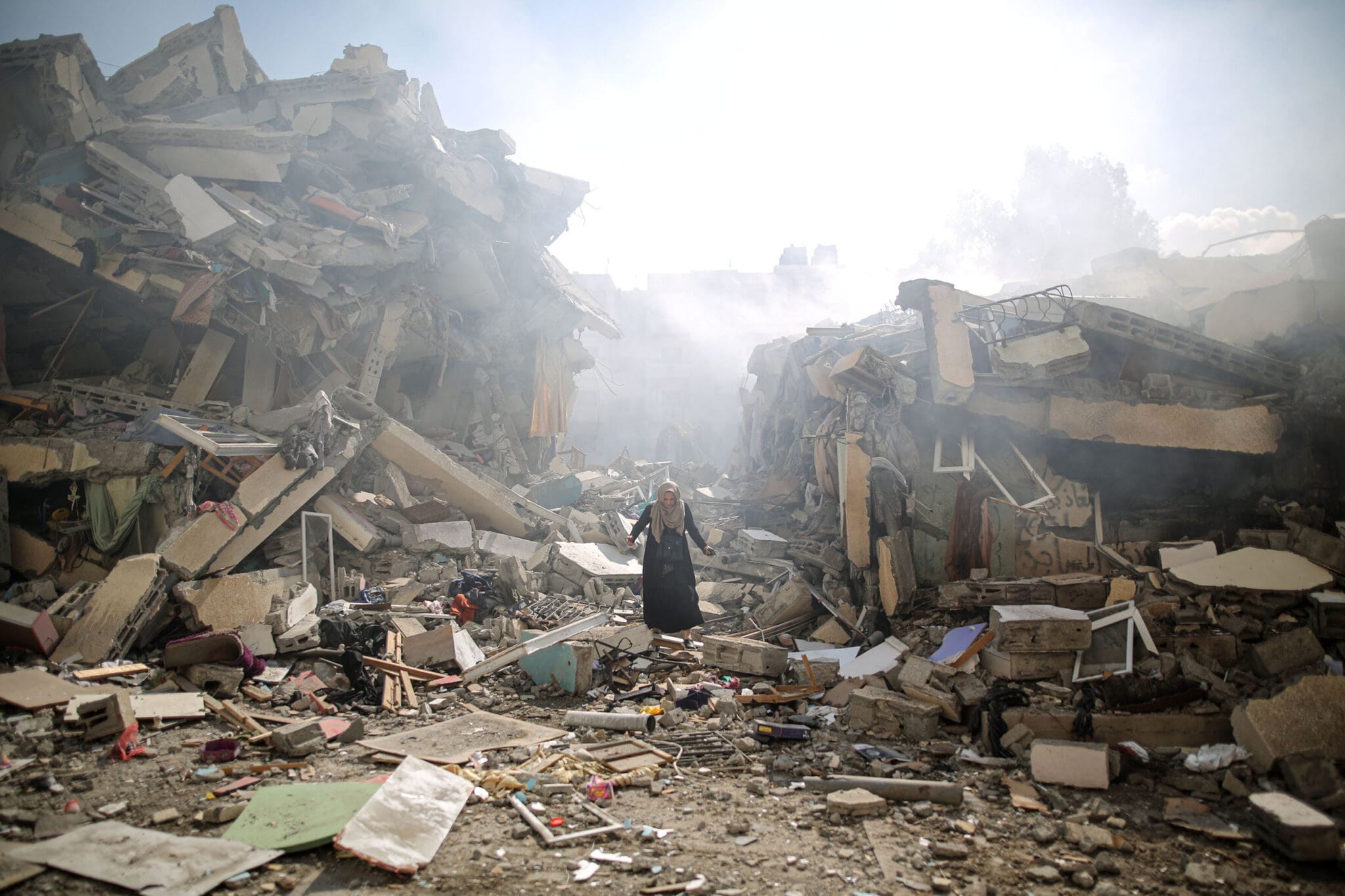
This is an attempt to record 1,000 days of genocide.
It begins on October 7, 2023, and follows the days as Gaza lived them: by the strike, by the body, by the name when a name could still be found. The numbers are the numbers reported at the time.
The record is partial. Some days were too full to hold. Some killings appeared once and vanished under the next massacre. Some names never reached English. Some bodies were pulled from the rubble days later and added to a total that was already behind. Gaza’s journalists were being killed as they wrote this down.
I missed things. I know I missed things.
I set it down anyway, because the alternative is worse. To let 1,000 days collapse into one number. To let the dead become background. To let each day vanish into the next, as if Palestinians did not have to live every hour of it.
October 7, 2023
The day Palestinians call Tufan al-Aqsa, the Flood of al-Aqsa, began before dawn on a Saturday, when fighters led by the Qassam Brigades broke through the perimeter that had sealed Gaza for sixteen years.
That perimeter had always been more than a fence. It was the wall of a cage, built around more than two million Palestinians and defended by a state that had already decided their life could be managed by siege, ration, drone, and periodic massacre. On October 7, the cage was broken open.
By mid-morning, Israel had declared the shape of what would follow. Its air force began striking Gaza, hitting homes without warning across the Strip in what its own later accounting would record as the deadliest opening of the assault. Before the day was out, Israel began closing every crossing into and out of the territory, sealing roughly two million Palestinians inside.
The siege that would define the next three years had begun. So had the language that would excuse it, the counting that would fail to hold it, and the world’s long practice of watching Gaza be killed in real time.
October 8, 2023
Israel moved onto a full genocidal footing. The cabinet invoked a formal state of war and authorized wide-scale operations, and the military began calling up a record 300,000 reservists. Israeli bombardment of Gaza widened through the day and into the night, neighborhood after neighborhood. By some Palestinian and Arab accounts it is October 8, not the 7th, that marks the true beginning of the genocide on Gaza, the day the Israeli response stopped being a counterstrike and became a campaign against an entire population.
October 9, 2023
The siege was made total and made explicit. Yoav Gallant, the Israeli defense minister, announced a complete siege of Gaza:
“No electricity, no food, no water, no fuel, everything closed. We are fighting human animals, and we are acting accordingly.”
— Yoav Gallant, October 9, 2023.
Israel Katz, then the energy minister, ordered Gaza’s water supply cut at once. That same day the Israeli military announced it had retaken all the towns around Gaza and turned its full weight onto the Strip; an Israeli airstrike on the Jabalia refugee camp killed at least fifty Palestinians, most of them civilians. Gallant’s words would later be cited as evidence of genocidal intent in the case brought against Israel at the International Court of Justice.
October 10, 2023
Israeli bombardment did not let up; the Israeli air force struck across the Strip as the power network began to fail. Satellite data later drawn from NASA’s Black Marble project showed Gaza’s night-time light collapsing sharply between October 10 and 11, a visible measure of a territory going dark.
October 11, 2023
At two in the afternoon, Gaza’s only power plant ran out of fuel and shut down. With the lines from Israel already severed under Gallant’s siege, the Strip was left without any central electricity at all. The plant and the Israeli feed together had supplied only a little over forty percent of Gaza’s needs, and even that had run just hours a day under the long blockade. Hospitals fell back on generators and on the fuel that was, by design, already running out. Katz repeated the order: no electricity, no water, no fuel.
October 12, 2023
Israel widened the siege from utilities to aid itself. Katz now called for humanitarian assistance to be cut off as well, no supplies of any kind to enter Gaza.
“Humanitarian aid to Gaza? No electrical switch will be turned on, no water hydrant will be opened and no fuel truck will enter until the Israeli abductees are returned home. Humanitarianism for humanitarianism. And no one will preach us morality.”
— Israel Katz, October 12, 2023.
Egypt kept the Rafah crossing closed, and the Strip’s two million Palestinians were now sealed between Israeli bombardment and blockade, with nothing coming in.
October 13, 2023
Israel ordered the depopulation of the north. The military told 1.1 million Palestinians in Gaza City and the northern Strip to leave their homes and move south of Wadi Gaza within twenty-four hours, an order the United Nations warned could not be carried out without catastrophe. Families fled south on foot and packed into trucks down Salah al-Din Street, the Strip’s main artery; Israeli strikes hit the evacuation route, and the Gaza Health Ministry reported that about seventy Palestinians were killed by Israeli forces on the road they had been told was safe. UNRWA announced that its shelters could no longer be considered safe and that its water was running out. For many in the north there was nowhere to go, and no safe way to leave.
October 14, 2023
The hospitals were already being marked. Israeli missiles struck the outpatient clinics and the cancer-diagnosis wing of the Ahli Arab Hospital, the old Baptist hospital in Gaza City, after its staff had been warned to evacuate. Across the Strip the forced march south went on, families crowding the length of Salah al-Din Street with what they could carry, while the army that had ordered them to flee kept striking the roads they fled along.
October 15, 2023
The Ahli Arab Hospital was struck again, wounding four of its medical staff and destroying part of the complex, and its administration received a second call from the Israeli army ordering it to empty and shut down. It refused. There was nowhere to send the wounded, and hundreds of displaced families had already gathered in its courtyard, believing a hospital was the safest ground left in Gaza City. Across the south, the Palestinians who had obeyed the order to flee found no safety waiting for them; Israeli bombing followed them into Khan Younis and Rafah, into the schools and the homes of relatives, under the same sealed siege.
October 16, 2023
Israeli bombardment continued on as Israel massed tanks and troops along the perimeter for the ground invasion it had promised. Hundreds of thousands were now displaced into the south, and the crossings stayed shut. In the world’s capitals a summit was being arranged for the 18th, where Biden was to meet Egypt’s Sisi, Jordan’s king, and Mahmoud Abbas in Amman, while the American secretary of state shuttled between Israeli officials shaping an aid plan that had not yet moved a single truck. Inside Gaza none of it changed the night, which came as the others had, without electricity, without water, and without pause in the strikes.
October 17, 2023
In the first hours of the evening, an Israeli strike hit the courtyard of the Ahli Arab Hospital, where hundreds of displaced Palestinians, most of them women and children, had taken shelter believing the grounds of a hospital would be spared.
Israel would kill more than five hundred Palestinians in a horrifying scene. The blast tore bodies apart and set part of the hospital ablaze, and survivors spent the night gathering scattered remains by the light of phones. It was the deadliest single event of the genocide to that point.
The hospital had been struck twice in the preceding days and ordered to evacuate, which Palestinian officials cited as evidence of intent. Israel denied responsibility, claiming a failed rocket fired by Islamic Jihad had caused the blast; Islamic Jihad rejected the claim, and Palestinian and many independent observers held Israel responsible. The massacre detonated across the region. Jordan, Egypt, Iran, Iraq, Syria, and Lebanon declared days of mourning, protests filled Arab capitals, Mahmoud Abbas withdrew from the Amman summit, and the United Arab Emirates and Russia called an emergency session of the Security Council.
October 18, 2023
Joe Biden arrived in Tel Aviv and adopted Israel’s account of the hospital before any investigation was complete, telling reporters the blast:
“appears as though it was done by the other team.”
— Joe Biden, October 18, 2023.
He announced a hundred million dollars in aid for Gaza and the West Bank and said Israel had agreed to let food, water, and medicine enter from Egypt for civilians only; Netanyahu’s office answered that no aid would pass through Israeli territory until the captives were returned. That same day the United States vetoed a Brazilian resolution at the Security Council calling for humanitarian pauses, objecting that it did not affirm Israel’s right to defend itself. The UN secretary-general, condemning the hospital strike, said the attacks of October 7 could not justify the collective punishment of the Palestinian people.
October 19, 2023
In a phone call, Biden and Sisi agreed to open the Rafah crossing for a first convoy of up to twenty trucks of aid, on assurances that the flow would be sustained. Even then the trucks could not move: the road on the Gaza side had been cratered by Israeli bombing and needed repair, and the crossing stayed shut. A second night passed with the aid visible at the border and the territory it was meant for still sealed.
October 20, 2023
The crossing remained closed. Some twenty trucks sat on the Egyptian side at Rafah, loaded and waiting, while two million Palestinians went without. The first convoy would not be let through until the next day, and against a sealed and bombarded territory, aid agencies said, twenty trucks was almost nothing. Israeli bombardment did not pause for the diplomacy, and from Washington Biden held to his line that there could be no talk of a ceasefire until the captives were freed.
October 21, 2023
The first aid convoy since the genocide began crossed into Gaza through Rafah: twenty trucks carrying medicine, medical supplies, and a small quantity of food, to be distributed by UNRWA and the Palestinian Red Crescent under a three-way American-Egyptian-Israeli arrangement that included no truce. Israeli warplanes kept striking as the trucks were unloaded, hitting a house and a civil-defense post within a few hundred meters of the crossing. The crossing had opened only hours after Hamas released two American captives, a mother and her daughter. Palestinian officials called twenty trucks almost meaningless; Mustafa Barghouthi noted that Gaza needed five hundred trucks a day, and the UN’s aid chief said this convoy must not be the last. No fuel was allowed in.
October 22, 2023
A second convoy entered, fourteen trucks of food, water, and some medicine, the government media office in Gaza noting it was only the second to cross in sixteen days of war. Against the need it was a rounding error, and still no fuel, the one thing the hospitals and the water pumps most required, was permitted through. In the hospitals still working, doctors operated by the light of phones and rationed the last of their generator diesel by the hour.
October 23, 2023
Gaza endured what was described as its fiercest night since the genocide began. More than four hundred Palestinians were killed by Israeli forces in a single day, around eighty of them overnight, as Israeli warplanes brought houses down on the families inside without warning. Palestinian civil-defense crews pulled thirty bodies, most of them women and children, from a single strike on the Jabalia camp. Israeli bombing reached the edges of three hospitals at once, Shifa, al-Quds, and the Indonesian. A third small convoy crossed at Rafah, bringing the three days’ total above fifty trucks, still nothing against the catastrophe. From Washington, Biden repeated that there could be no ceasefire until the captives were freed.
October 24, 2023
Israeli bombardment did not slow, and Israel began openly marking the hospitals. The army named Shifa, Gaza’s largest, as a target, claiming Hamas ran command centers in tunnels beneath it, a claim Hamas rejected and warned was the prelude to a massacre at a hospital sheltering tens of thousands of displaced Palestinians. Shifa was one of two dozen hospitals Israel was now pressing to empty, even as the wounded arrived faster than the staff could treat them and the fuel to keep the machines running drained away.
October 25, 2023
Asked about the dead, President Biden said he had no confidence in the count.
“I have no notion that the Palestinians are telling the truth about how many people are killed. I’m sure innocents have been killed, and it’s the price of waging a war.”
— Joe Biden, October 25, 2023.
He offered no basis for the doubt. The figure he was dismissing, more than six thousand five hundred Palestinians killed in eighteen days, came from the same Health Ministry whose counts the United Nations and human-rights monitors had relied on time and time again.
October 26, 2023
Gaza’s Health Ministry answered the doubt with the dead themselves. It published a 212-page report listing 7,028 martyrs by full name, identity-card number, age, and sex, among them 2,913 children. The list did not include the missing still under the rubble, nor those buried directly without passing through a hospital. The ministry’s spokesman, Ashraf al-Qudra, said they would not have published the names but for the doubt of Washington and Tel Aviv.
“Let the world know that behind every number is the story of a human being with a name and an identity. Our people are not nobodies to be ignored.”
— Gaza Health Ministry, October 26, 2023.
Human Rights Watch, which had measured the ministry’s figures against its own for years, called them reliable. The White House called the ministry a front for Hamas.
October 27, 2023
Israel cut Gaza off from the world. As it widened its ground operations into the largest incursion yet, Israeli bombing severed the last fiber lines and communications towers, and a total internet and telephone blackout fell over the whole Strip. It was the fiercest Israeli aerial and artillery bombardment of the genocide so far, and it came down on 2.3 million Palestinians who could no longer call an ambulance, reach a relative, or tell the world what was being done to them. The director-general of the World Health Organization said the blackout made it impossible for ambulances to reach the wounded, who would be left, he feared, to bleed to death in the dark. Behind that darkness the tanks moved in.
By the twenty-first day, the dead had passed seven thousand.
GROUND INVASION
October 28, 2023
With Gaza still cut off in the dark, Netanyahu announced what he called the second stage of the war, and Israeli ground forces pushed in from the north and the east under cover of the heaviest bombing yet. Communications flickered back partially through the day, and the first fragmentary images of the night’s destruction reached the outside world. The Health Ministry reported that the dead now numbered more than eight thousand, a third of them children.
That same day, Wael al-Dahdouh, Al Jazeera’s Gaza bureau chief, learned while reporting live that Israel had killed his wife, his fifteen-year-old son, his seven-year-old daughter, and eight other relatives in an airstrike on Nuseirat. The genocide was not only sealing Gaza from view; it was reaching into the homes of those still trying to show it.
October 29, 2023
Israeli columns advanced into the northern Strip and toward the coast, working to cut Gaza City off from the south. Israeli bombardment of residential blocks continued without pause, and entire extended families were erased from the civil registry in single strikes, a pattern the Health Ministry had begun to record under its own heading. Tens of thousands more fled south along a road the Israeli army opened by the hour and bombed the rest of the day.
October 30, 2023
The strikes fell on the places Palestinians had been told were safe. Shelters, bakeries, and the lines outside them were hit across the Strip, and the south, where more than a million displaced Palestinians were now crowded, was bombed as heavily as the north. Fuel had run out almost everywhere; the bakeries that survived could not bake, and the hospitals still functioning were running their generators on the last of their reserves.
October 31, 2023
Israel bombed the Jabalia refugee camp, the largest in Gaza, in a strike that flattened an entire residential block and left a crater where apartment buildings had stood. Israel killed scores of Palestinians injuring hundreds more, families pulled in pieces from a mountain of broken concrete; the Health Ministry and the camp’s own residents put the dead in the dozens and climbing as the digging went on by hand. Israel said it had killed a Hamas commander beneath the block and acknowledged civilian deaths as a consequence. The camp would be struck again, and then again, in the days that followed.
November 1, 2023
For the first time since the genocide began, the Rafah crossing opened to let a trickle of people out: foreign passport holders, dual nationals, and a small number of the critically wounded, evacuated to Egypt under lists vetted by Israel. For everyone else the crossing stayed shut, an exit the size of a keyhole in a sealed wall. That same day Jabalia was bombed again by Israeli forces, a second massacre in the same camp within twenty-four hours.
November 2, 2023
Israeli bombing pressed on as their ground forces tightened around Gaza City. Aid remained a trickle against an ocean of need, still no fuel, and the United Nations warned that civil order was breaking down as starving people broke into its warehouses for flour. The Health Ministry later reported that more than a hundred of its own UNRWA colleagues had now been killed by Israel, the highest toll the agency had suffered in its history.
November 3, 2023
An Israeli strike hit an ambulance convoy outside the gates of Shifa Hospital as it tried to carry wounded toward Rafah. The Health Ministry reported at least fifteen Palestinians were killed by Israeli forces and dozens wounded at the hospital’s entrance; Israel said the convoy was being used by Hamas. The footage of the dead and the shredded ambulances at the door of Gaza’s largest hospital moved around a world that had been told the hospital was a legitimate target.
November 4, 2023
The strikes on shelters continued, and the southern “safe zone” proved to be nothing of the kind. Israeli bombing reached schools sheltering the displaced and the camps of the central Strip. In the capitals, the diplomacy circled the word ceasefire without touching it; the United States pressed instead for brief humanitarian pauses, and Israel rejected even those while any captive remained in Gaza.
November 5, 2023
Israel struck the al-Maghazi refugee camp in the central Strip, a dense block of homes sheltering displaced families, killing dozens in a single night. Survivors described pulling neighbors from the rubble in the dark with no equipment and no ambulances that could reach them. The camp had been considered, like everywhere south of Wadi Gaza, a place Palestinians had fled to for safety.
November 6, 2023
The toll passed ten thousand, more than four thousand of them children, and the UN secretary-general gave the genocide its plainest description yet.
“Gaza is becoming a graveyard for children. Hundreds of girls and boys are reportedly being killed or injured every day.”
— António Guterres, November 6, 2023.
Israel rejected the characterization and pressed its forces deeper into Gaza City. Israeli bombardment did not pause for the sentence to be spoken.
November 7, 2023
Israeli forces reached the Mediterranean, severing the Strip in two and closing the ring around Gaza City and the north. The army declared the north a closed battlefield and again ordered everyone remaining to move south, down a single road, in daily windows it set and the strikes did not always honor. Those who could not move, the old, the wounded, the patients wired to failing machines, stayed where they were.
November 8, 2023
Inside the encircled north, the hospitals became islands. Shifa, al-Quds, al-Rantisi, and the Indonesian Hospital were now ringed by fire, their corridors filled with the wounded and with thousands of displaced people who believed, still, that a hospital might be spared. Water was being drunk from any source that could be found; disease was beginning to move through the shelters.
November 9, 2023
Israeli forces closed in on the hospitals of Gaza City. Strikes hit the gates and upper floors of al-Rantisi, the children’s and cancer hospital, and the area around Shifa came under sustained fire. Israeli snipers and drones were now firing on anyone who moved in the streets nearby. UNICEF repeated that more children were being killed in Gaza than in all the world’s conflicts of recent years combined.
November 10, 2023
Al-Rantisi was forced out of service, its young patients and the families sheltering there driven into the street under fire. Shifa was effectively besieged; its generators were failing, and with them the incubators in the neonatal unit. Doctors began to describe a choice no doctor should face, which of the machines keeping the smallest patients alive would lose power first.
November 11, 2023
One hospital after another in the north went dark. The Health Ministry announced that Shifa, al-Quds, and others had ceased to function as hospitals, their fuel exhausted, their operating rooms cold, the dead accumulating in courtyards because there was no way to bury them and no power to keep them. Premature babies were taken from their incubators and wrapped together for warmth as the electricity died.
November 12, 2023
At Shifa, the newborns began to die. With the generators silent, the neonatal unit had no power for the incubators, and staff laid the infants side by side on ordinary beds, doing what could be done by hand. Israel surrounded the complex and said a Hamas command center lay in tunnels beneath it, a claim the hospital’s doctors and Hamas denied. Inside were thousands of patients, staff, and displaced civilians, and the bodies that could not be moved.
November 13, 2023
The siege of Shifa tightened. Food and clean water inside the complex were gone; people drank from the wells of the dead. The Israeli military offered to deliver incubators and said it had left a corridor open for evacuation, while those inside said anyone who stepped into the open was shot. The world watched a hospital die in real time and could not agree on what it was seeing.
November 14, 2023
Israeli bombardment of the north went on around the besieged hospitals, and the south absorbed wave after wave of the newly displaced with nothing left to give them. The Health Ministry warned that the collapse of the health system was now killing people the bombs had not, the kidney patients without dialysis, the diabetics without insulin, the wounded without surgery, a second toll rising silently beneath the first.
November 15, 2023
Israeli forces stormed Shifa Hospital before dawn, moving through its wards with soldiers and armor in what they called a search operation against the command center they insisted lay beneath it. Troops interrogated medical staff and displaced people at gunpoint and broadcast images of weapons they said they had found; independent observers found the evidence offered thin against the scale of the claim that had justified besieging a hospital full of patients. The newborns who had survived were now caught inside an active military operation.
November 16, 2023
The search of Shifa continued, and the world was shown a hospital turned into a battlefield, its patients and its dead among the soldiers. The Health Ministry reported that premature babies still inside were dying for lack of care and had to be evacuated immediately or lost. Outside, in the south, the displaced now numbered more than a million and a half, and Israeli bombing of their shelters did not stop because the cameras were pointed at Shifa.
November 17, 2023
Plans were made under UN and Red Crescent escort to move the surviving premature babies out of Shifa toward the south and on to Egypt. Some of the infants had already died waiting; the rest were carried out wrapped in foil and blankets, tiny and unnamed on the lists, into a southward road that was itself under fire. A mass grave was dug in the hospital courtyard for those who could not be buried any other way.
November 18, 2023
An Israeli strike hit the al-Fakhoura school in Jabalia, a UN school packed with displaced families, killing dozens as they sheltered in the classrooms and the yard. It was one of a series of strikes on UN shelters, the places people had been explicitly told to go.
November 19, 2023
The premature babies of Shifa reached the south and crossed into Egypt for treatment, a handful of survivors out of a unit that had held many more. Israeli bombardment widened again toward Khan Younis in the south, the very direction the population had been ordered to flee, and the people there understood that the line drawn at Wadi Gaza had never meant safety, only a delay.
November 20, 2023
Israeli fire struck the Indonesian Hospital in the north, where hundreds of patients and displaced people remained, killing a number of them in the wards and the yard. With Shifa gone, the Indonesian had been one of the last functioning hospitals in the north, and now it too was being emptied under fire. The Health Ministry reported that the north no longer had a hospital able to perform major surgery.
November 21, 2023
After weeks of mediation led by Qatar and Egypt, the outline of a deal emerged: a pause of several days in the fighting, the release of fifty Israeli captives, women and children, in exchange for a larger number of Palestinian women and children held in Israeli prisons, and the entry of more aid and fuel into Gaza. It was not a ceasefire and no one called it one. It was a pause, the first prospect of one in forty-five days.
November 22, 2023
The Israeli cabinet approved the agreement after a long night session: a four-day truce, fifty Israeli captives for a hundred and fifty Palestinian women and children, hundreds of aid trucks, and fuel at last. The pause was expected to begin within a day.
For Gaza it meant, for the first time since October 7, the possibility of a night without bombing, of digging for the buried without being struck, of counting the dead.
November 23, 2023
The truce did not begin. Its start slipped to the following day amid disputes over the lists and the logistics, and so November 23 passed as the forty-seven days before it had, under Israeli bombardment, the strikes falling on the north and the south alike up to the final hours before the pause.
By the eve of the truce the Health Ministry counted more than fourteen thousand Palestinians killed, among them well over five thousand children, with thousands more missing beneath the rubble, uncounted, where the machines that might have found them had long since gone silent.
November 24, 2023
At seven in the morning, on the forty-ninth day, the guns went quiet. The truce held from its first minutes, and within twenty minutes the aid trucks began rolling through Rafah, more in a morning than had entered in weeks. By evening Hamas released twenty-four captives, thirteen Israelis among ten Thai workers and one Filipino, and Israel freed thirty-nine Palestinian prisoners, women and children, the first exchange of many. The World Health Organization and the Red Cross used the silence to reach the abandoned hospitals of the north and evacuate what remained of them, the Ahli Arab among them. Even in the quiet, two Palestinians trying to return to the north were shot dead, and eleven wounded, by Israeli soldiers on the road home.
November 25, 2023
The second day’s exchange nearly broke on the question of whether Israel was keeping its side. Hamas held back its release for seven hours, accusing Israel of violating the terms over the aid let into the north, before freeing thirteen Israeli captives and four Thai nationals; Israel released another thirty-nine Palestinians. Near Ofer prison, west of Ramallah, Israeli forces shot and wounded three Palestinians who had gathered to wait for their freed relatives. The UN counted what the truce had laid bare: only a couple of small hospitals still functioning in the whole of the north, eight more in the south, for a population of millions.
November 26, 2023
On the third day Hamas released seventeen more, fourteen Israelis and three Thais, and Israel freed thirty-nine Palestinian children. Netanyahu came into Gaza to stand among his soldiers and commanders, a visit staged for the cameras in a territory his army had spent fifty days reducing to rubble. In the West Bank, the dying did not pause for the truce in Gaza: six Palestinians were reported killed in Israeli raids.
November 27, 2023
Qatari mediators announced that Israel and Hamas had agreed to extend the pause by two days. Hamas released eleven Israeli captives; Israel freed thirty-three Palestinian prisoners. The math of the exchange had been settled, three Palestinians out of the prisons for every one Israeli out of Gaza, a ratio that said plainly how each side’s people were counted.
November 28, 2023
The fifth exchange: ten Israeli captives, a household pet, and two Thai nationals, for thirty Palestinian prisoners. A relatively calm day.
November 29, 2023
Hamas told the mediators it was ready to extend the pause by four days; an Israeli official told the Washington Post that Israel would accept two or three. The intelligence chiefs of the Mossad, the CIA, and Egypt met in Qatar to negotiate the next stretch. Hamas released sixteen more captives, Israel another thirty Palestinians. In Jenin, Israeli forces killed four Palestinians during an incursion, two of them children, and the dying in the West Bank went on uncounted in the truce’s ledger.
November 30, 2023
On what would be the last full day of the pause, Israel and Hamas confirmed an extension into a seventh day, and eight more captives were exchanged for thirty Palestinian prisoners. The head of the World Health Organization warned that Gaza’s health needs had multiplied while only a third of its facilities still worked, and the Health Ministry reported that hundreds needed evacuation out of the Strip for care that no longer existed inside it. The trucks kept coming while they could. Everyone understood the window was closing.
THE TRUCE ENDS
December 1, 2023
At seven in the morning the seven-day truce expired, and the Israeli military resumed its assault at the same intensity it had paused, as if the week had been a held breath and not a change of mind. Leaflets fell over Khan Younis marking hundreds of new evacuation zones, pushing the people who had been herded south to move again. An airstrike brought down a large building in Khan Younis, and by day’s end the Health Ministry reported that more than 180 Palestinians had been killed by Israeli forces since the pause ended. Doctors at al-Aqsa Martyrs Hospital, already overwhelmed, treated the wounded on the floor. The genocide had come back, and it came back south.
December 2, 2023
The Health Ministry put the dead since October 7 at 15,207, with more than forty thousand wounded. In Jabalia, an Israeli strike brought down the home of the Abed family on the heads of everyone inside, killing around a hundred Palestinians, scores more buried in the rubble. Among the dead was Dr. Sufyan Tayeh, president of the Islamic University of Gaza, a theoretical physicist ranked among the top two percent of researchers in the world, killed with his whole family.
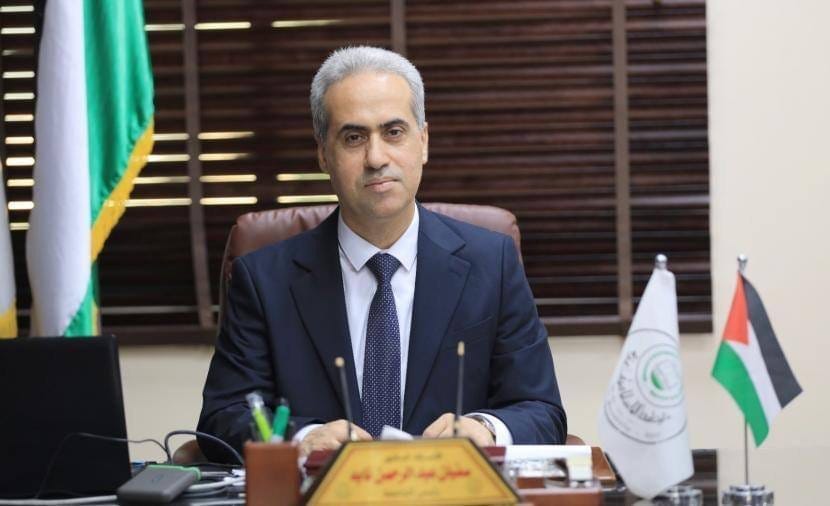
The genocide was not only erasing Palestinians; it was erasing the minds Gaza had spent generations raising, the professors and the poets and the doctors, the ones who would have told the story afterward.
December 3, 2023
Israel announced it was widening its ground operations to cover the entire Strip, north and south together, the “safe” south now a front line like the rest. The Shin Bet director said the government had fixed its objective as the elimination of Hamas.
“In every location, in Gaza, in the West Bank, in Lebanon, in Turkey, in Qatar, everyone… It will take a few years, but we will be there in order to do it… The cabinet set a goal for us, to take out Hamas. And we are determined to do it, this is our Munich.”
— Ronen Bar, Shin Bet chief, December 3, 2023
Israeli forces shelled the Kamal Adwan hospital in the north, killing at least four, and the Israeli bombardment of the Jabalia camp killed and wounded dozens more.
There was nowhere left in Gaza that was not a target, and Israel had now said so officially.
December 4, 2023
Israeli bulldozers demolished the Palace of Justice in southern Gaza City, the building that held the Supreme Court, the Court of Appeals, and the lower courts, the architecture of Palestinian law in Gaza flattened in an afternoon. Nearly the whole Strip went dark again as the internet collapsed once more. A senior officer claimed Israel had killed more than five thousand Palestinian fighters across the war, a number offered without evidence against a civilian toll the same army disputed by name.
December 5, 2023
The New York Times reported Israel had begun its assault on the south. Israeli troops reached the centers of Khan Younis and Jabalia. An Israeli airstrike hit the Maan school in Khan Younis, near the Nasser medical complex, a UNRWA shelter full of displaced families, killing at least twenty-five Palestinians. The doctors at al-Aqsa Martyrs Hospital said again that they could not keep up with the wounded arriving at their doors.
December 6, 2023
Israeli officials claimed their forces had killed half of Hamas’s mid-level commanders in Gaza. Médecins Sans Frontières reported that fuel and medical supplies at al-Aqsa Martyrs Hospital had fallen dangerously low.
On the northern border, Israeli Defense Minister Yoav Gallant told local officials that if diplomacy failed, Israel would use its army to push Hezbollah back from the frontier, a war being threatened if Lebanon would not stay quiet on genocide.
December 7, 2023
The poet and teacher Refaat Alareer was killed with members of his family in an Israeli airstrike. He had taught a generation of Gaza’s young writers to tell their own story in English, and had written, weeks before, that if he must die, it should become a tale.
If I must die,
you must live
to tell my story
to sell my things
to buy a piece of cloth
and some strings,
(make it white with a long tail)
so that a child, somewhere in Gaza
while looking heaven in the eye
awaiting his dad who left in a blaze—
and bid no one farewell
not even to his flesh
not even to himself—
sees the kite, my kite you made, flying up above
and thinks for a moment an angel is there
bringing back love
If I must die
let it bring hope
let it be a tale
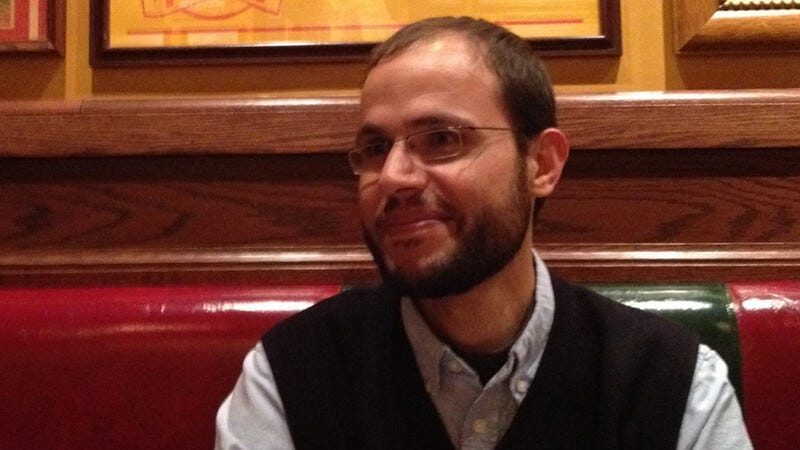
Israel bombed and destroyed the Great Omari Mosque, the oldest in Gaza, a thousand years of standing brought down in a strike.
Netanyahu said Israel would “turn Beirut into Gaza” if Hezbollah entered the war, the threat itself a confession of what had been done to Gaza.
December 8, 2023
The United States vetoed a UN Security Council resolution demanding an immediate ceasefire in Gaza; thirteen members voted yes, Britain abstained, and Washington alone struck it down. The head of UNRWA in Gaza said the civil order was collapsing, aid convoys looted, UN vehicles stoned by people with nothing left; the agency’s chief said 133 of its staff had now been killed and that 1.9 million Palestinians, eighty-five percent of Gaza, had been driven from their homes, many of them more than once. The machinery built to keep Gaza’s people alive was breaking down faster than it could be counted.
December 9, 2023
The State Department approved an emergency sale of fourteen thousand tank shells to Israel, bypassing the ordinary review, the shells bound for the same bombardment the same government called a tragedy. The World Health Organization said two health workers had been shot dead by Israeli forces inside the al-Awda hospital, besieged by Israel since December 5.
Hospital strikes and sieges, once debated by the international community, had become a regular for the Israeli forces.
December 10, 2023
The Health Ministry reported that nearly fifty thousand Palestinians had now been wounded since the genocide began, a city’s worth of broken bodies in a place with almost no hospitals left to mend them. Médecins Sans Frontières said the Israeli army had forced it to evacuate two of its clinics and that health care in Gaza had collapsed entirely. Hamas warned that no captive in Gaza would be left alive without an exchange and negotiations, putting the lives Israel claimed to be fighting for at the center of the genocide it refused to pause.
December 11, 2023
At the Kamal Adwan hospital, the director reported that Israel had killed two mothers and their newborn infants when it struck the maternity ward; the United Nations confirmed the killings. Israeli forces tightened around the northern hospitals and pushed smoke grenades into the crowds sheltering at the Jabalia camp. A general strike shut the West Bank in solidarity with Gaza. The pattern had now become unmistakable, the places that held the most vulnerable, the maternity wards and the children’s wings, were the places Israeli strikes kept finding.
December 12, 2023
The UN General Assembly voted overwhelmingly to demand an immediate ceasefire, 153 nations in favor, ten against, twenty-three abstaining, the will of the world recorded and ignored. Israeli forces raided the Kamal Adwan hospital after days of shelling it, arresting dozens of the medical staff, the director among them. The Israeli army acknowledged that more than a tenth of its own soldiers killed in Gaza had died by friendly fire. At the Nasser complex in Khan Younis, doctors reported they had almost no supplies and almost no functioning medical roles left to perform.
December 13, 2023
Israel’s ambassador to Britain told Sky News she absolutely rejected a two-state solution, saying the quiet part into a camera while her country’s army made the question academic by force. A Golani brigade battalion commander was killed in fighting in Shujaiya. Inside the al-Awda hospital, 240 Palestinians remained trapped by Israeli snipers, without clean water, living on a single daily meal of bread or rice, a hospital turned into a siege within a siege.
December 14, 2023
The Health Ministry reported that 2,500 displaced Palestinians had been forced out of the Kamal Adwan hospital, and that Israeli soldiers had stopped the medical staff from caring for twelve children in intensive care and ten patients in the emergency department, two of whom died as a result. The hospitals of the north were not being closed so much as killed, patient by patient, with the people who tried to keep them alive marched out at gunpoint.
December 15, 2023
Israel launched its first major assault on Rafah and the Philadelphi corridor, the strip’s last supposed refuge in the far south now under air and drone attack. Artillery hit the Haifa school and a residential home, killing at least seventeen and wounding dozens. Samer Abu Daqqa, a cameraman and editor for Al Jazeera Arabic, was killed in Khan Younis while covering the aftermath of the strike on the school; Wael al-Dahdouh was wounded beside him.

Israel admitted it had shot and killed three of its own captives in Shujaiya in a friendly-fire incident, men who had been waving a white flag when its soldiers opened fire, the white flag no protection even for the people Israel said it was fighting to recover.
December 16, 2023
An Israeli sniper shot and killed a Palestinian Christian mother and her daughter inside the Holy Family Catholic Church in northern Gaza, where they had taken shelter. The French foreign ministry said one of its staff had died of wounds from an Israeli strike on Rafah that killed eleven Palestinians, and condemned the attack. Journalists reported that Israeli bulldozers had crushed dozens of Palestinians sheltering outside the Kamal Adwan hospital. The largest shipping company in the world announced it would no longer send vessels through the Red Sea, the genocide spilling outward into the sea lanes as it ground deeper into Gaza.
December 17, 2023
The Health Ministry reported that ninety Palestinians had been killed in Israeli strikes on the Jabalia camp. A tank shell hit the children’s ward of the Nasser medical complex, killing children where they were being treated. The head of a Metula Local Council suggested on a pop-music radio station that all of Gaza’s Palestinians be sent to refugee camps in Lebanon and the Strip leveled into an empty museum like Auschwitz, the eliminationist language no longer confined to the margins.
“Instead of urging people to go south [of Gaza], we should direct them to the beaches. The Navy can transport them to the shores of Lebanon, where there are already sufficient refugee camps. Then, a security strip should be established from the sea to the Gaza border fence, completely empty, as a reminder of what was once there. It should resemble the Auschwitz concentration camp.”
— David Azoulai said in an interview with Ben Caspit and Yinon Magal, December 17, 2023.
December 18, 2023
The Ahli Arab hospital was attacked again, its displaced forced out and two doctors arrested. The United States announced a ten-nation naval coalition to protect Red Sea shipping from Houthi attacks, marshaling a fleet for the cargo lanes while the ceasefire it had vetoed went unbuilt.
December 19, 2023
At least thirteen Palestinians were killed in an Israeli strike on the Jabalia camp; another twenty-nine were killed and three buildings destroyed in an Israeli strike on a residential area of Rafah; hundreds more were reported killed in Israeli shelling of the Rimal district of Gaza City. An Israeli real-estate company circulated an advertisement promoting the construction of illegal settlements for Israelis on Gazan land its army’s bombing had just cleared, the intent stated in a brochure. Israel told Qatar it was ready for a week’s pause in exchange for forty captives.
December 20, 2023
Ismail Haniyeh went to Cairo to discuss another truce, and the Wall Street Journal reported Hamas had refused a temporary pause for captives, insisting no Israeli captive would be released until a full ceasefire was reached; Israel rejected that the next day. Israeli forces shelled the area around the Kuwaiti Specialty Hospital in Rafah, which filled with the wounded from a strike nearby. The UN human-rights office said it had received disturbing reports that Israeli forces had summarily killed at least eleven unarmed Palestinian men in Gaza.
December 21, 2023
A UN report said more than half a million Palestinians, a quarter of Gaza’s population, were now facing starvation; the World Food Programme’s chief economist said he had never seen anything on the scale of what was happening in Gaza.
“It doesn’t get any worse… I have never seen something at the scale that is happening in Gaza and at this speed, how quickly it has happened in just a matter of two months.”
— Arif Husain, the World Food Programme’s chief economist, December 21, 2023.
Israeli bulldozers demolished the Sheikh Shaaban cemetery in eastern Gaza, crushing the bodies buried there, the dead disinterred and destroyed a second time. Hamas demanded the release of three senior Palestinian prisoners in any deal, Marwan Barghouti among them.
December 22, 2023
An Israeli airstrike on a building in Gaza City killed seventy-six members of one extended family, among them a veteran of the UN Development Programme, Issam al-Maghribi. Israeli forces beat and arrested eight medical staff members of the Palestinian Red Crescent Society after storming its ambulance center in Jabalia.
The killing of whole families in single strikes had become so routine it barely registered abroad; in Gaza it was the shape of the genocide.
December 23, 2023
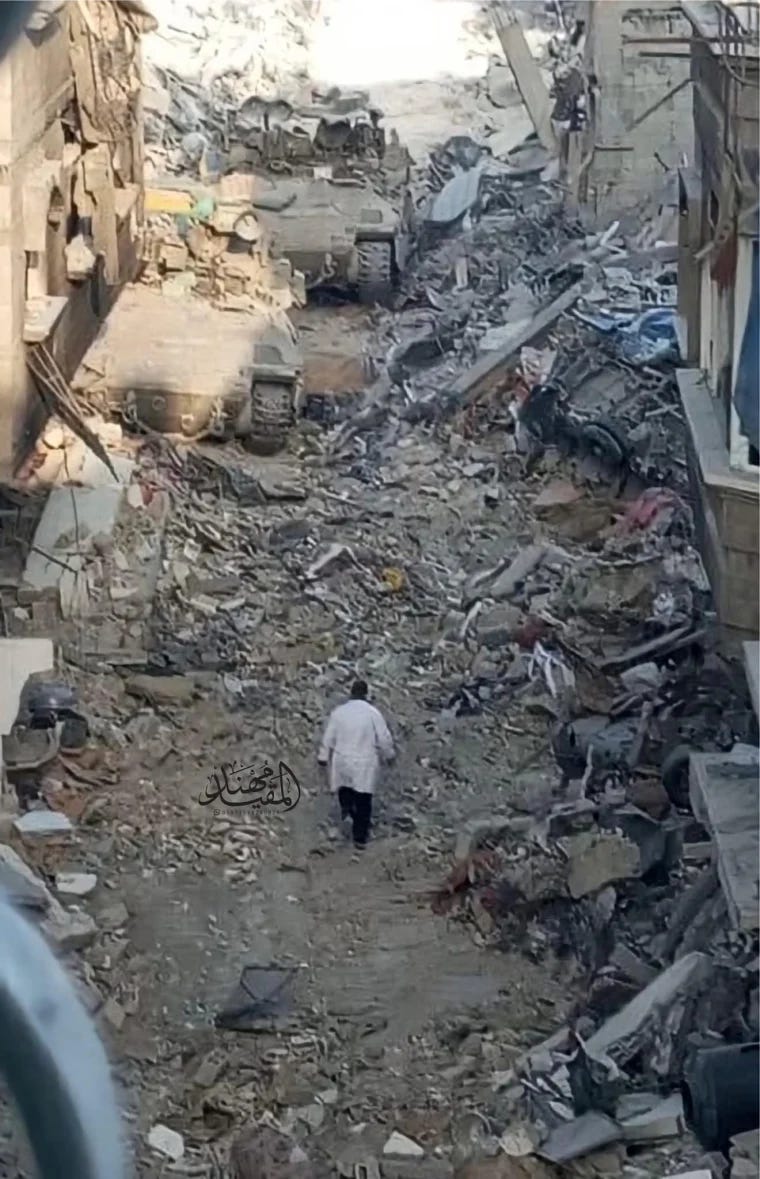
The Health Ministry reported a massacre in the Jabalia camp, where dozens of Palestinians civilians were executed by Israeli forces in the streets; the Gaza government media office reported Israeli forces had killed 137 civilians in Gaza City. The pediatrics chief at the Kamal Adwan hospital, Dr. Hussam Abu Safiya, described what he had seen:
“The soldiers dug up the graves this morning and dragged the bodies with bulldozers, then crushed the bodies with the bulldozers… I have never seen such a thing before.”
December 24, 2023
On Christmas Eve, the Health Ministry reported that at least seventy Palestinians had been killed in Israeli attacks on the al-Maghazi refugee camp, and twenty-three more in a strike on Khan Younis. Netanyahu said Israel was paying “a very heavy price” for its invasion, the cost he named being his soldiers’, never the buried families of al-Maghazi.
December 25, 2023
The Health Ministry reported that at least 250 Palestinians had been killed by Israeli forces in the previous twenty-four hours, bringing the toll to 20,674. On Christmas Day, Israel struck outside Damascus and killed a senior Iranian Revolutionary Guard commander, pushing to expand its genocide beyond Gaza and across the entire region.
December 26, 2023
The Health Ministry reported that 241 Palestinians had been killed by Israeli forces in a day, the toll reaching 20,915. Israel’s military said it had struck 100 targets in southern Gaza in twenty-four hours, while its ground assault pushed into the refugee camps of central Gaza. The map of killing widened again: Khan Younis in the south, the camps in the middle, the north already shattered.
December 27, 2023
The Health Ministry reported that 195 Palestinians had been killed by Israeli forces in a day, the toll reaching 21,110, and that at least twenty had been killed near the Amal hospital in Khan Younis. The Israeli army around the Amal hospital pressed in; the assault on Khan Younis was now where the worst of the killing fell.
Israel’s military chief, visiting the northern command, spoke of high readiness as Hezbollah’s attacks from Lebanon intensified, the second front always there at the corner of the page.
December 28, 2023
The Health Ministry reported that at least fifty Palestinians had been killed in morning Israeli strikes on Beit Lahia, Khan Younis, and al-Maghazi, and 210 over the day, the toll reaching 21,320. The Euro-Med Human Rights Monitor put the true figure far higher, estimating 29,124 Palestinians killed since October 7, including 11,422 children and 5,822 women, with the gap between the counts measuring the thousands lost under rubble no one could reach. An Israeli strike on Rafah killed at least twenty more in the evening.
Israel struck a Syrian army position in southern Syria, the genocide’s edges flaring again beyond Gaza: Lebanon to the north, Syria to the east, the Red Sea further south, each front carrying the same warning that the genocide was never going to stay contained.
December 29, 2023
South Africa filed its case against Israel at the International Court of Justice, accusing it of committing genocide in Gaza, the charge the survivors had been making for weeks now entered into the highest court in the world.
At least twenty Palestinians were killed in a dawn Israeli strike on the Nuseirat camp. The Health Ministry reported that 187 had been killed by Israeli forces over the day, the toll reaching 21,507. The Gaza media office reported that eight hundred thousand Palestinians in the north could not reach a hospital and seven thousand remained buried under the rubble; the UN had called the health system “shattered” and said its patients were “waiting to die.”
The United States approved another emergency arms sale to Israel, $147.5 million, without congressional review.
December 30, 2023
The Health Ministry reported that 165 Palestinians had been killed by Israeli forces in a day, the toll reaching 21,672. Just before midnight an Israeli strike killed twelve in al-Zawaida. Netanyahu said Israel must control the border corridor between Egypt and Gaza, the Philadelphi route, to keep the territory “demilitarized,” staking a claim to the last seam of Gaza not yet under his army’s boot. An Israeli strike near the European Hospital in Khan Younis killed five.
December 31, 2023
The year ended under fire. Israeli airstrikes on central Gaza killed at least thirty-five. The Health Ministry reported that 150 had been killed by Israeli forces over the day, the toll reaching 21,822. Among the dead was Yusuf Salama, a former Palestinian minister and a preacher of al-Aqsa Mosque, killed with members of his family in a strike on the al-Maghazi camp. Israel withdrew five brigades from Gaza, a sign of a shift toward a longer genocide, not the end of one.
The year closed with Israel killing more than twenty-one thousand Palestinians, and the killing moved into the next year without pause.
THE GENOCIDE WIDENS
January 1, 2024
The Health Ministry reported that at least 156 Palestinians had been killed by Israeli forces in a day, the toll reaching 21,978.
The new year opened exactly as the old one had closed, with a count and a strike.
January 2, 2024
Saleh al-Arouri, deputy head of Hamas’s political bureau, was killed with six others in an Israeli drone strike in the southern suburbs of Beirut, the genocide reaching into Lebanon to kill a Hamas leader on another country’s soil.
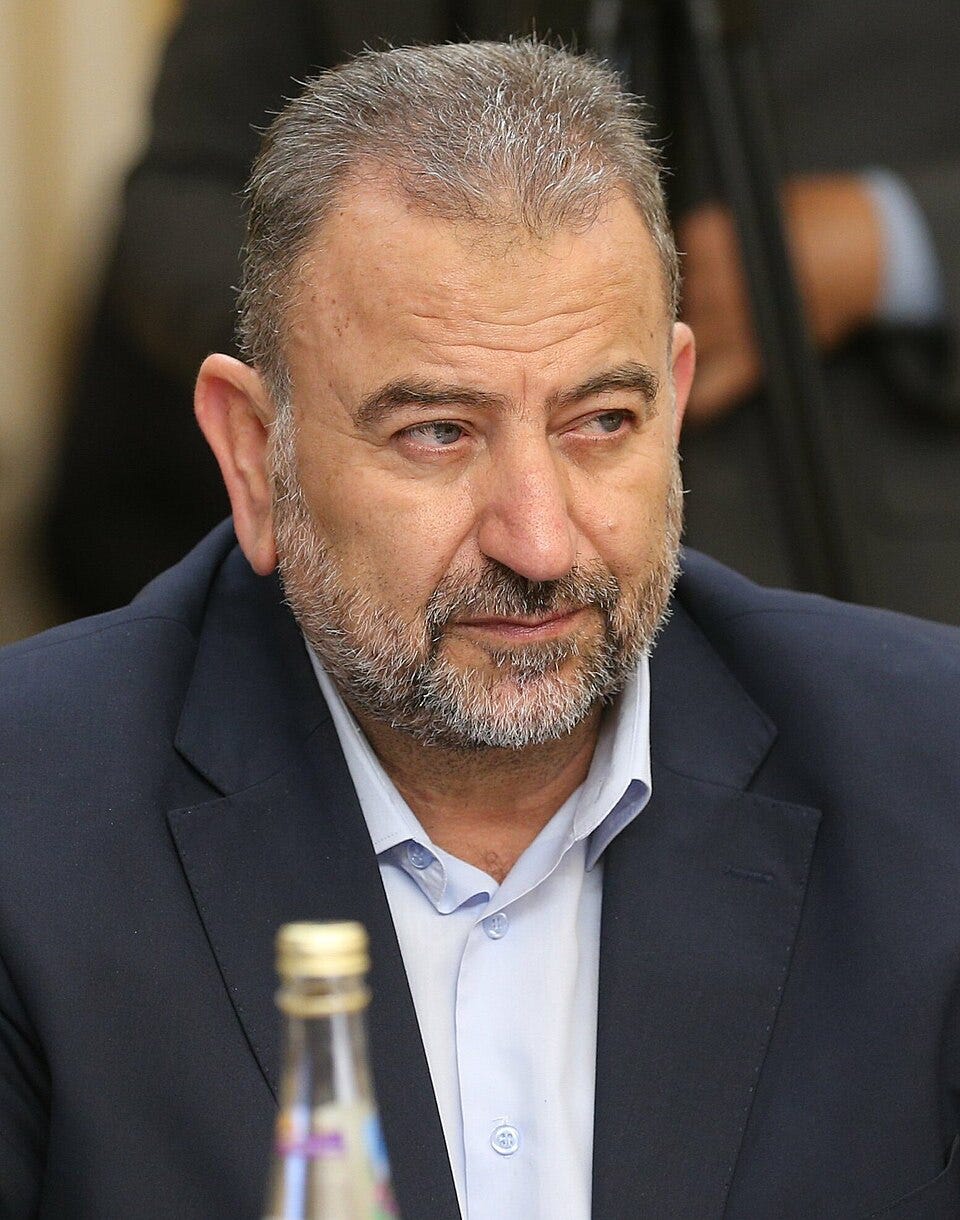
The Health Ministry reported that at least 207 Palestinians had been killed by Israeli forces over the day, the toll reaching 22,185. An Israeli strike on the Palestinian Red Crescent headquarters in Khan Younis killed five, another reminder that in Gaza even the symbols of aid and survival were not spared.
January 3, 2024
The Health Ministry reported that at least 128 Palestinians had been killed by Israeli forces in a day, the toll reaching 22,313. A UN official condemned an Israeli strike on Khan Younis that killed five Palestinians, a newborn among them, sheltering at the Amal hospital. The Red Crescent reported Israeli attacks intensifying around the Amal hospital, the siege of the south’s hospitals taking the same shape the north’s had taken in November.
January 4, 2024
At least fourteen Palestinians were killed in an Israeli strike west of Khan Younis. The Health Ministry reported that 125 had been killed by Israeli forces over the day, the toll reaching 22,438. The Red Crescent reported that Israel had bombed the home of the director of Gaza’s central ambulance center, and reported another strike on the Amal hospital. The machinery of rescue was itself being hunted, the ambulance crews and their directors killed alongside the people they were trying to reach.
January 5, 2024
The Health Ministry reported that at least 162 Palestinians had been killed by Israeli forces in a day, the toll reaching 22,600. The international federation of the Red Cross and Red Crescent condemned the Israeli attacks on the Amal hospital and the Palestinian Red Crescent headquarters. Médecins Sans Frontières set up a field hospital in Rafah, describing staff kneeling bloodied on the floor trying to save lives, intubating patients on the ground, the practice of medicine in Gaza reduced to its rawest form.
January 6, 2024
Twenty-two Palestinians were killed in a pre-dawn Israeli strike on a home in Khan Younis. The Health Ministry reported that at least 122 had been killed by Israeli forces over the day, the toll reaching 22,722. A displaced man was shot in the chest by an Israeli sniper in front of the Amal hospital, the hospital entrance itself a killing ground.
January 7, 2024
The Health Ministry reported that at least 22,722 Palestinians had been killed and 58,166 wounded by Israeli forces since October 7.
In the occupied West Bank, an Israeli air attack killed at least six Palestinians in Jenin, with witnesses saying human remains were scattered at the scene. Israeli forces stormed Nablus, where armed fighting broke out after at least one Palestinian was arrested, and raids spread through Jenin, Hebron, Qalqilya, and Jericho.
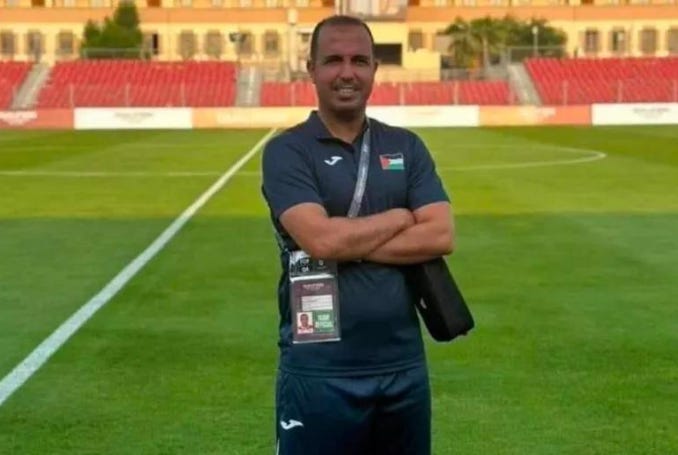
In Gaza, Hani al-Masdar, a coach for Palestine’s Olympic football team, was killed in an Israeli air raid. He was one name in a wider assault on Palestinian life and memory: by then, more than one thousand athletes, coaches, scouts, and sports workers had been killed by Israel.
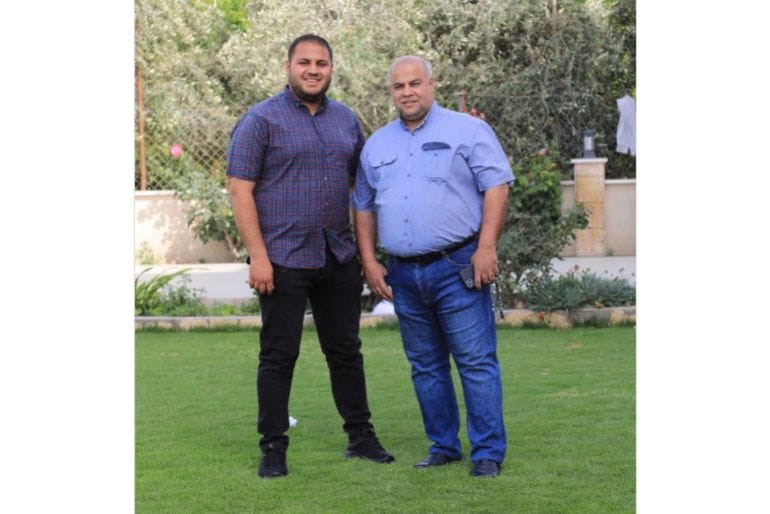
An Israeli missile struck a vehicle near al-Mawasi, the area Israel had marked as safe, killing journalists Hamza Dahdouh and Mustafa Thuraya. Hamza was the eldest son of Wael Dahdouh, bureau chief of Al Jazeera in Gaza City, whose wife, son, daughter, and grandson had already been killed earlier in the genocide; the grief around one journalist had become almost a ledger of Israel’s assault on Gaza itself.
January 8, 2024
The Health Ministry reported that at least seventy-three Palestinians had been killed by Israeli forces over the day and ninety-nine wounded. Al-Aqsa Martyrs Hospital in central Gaza was partially evacuated as Israeli military activity closed in, with the WHO saying about six hundred patients and medical staff had been forced to leave, their whereabouts unknown.
Wael Dahdouh, Al Jazeera’s Gaza bureau chief, returned to the air just hours after Israel killed his eldest son Hamza, months after it had killed his wife, another son, his daughter, and his grandson. The patience and courage required to stand there again, to keep speaking while grief kept taking from him, was almost impossible to comprehend.
January 9, 2024
The Health Ministry reported that at least 249 Palestinians had been killed by Israeli forces and 510 wounded in the previous twenty-four hours, the toll reaching 23,084.
By then, the killing of hundreds in a single day had been folded into the rhythm of the genocide, each number unbearable on its own and still somehow made ordinary by the next morning.
January 10, 2024
The Health Ministry reported that 147 Palestinians had been killed by Israeli forces in a day, the toll reaching 23,357. At least forty Palestinians were killed in Israeli shelling near the entrance of al-Aqsa Martyrs Hospital. The Red Crescent reported an Israeli strike had killed four medics and two patients in an ambulance. The Health Ministry warned that eight hundred thousand Palestinians in the north had been “sentenced to death” by the collapse of the health system, and said it was investigating wounds caused by internationally banned weapons.
January 11, 2024
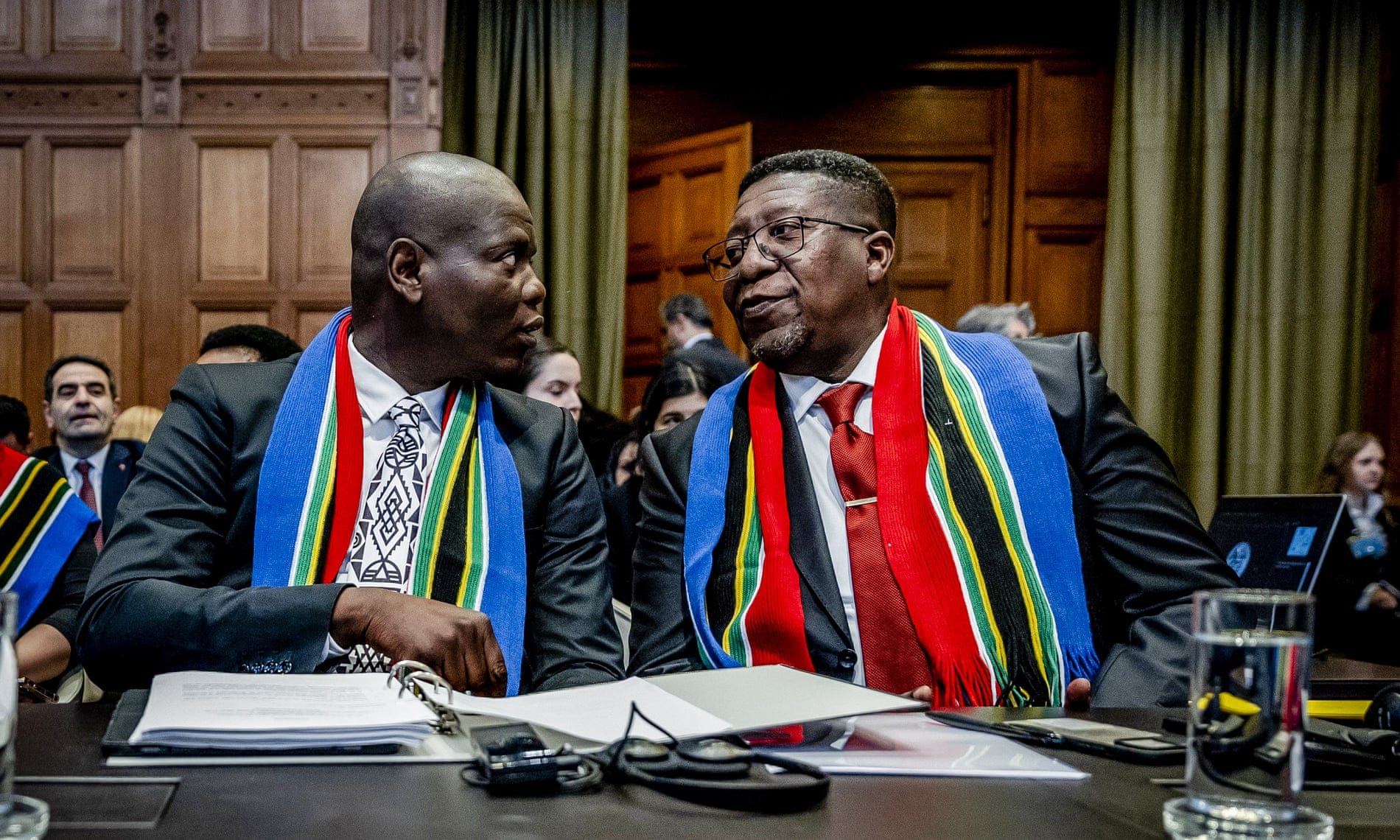
At The Hague, South Africa opened its case before the International Court of Justice, laying out, in the court’s own chamber, the charge that Israel was committing genocide in Gaza, ninety-six days and more than twenty-three thousand dead into the proof.
The Health Ministry reported that 112 Palestinians had been killed by Israeli forces in a day, the toll reaching 23,469. Nine more were killed in an evening Israeli strike on a home in the Shoka district of Rafah. And as Gaza’s dead were being counted, Antony Blinken was reportedly pressing Qatar to restrain the channel showing the bodies to the world.
“Turn down the volume,” Blinken said.
That was the American request: not stop the killing, not stop the bombing, not stop the starvation, but soften the broadcast of it.
January 12, 2024
The hundredth day approached with no slackening. The Health Ministry put the dead at 23,708, another 151 killed overnight. At the UN, the head of humanitarian affairs reported what his colleagues had found on reaching the north for the first time in weeks: bodies lying in the streets, displaced people showing the signs of starvation, stopping the aid trucks to claw at anything that might keep them alive. The same day the United States and Britain began bombing Yemen, striking more than a dozen locations, the genocide spreading outward along the sea lanes while the famine it had caused tightened inland.
January 13, 2024
135 killed. The toll reached 23,843.
In the West Bank an eighteen-year-old Palestinian was beaten to death by Israeli soldiers during a raid in Zeita, near Tulkarm, and an elderly woman was shot dead by an Israeli sniper in the north of Gaza.
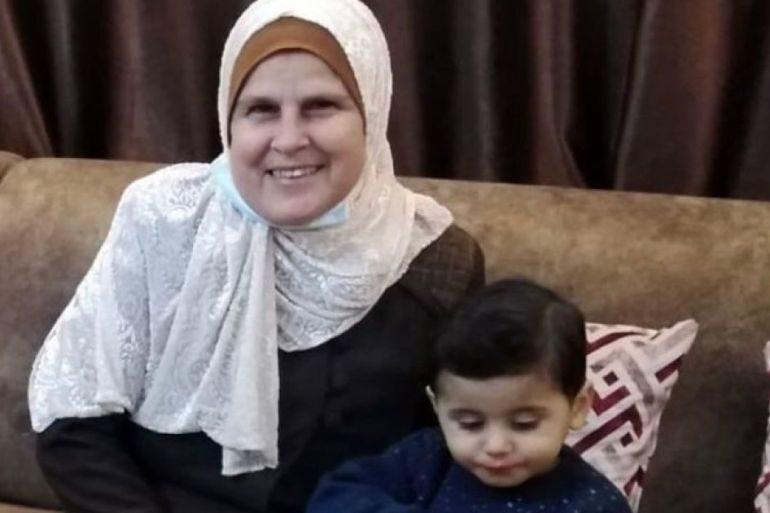
The dying had become so constant in both territories that a single day’s entry could hold a teenager beaten to death and a grandmother shot at distance, and neither would be the day’s headline.
January 14, 2024
On the hundredth day of the genocide, Netanyahu marked the occasion with open contempt for any court, law, or power that might restrain him.
“No one will stop us, not The Hague, not the axis of evil.”
— Benjamin Netanyahu, January 14, 2024.
He was speaking of the genocide case against Israel at the International Court of Justice, three days from its opening. That day an Israeli strike on a home in Rafah killed fourteen, among them a two-year-old girl, and Israeli forces opened fire on Palestinians trying to reach the small quantity of aid that had been let in. The toll passed 23,968.
January 15, 2024
The toll passed 24,000. At least thirty-three Palestinians were killed in morning Israeli strikes on homes in Khan Younis, twenty-two more in central Gaza. A video released by the Qassam Brigades showed two Israeli captives it reported had been killed in Israeli airstrikes, the captives Israel said it was fighting to recover dying under its own bombs. The WHO reported a rise in hepatitis A spreading through the displacement camps, the disease of crowding and filthy water beginning its own work.
January 16, 2024
UN experts set out the arithmetic of hunger: Gazans now made up 80 percent of all people facing famine or catastrophic hunger worldwide. Every person in Gaza was hungry. A quarter of the population was starving, struggling to find food and drinkable water. All 335,000 children under five were at high risk of severe malnutrition, a whole generation now threatened with stunting before it could even grow.
“What we’re witnessing in Gaza is an entire civilian population made to go hungry.”
— Michael Fakhri, Special Rapporteur on the right to food, January 16, 2024.
The Health Ministry reported that 350,000 patients with chronic illness had been cut off from their medicines. The toll reached 24,285.
January 17, 2024
The toll reached 24,448. Israel blew up Al-Israa University in Gaza City, the last of the Strip’s universities still standing, demolishing it after using it for weeks as a base, the third university destroyed in the war.
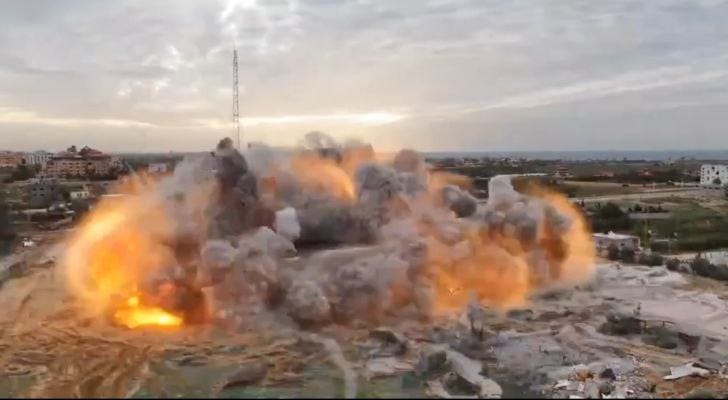
The erasure of Gaza’s institutions, its courts, its mosques, its universities, was proceeding alongside the killing of its people, as if the place itself was to be unmade.
January 18, 2024
The toll reached 24,620. Israeli forces reached the far south of Khan Younis. The Palestinian foreign ministry accused Israel of committing fifteen massacres in a single day, 172 Palestinians killed under the cover of a communications blackout. By then, even the accusation felt almost useless against the scale of what had already become ordinary: day after day, hundreds killed, the word massacre forced to chase a reality larger than language.
To the White House, Netanyahu stated plainly that he rejected any move toward a Palestinian state, the position made explicit while the army made it a fact on the ground.
January 19, 2024
The toll reached 24,762. An Israeli strike near the Shifa complex killed twelve in a residential building. Jordan said Israel had targeted its field hospital again, firing inside it on the staff. The Red Crescent reported Israeli fire wounding the displaced sheltering at the Amal hospital in Khan Younis, the hospital that would be besieged, stormed, and emptied over the weeks to come.
January 20, 2024
The toll reached 24,927. A seventeen-year-old Palestinian with American citizenship was shot dead by Israeli forces east of Ramallah; the United States said it was investigating. The airstrikes on Khan Younis concentrated around the Nasser medical complex and the Jordanian field hospital, the pattern of ringing the hospitals before storming them now familiar from the north, repeating in the south.
In Damascus, an airstrike killed five senior members of Iran’s security forces, including Revolutionary Guard figures, and Iran warned that the attack would “not remain unanswered.” Gaza remained the center of the genocide, but Israel’s rampage kept finding new borders.
January 21, 2024
The toll reached 25,105. In Tel Aviv, thousands of demonstrators demanded the captives’ release and an election to be rid of Netanyahu’s government.
Gaza was being destroyed just miles down the coast, but the demand remained framed around Israeli failure and Israeli repair. This was the limit of Israeli protest: grief for its own, anger at its leaders, and almost nothing for Gaza. A society could fill the streets and still leave the genocide itself outside the frame.
January 22, 2024
The toll reached 25,295. The Red Crescent reported at least fifty killed in western Khan Younis.
Another day, another number too large to absorb, and still somehow made ordinary by repetition.
January 23, 2024
The toll reached 25,490. Israel said it had encircled Khan Younis. Israeli artillery hit the Amal hospital and the Red Crescent headquarters there, killing one. Hamas called on the UN, the Red Cross, and the WHO to intervene at once and shoulder their responsibility to stop the Israeli attacks on Gaza’s hospitals, an appeal to institutions that issued statements and watched.
January 24, 2024
The toll reached 25,700, with 354 wounded in a day. At the Kerem Shalom crossing, a crowd of Israeli demonstrators gathered to block the aid trucks from entering Gaza, turning back the trickle of food at the border while the UN warned of famine inside. Israel shelled an UNRWA training center sheltering the displaced, killing at least nine and wounding at least seventy-five. Palestinians who fled the Nasser hospital were reported killed by Israeli tanks and drones.
January 25, 2024
The toll reached 25,900. The UN reported that twelve Palestinians were killed by Israeli tank fire on a UN shelter housing thousands of displaced civilians in Khan Younis; Israel denied responsibility and said it was investigating. At a roundabout in Gaza City, Israeli forces opened fire on a crowd gathered for aid, killing twenty and gravely wounding 150. Four children were killed when Israeli warplanes struck a residential area of the Nuseirat camp.
The shooting of the hungry as they waited for flour was becoming a category of death all its own.
January 26, 2024
The toll reached 26,083.
At The Hague, the International Court of Justice delivered its first ruling on South Africa’s genocide case: it ordered Israel to do everything in its power to prevent acts of genocide in Gaza, to prevent and punish incitement, and to allow humanitarian aid, finding the charge plausible enough to proceed.
It did not order Israel to stop the military operations. The court had named the danger as genocide and left the army that was accused of it to police itself.
January 27, 2024
The toll reached 26,257. Several Western states, led by the United States, announced they were suspending funding to UNRWA over Israeli allegations that a handful of its staff had taken part in the October 7 attack, the agency that fed and sheltered most of Gaza defunded on accusation in the middle of a famine. UNRWA’s chief, Philippe Lazzarini, warned that its aid to Palestinian refugees might have to stop. Around the Amal hospital, Israeli snipers were preventing anyone from leaving.
January 28, 2024
The toll reached 26,422. Thousands fleeing fighting in Khan Younis arrived in overcrowded Rafah, sleeping in the streets and in tent camps flooded with sewage. What appeared then as Rafah’s catastrophe would soon become Gaza’s condition: tents, displacement, sickness, and nowhere left to flee.
January 29, 2024
The toll reached 26,637.
Six-year-old Hind Rajab was trapped in a car in Gaza City after Israeli fire killed the relatives around her. For hours, she stayed on the phone with the Red Crescent, the last living voice inside a car full of the dead, begging to be rescued. An ambulance was sent for her after coordination with Israeli forces. Then contact was lost. Hind was left there, alive long enough to be heard by the world and alone long enough to be killed anyway. The medics trying to save her were killed too, the ambulance found destroyed beside her days later, as if even the rescue had been turned into part of the crime.
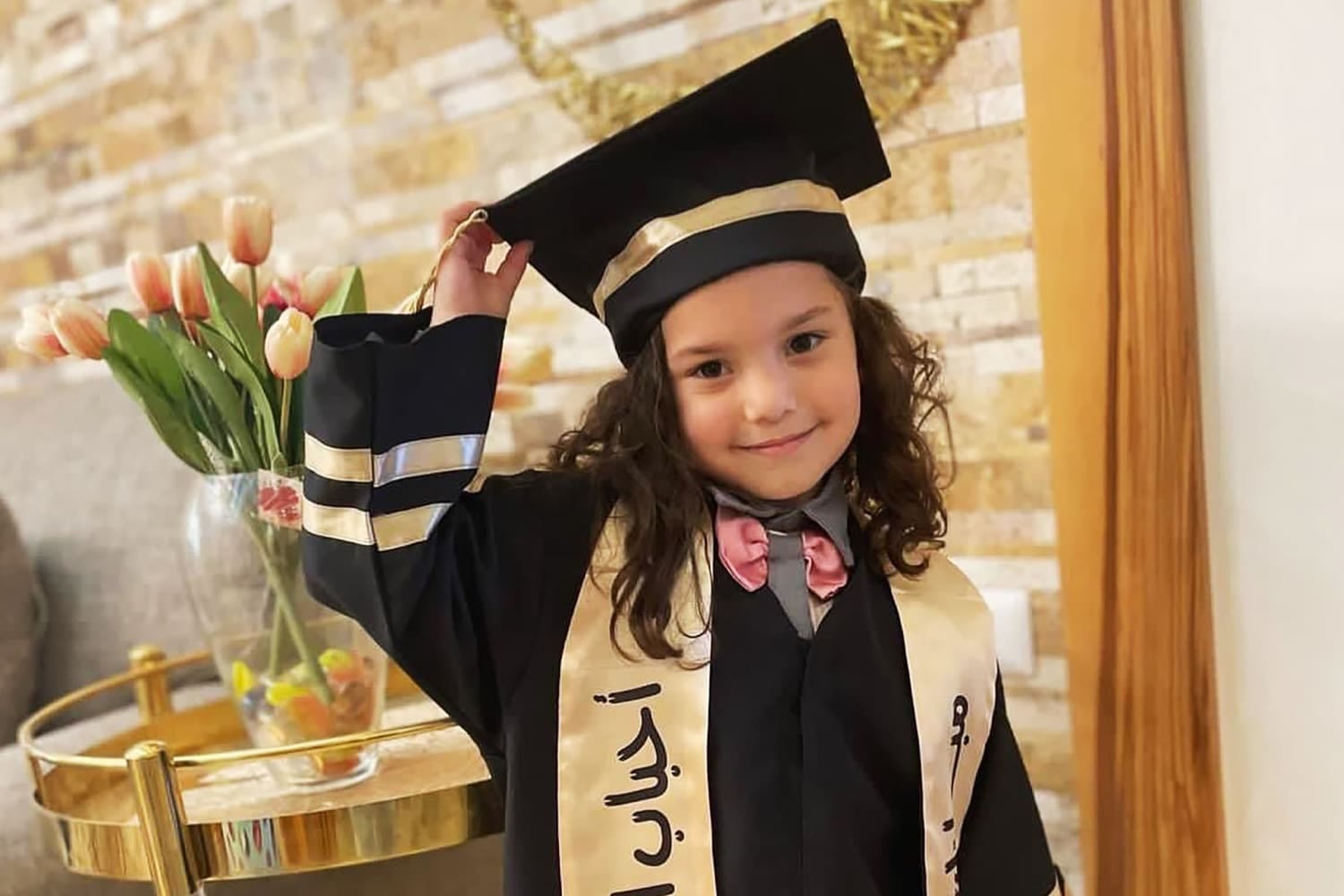
This was the gut wound of the genocide: a child calling from inside a grave Israel had made around her, and no one allowed to reach her before the silence came.
January 30, 2024
The toll reached 26,751, among them at least eleven thousand children.
Eleven thousand small bodies. Eleven thousand children who should have been asleep, hungry, laughing, annoying their parents, asking for things. Instead, they became one line in the day’s record.
January 31, 2024
The toll reached 26,900.
Palestinian officials accused Israel of more extrajudicial killings after a mass grave was found holding thirty bodies, shot dead while blindfolded and bound. Accusal was almost too small a word for bodies discovered already carrying the evidence: wrists tied, eyes covered, lives ended at close range.
The Amal hospital ran out of food and went entirely out of service, another of the south’s hospitals killed by Israeli siege. Two Palestinian children were wounded by armed settlers near Susiya, south of Hebron; the West Bank’s quieter, steadier violence ran underneath the headline of Gaza all month.
THE FAMINE
February 1, 2024
February opened at 27,019 killed. Dozens of bodies, torture victims, were found at a school in Beit Lahia. Israeli forces stormed the Amal hospital for the third time.
Biden signed an executive order sanctioning settlers attacking Palestinians in the occupied West Bank, a grotesque little performance from the man arming the genocide in Gaza. He punished the settlers at the edge of the crime while supplying the state carrying it out. The weapons kept flowing. Settlers blocked aid trucks from leaving the port of Ashdod.
February 2, 2024
The toll reached 27,131.
The United States carried out a wave of strikes across Iraq and Syria, hitting more than eighty-five locations and killing at least thirty-nine. The genocide in Gaza was now burning outward on a half-dozen fronts at once, dragging the whole region into its fire.
Inside Gaza, the daily killing went on at the same rate it had for four months, the three-digit count buried beneath the regional headlines.
February 3, 2024
The toll reached 27,238. The day’s entry held what had become the genocide’s ordinary furniture: nine cross-border exchanges with Lebanon, four drone-and-rocket attacks on American bases in Iraq and Syria, a raid in Jenin where two young Palestinians were beaten and hospitalized. The wider war was loud; Israel’s genocide on Gaza was the engine of it.
And still the killing of Palestinians remained the quiet center, continuous and bureaucratic, counted by the Health Ministry while everyone else learned to treat genocide as the background.
February 4, 2024
The toll reached 27,365. Two children were killed in an Israeli strike on a kindergarten in Rafah; at least ninety-two Palestinians were killed overnight in Israeli attacks on the city the displaced had been told was their refuge.
After 14 days of continuous siege, the Red Crescent reported the Amal hospital had exhausted its food, its fuel, and its medicines, with a severe shortage of the basic drugs for chronic disease, the slow strangulation of the south’s last hospitals proceeding by attrition.
February 5, 2024
The toll reached 27,478. A convoy of trucks waiting to bring food into Gaza came under Israeli fire, much of the cargo destroyed. The blocking and burning of aid, by soldiers at the crossings and settlers at the ports, was becoming as much a part of the famine as the siege itself.
February 6, 2024
The toll reached 27,585. The Israeli military spokesman said thirty-one more captives in Gaza had died, the people Israel said it was fighting to save dying in its own bombardment.
February 7, 2024
The toll reached 27,703. Israel rejected the three-stage ceasefire proposal Hamas had put forward. One day after receiving it, Netanyahu stood at a press conference and said war would continue until victory.
“Total victory.”
— Benjamin Netanyahu, February 7, 2024.
What was victory supposed to look like by then? Another thousand killed, another hospital emptied, another city turned into dust, another line of wounded people sealed behind a border.
The word had no military meaning left. It meant only that the killing, the genocide, had not yet satisfied Israel.
February 8, 2024
The toll reached 27,840. A medic was killed and two wounded when Israeli forces fired directly on them in the open ground between the Ahli Arab and Shifa hospitals as they tried to reach the wounded. A fourteen-year-old girl was shot dead by an Israeli sniper outside the besieged Nasser hospital.
The killing of medics and the killing of children outside hospitals had become the same daily sentence, repeated.
February 9, 2024
The toll reached 27,947. Israeli snipers killed at least twenty-one Palestinians near the Nasser hospital. UNRWA’s chief said Israel was blocking food from reaching 1.1 million people in Gaza, more than half the population deliberately cut off from food. Israeli forces stormed the Amal hospital again.
February 10, 2024
The toll reached 28,064. At least twenty-eight were killed in Israeli strikes on Rafah, the southernmost city, where more than a million displaced Palestinians were now crammed against the sealed Egyptian border with nowhere left to flee, and which Israel was now preparing to invade.
February 11, 2024
The toll reached 28,176. Netanyahu said Israel was preparing a detailed plan to move the people of Rafah north before the expected ground assault on the city, the language of evacuation laid over a population that had already been driven the length of the Strip. A senior Hamas figure warned that an Israeli ground attack on Rafah would end the captive negotiations. King Abdullah of Jordan’s plane dropped aid into Gaza from the air, the spectacle of food parachuted into a territory whose land crossings stood sealed by the army being asked to open them.
February 12, 2024
The toll reached 28,340. Israel said it had rescued two captives held in Rafah, and carried out waves of strikes across the city to cover the operation; local health officials reported sixty-seven Palestinians killed and dozens wounded, homes, hospitals, and three mosques shelled. Two Israelis brought out alive, sixty-seven Palestinians killed to make it possible. The operation was called a rescue. It was bloodlust with a military name: two of theirs brought out alive, sixty-seven Palestinians killed around them, and the dead treated as the cost of Israeli life.
The appeals court at The Hague ruled the Netherlands must block the export of F-35 fighter-jet parts to Israel, citing the risk they would be used to violate international law. Even this came with the dead already in the tens of thousands, as if the world still needed to litigate whether the machinery killing Gaza might be used unlawfully. Palestinians were being killed by the hundred, and Europe was still arguing over parts.
February 13, 2024
The toll reached 28,473. The US Senate approved a package providing Israel another fourteen billion dollars. Israeli snipers killed three Palestinians inside the Nasser hospital, and a ten-year-old girl died in its intensive-care unit after the power failed through the night.
Hassan Nasrallah said Hezbollah’s fire across the border would stop only when the Israeli assault on Gaza stopped, binding the northern front to the southern one.
February 14, 2024
The toll reached 28,576. Israel carried out its heaviest attack on Lebanon since the genocide began, killing fourteen, in reprisal for a strike on its northern command in Safed that killed an Israeli soldier.
The genocide was no longer contained to Gaza’s ruins; it was pushing outward through Lebanon, Syria, Iraq, Yemen, and the Red Sea, one front after another forced open by the state still being armed to continue.
February 15, 2024
The toll reached 28,663. Israeli forces raided the Nasser medical complex, the south’s largest functioning hospital, in what it called a limited operation, claiming credible evidence that captives were held there. The Health Ministry’s spokesman said one person was killed and others wounded. The siege and storming of Nasser, the southern echo of Shifa, had begun.
February 16, 2024
The toll reached 28,775. At least five patients died in the Nasser hospital after the power and the oxygen supply failed, the patients on ventilators dying as the machines went silent, exactly as the newborns of Shifa had died in November.
The Israeli method had a pattern now, surround the hospital, cut its power, let the most fragile patients die, then storm it.
February 17, 2024
The toll reached 28,858.
The International Court of Justice declined South Africa’s request for new measures specifically to halt the Rafah assault, saying instead that the dangerous situation there required Israel to abide by its January order to prevent genocide. Netanyahu vowed the Rafah operation would happen anyway, promising to move more than 1.4 million displaced Palestinians north to Khan Younis, where fighting was still raging.
Biden answered this with hope and expectation, the useless vocabulary of a president still arming the thing he claimed to fear: he hoped Israel “will not make any massive land invasion” of Rafah, and his “expectation” was that it would not happen.
February 18, 2024
The toll reached 28,985. The WHO’s chief said the Nasser hospital was no longer functioning after a week-long Israeli siege followed by the raid. Netanyahu pledged to invade Rafah “no matter what,” and rejected calls for early elections as thousands protested in Tel Aviv and Jerusalem demanding he step down.
Again, Israeli protests were against the man managing the genocide, not the genocide itself. Gaza’s south was being readied for an invasion the world’s highest court had all but told Israel not to launch, and the demand in Israel was still for a different leader to inherit the same crime.
February 19, 2024
The toll reached 29,092.
At The Hague, in hearings requested by the General Assembly on the legality of Israel’s fifty-seven-year occupation, the Palestinian foreign minister named the older crimes: colonialism and apartheid. The headlines still wrote accused. Accused, while Gaza was being starved, bombed, buried, and emptied in real time; accused, as if apartheid and colonialism were not already the lesser words beside genocide.
How tiring…
February 20, 2024
The toll reached 29,195.
There was nothing new to say. Another hundred Palestinians, and still the line stayed this short.
February 21, 2024
The toll reached 29,313. Médecins Sans Frontières said an Israeli tank had fired on a house in Al-Mawasi sheltering MSF colleagues and their families, killing two family members and wounding six others, five of them women or children. Bullets also hit the clearly marked MSF building, and ambulance crews were delayed for more than two hours by shelling in the area.
“The amount of force being used in densely populated urban environments is staggering, and targeting a building knowing it is full of humanitarian workers and their families is unconscionable.”
— Meinie Nicolai, MSF General Director
The doctors at Shifa said conditions were worsening day by day.
February 22, 2024
The toll reached 29,410. Local authorities said Israeli shelling of homes in central Gaza killed at least forty, with Palestinian civil defense workers searching through the rubble of collapsed buildings for bodies that remain trapped underneath. The count climbed by roughly a hundred a day now, the killing settled into a rhythm so steady the numbers had begun to blur, which is its own kind of horror.
February 23, 2024
The toll reached 29,514. Netanyahu set out his plan for “postwar” Gaza: Israel would operate militarily there indefinitely, and UNRWA would be shut down. UNRWA itself said it could no longer deliver services in the north. The Health Ministry reported 350,000 chronically ill patients, 60,000 pregnant women, and 700,000 children faced grave health complications from malnutrition, dehydration, and the collapse of care. The famine was no longer a warning; it was a diagnosis.
February 24, 2024
The toll reached 29,606. The daily entries had thinned to the essential arithmetic, ninety-two killed, the count advanced, a soldier named, a child in Rafah. The genocide had been grinding for nearly five months, and the world’s attention had moved to the sea lanes and the northern border, while in Gaza the hundred-a-day kept on.
February 25, 2024
The toll reached 29,692.
In Washington, an active-duty US airman, Aaron Bushnell, set himself on fire outside the Israeli embassy in protest of the genocide in Gaza, and died of his injuries. He had said he would no longer be complicit. His death forced Gaza back onto front pages that had drifted from it, a single act of unbearable witness from inside the country arming it.
“My name is Aaron Bushnell, and I am an active duty member of the United States Air Force. I will no longer be complicit in genocide. I’m about to engage in an extreme act of protest but, compared to what people have been experiencing in Palestine at the hands of their colonizers, it’s not extreme at all. This is what our ruling class has decided will be normal.”
— Aaron Bushnell’s final message
I wrote about him separately because his death asks for more than a day’s entry can hold.

February 26, 2024
The toll reached 29,782. The Palestinian prime minister, Mohammad Shtayyeh, announced his government’s resignation, citing the new reality the genocide had created. Israel struck the Lebanese city of Baalbek for the first time in the war, killing two, the genocide widening again.
February 27, 2024
The toll reached 29,878.
The toll of genocide stood now within a few days of thirty thousand, as if the round number would reveal something the twenty-eight thousand before it had not. What was the difference anymore? One hundred twenty-two lives between a number the world could still skim past and a number it would briefly pretend to find unthinkable.
February 28, 2024
The toll reached 29,954. Forty-six lives short of thirty thousand, as if anyone could still pretend the threshold mattered.
Six Palestinian children died of malnutrition in Gaza, after weeks of warnings that thousands might starve under the Israeli siege. The killing was no longer only coming from the sky. It was arriving through empty stomachs, through closed crossings, through the slow failure of a child’s body when food is kept out on purpose.
February 29, 2024
The toll reached 30,035. The round number arrived, and almost immediately became insufficient. South of Gaza City, near Rashid Street, Israeli soldiers opened fire on a vast crowd of starving people gathered around aid trucks; at least 118 Palestinians were killed and 760 wounded. It would be called the Flour Massacre.
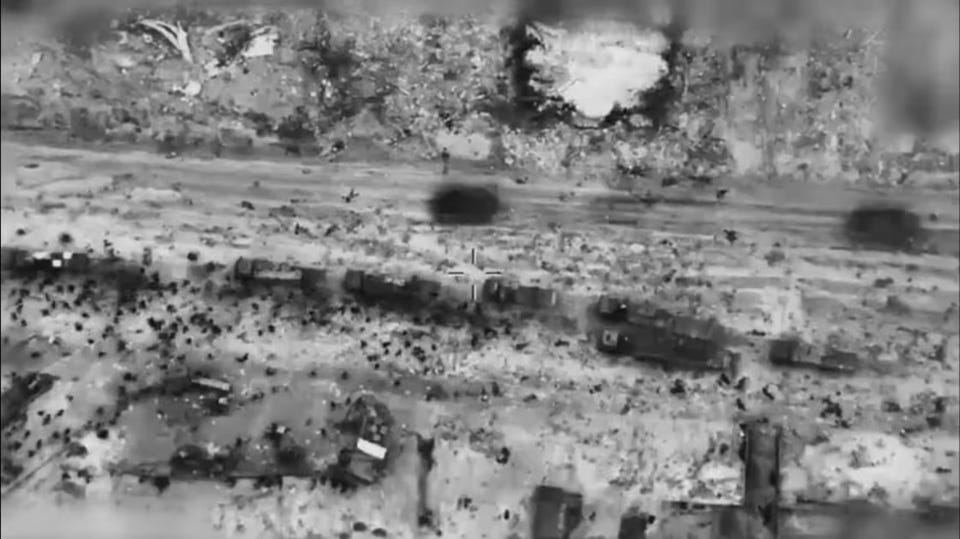
Israel admitted its troops had fired, claiming the crowd had endangered them and that most of the dead were crushed in the panic. Palestinian eyewitnesses and the official news agency said Israeli tanks fired machine guns into thousands of people. But the essential fact did not depend on Israel’s grammar of denial: a population starved by siege was drawn toward trucks carrying flour, and as people reached for food, they were fired on.
Thirty thousand had been crossed, and even hunger had become a place where Israel could kill.
THIRTY THOUSAND
March 1, 2024
March opened past thirty thousand dead, 30,228 by the Health Ministry’s count, 193 killed in the day after the massacre at the trucks. The genocide entered its sixth month with the round, terrible number behind it and no sign that the number meant anything to those prosecuting it.
March 2, 2024
The toll reached 30,320. Fifteen were killed in an Israeli strike on a home in Deir al-Balah, eleven more in a strike on a tent sheltering the displaced near the Tal al-Sultan hospital in Rafah.
The United States carried out its first airdrop of aid into Gaza, parachuting thirty-eight thousand meals, the spectacle of the genocide’s chief arms supplier dropping food from the sky onto the famine its weapons enforced.
March 3, 2024
The toll reached 30,410. At least eight Palestinians were killed when Israeli forces shelled an aid truck in Deir al-Balah, and fourteen in a strike on Rafah, most of them children. The aid itself had become a place of death, struck in the trucks, fired on in the queues, dropped from planes onto the heads of those it was meant to feed.
March 4, 2024
The toll reached 30,534. The Health Ministry reported that it had detected about one million cases of infectious disease, describing the medical situation as “extremely catastrophic.” The number of children killed by malnutrition and inadequate medical care had risen to sixteen. The siege and genocide had turned hunger, infection, and the absence of treatment into their own machinery of death.
March 5, 2024
The toll reached 30,631. Israeli forces shelled a mosque sheltering civilians in Deir al-Balah, killing a woman and wounding twenty, and fired on Palestinians seeking aid from a supply convoy entering Gaza City. The pattern held without variation: shelters, mosques, schools, and aid lines, the places the displaced gathered for safety or for food, were the places the fire found.
March 6, 2024
The toll reached 30,717. The WHO said eight thousand wounded Palestinians in Gaza needed treatment they could only receive outside it, held behind a border that would not open for them. Each week the number of those who needed evacuation grew, and each week the crossings stayed effectively sealed, so the wounded waited, and some of them became the dead.
March 7, 2024
The toll reached 30,800. Israel’s settlement planning authority approved permits for 3,500 new illegal settlement units in the occupied West Bank, the colonization advancing on one territory while the army razed the other. Five were killed in an Israeli shelling of a mosque in Jabalia.
March 8, 2024
The toll reached 30,878. Five Palestinians in Rafah were killed when aid parcels dropped by air crushed them; two more in Gaza City died from defective airdrops. A father and his son were found killed by Israeli forces and left in the street at the Farhana school in Khan Younis. The airdrops, the world’s answer to a famine it would not stop by opening the roads, were now themselves killing the people they fell on.
March 9, 2024
The toll reached 30,960. In Tel Aviv a march in support of Netanyahu called for Gaza to be burned to the ground. The WHO delivered emergency supplies to the Ahli hospital, running at thirty percent on solar power, and its chief set out the tally of the genocide on Gaza’s health system.
“Almost 31,000 people have lost their lives, more than 72,000+ have been injured, thousands are missing. 406 attacks on health care. 1 in 3 hospitals is only partially or minimally functional.”
“When is enough?”
— Tedros Adhanom Ghebreyesus, March 8, 2024.
March 10, 2024
The toll reached 31,045 as Ramadan began under fire. Fifteen were killed in Israeli shelling of the Nuseirat camp and the Mawasi area; thirteen displaced Palestinians who had fled to Khan Younis were killed when their tents were shelled by Israeli forces. Two Palestinians, one of them an infant, died of malnutrition in the north. In the Mawasi “humanitarian zone,” Israeli forces carried out a massacre of the Abd al-Ghafour family and even their animals. Lambs lay dead on the ground, and a small baby lamb sat beside her mother’s body, too young to understand what had been taken from her. The holy month opened with Palestinians killed in tents, infants dying of hunger, and even animals left in the dirt.
The holy month opened as every month had.
March 11, 2024
The toll reached 31,112. Mohammed Barakat, a player for the Palestinian national football team, was killed in an Israeli strike in Khan Younis.
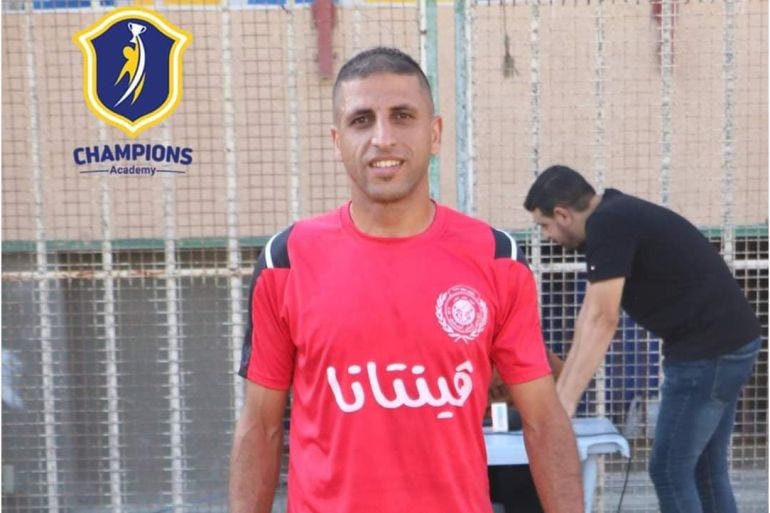
Israeli forces barred hundreds of worshippers from al-Aqsa Mosque for the first Friday prayers of Ramadan. The Health Ministry reported two thousand of its medical staff in the north were themselves facing famine, the doctors starving alongside their patients.
March 12, 2024
The toll reached 31,184. Israeli forces attacked Palestinians waiting for aid trucks at the Kuwait roundabout south of Gaza City, killing seven. The roundabouts where the hungry gathered, Rashid Street, the Kuwait roundabout, the Nabulsi roundabout, were becoming named sites of recurring massacre.
March 13, 2024
The toll reached 31,272. An Israeli attack on a UN aid distribution center in Rafah killed five, among them a UN staff member, and wounded twenty-two. The institutions meant to be inviolable, the UN’s shelters and centers and convoys, were struck so regularly that the strikes had stopped being treated as violations and started being treated as weather.
March 14, 2024
The toll reached 31,341. An Israeli attack on aid-seekers in Gaza City killed twenty and wounded 155. The shooting of the hungry continued at a scale that, in any other war, each instance would have been a scandal; here they accumulated, day on day, into a method.
March 15, 2024
The toll reached 31,490. The aid ship Open Arms reached the Gaza coast with two hundred tons of food from Cyprus, one vessel against a famine of millions, the sea route opened because the land routes were kept shut. What a sick little theater. Israeli strikes killed at least twenty-nine Palestinians waiting for aid in two separate attacks. Hamas put forward a new proposal to end the genocide.
March 16, 2024
The toll reached 31,553. At least thirty-six Palestinians were killed in an Israeli night strike on a residential building in the Nuseirat camp.
The Red Cross said health care in Gaza was on the edge of collapse and its hospitals were facing desperate conditions. Jagan Chapagain, head of the International Federation of Red Cross and Red Crescent Societies, said civilians in Gaza were facing:
“an unprecedented level of indignity, misery and suffering.”
Netanyahu dismissed Hamas’s latest ceasefire proposal as “ridiculous,” though an Israeli delegation was still expected in Qatar for talks. Genocide continued, hospitals collapsed, families were pulled from buildings, and Netanyahu’s word for stopping it was “ridiculous.”
March 17, 2024
The toll reached 31,645. At least twelve were killed in Israeli attacks on Deir al-Balah. A short entry on a day that, by the standards of this genocide, was quiet, which is to say only a dozen people were torn out of the world.
March 18, 2024
The toll reached 31,726. Israeli forces raided the Shifa complex again, the hospital they had stormed in November and declared cleared, now said to have been re-entered by Hamas. The Israeli army said twenty Palestinians were killed and dozens detained. Shifa, the largest hospital in Gaza, was being destroyed a second time, and would be left, after this raid, a burned-out ruin.
March 19, 2024
The toll reached 31,819. Israeli airstrikes hit aid distribution workers near Gaza City’s Kuwait Roundabout, killing at least twenty-three people. At least fifteen more Palestinians were killed when Israel bombed a house in Nuseirat refugee camp. At al-Shifa Hospital, Israel said at least fifty Palestinians had been killed and three hundred detained in its raid, the hospital again turned into a battlefield and a prison.
March 20, 2024
The toll reached 31,923. Israel said it had killed ninety Palestinians and detained 160 more as its raid on al-Shifa hospital continued. The complex that had once been the beating heart of Gaza’s medicine was now being converted into something else entirely: a killing ground, a detention site, and another stage for Israel to recast the destruction of a hospital as an operation.
March 21, 2024
The toll reached 31,988. The United States, which had vetoed ceasefire after ceasefire, put forward its own Security Council draft calling for an immediate ceasefire tied to the release of captives. It was a shift in wording from the country still arming the genocide, and the wording did not stop anything. Israel said it had killed fifty more at Shifa, raising its claimed total there to 140.
March 22, 2024
The toll reached 32,070. The far-right finance minister, Bezalel Smotrich, announced Israel had seized eight hundred hectares of the occupied West Bank as “state land,” the largest such appropriation in decades, the land grab proceeding in broad daylight. Russia and China vetoed the US ceasefire draft at the Security Council, faulting it for not calling clearly for a ceasefire and for implying any ceasefire was conditional on the captives’ prior release.
March 23, 2024
The toll reached 32,142. At least five patients died at Shifa for lack of medical supplies as the Israeli siege around the complex went on. Another nineteen Palestinians were killed when Israeli forces fired on a crowd waiting for aid trucks in the Zeitoun neighborhood, another massacre at another aid line.
March 24, 2024
The toll reached 32,226. Israeli tanks besieged the area around the Amal and Nasser hospitals. The siege of the south’s hospitals, like the north’s before them, was being conducted with a patience that made the outcome certain.
March 25, 2024
The toll reached 32,333. At the Security Council, an Algerian-sponsored resolution demanding a ceasefire in Gaza for the month of Ramadan finally passed, fourteen in favor, the United States abstaining rather than vetoing for the first time. Israel ignored it, and the genocide did not pause. The resolution the world had reached for since October arrived, was passed, and changed nothing on the ground.
March 26, 2024
The toll reached 32,414. Israeli forces had now besieged three hospitals at once, Shifa, Amal, and Nasser. The Royal Air Force dropped more than ten tons of food into Gaza, another nation parachuting meals over a sealed territory. The methods of the genocide had become fixed: hospitals besieged on the ground, food dropped from the sky, and the count climbing by the day.
March 27, 2024
The toll reached 32,490. Two Palestinians were killed and nine wounded in a drone strike on the Jenin camp in the West Bank, where Israeli raids were intensifying in parallel with Gaza. Spanish aircraft dropped aid, and Spain called on Israel to open the land crossings to prevent famine, the same plea every aid-dropping nation made and Israel refused.
March 28, 2024
The toll reached 32,552. Israel raised its claimed count of those killed at Shifa to around two hundred. Israeli soldiers shot two Palestinian men walking along the Gaza coast and then buried them with a bulldozer, one of many such killings that would surface later when the graves were opened.
March 29, 2024
The toll reached 32,623. Israel barred Palestinian Christians from the Old City of Jerusalem during Easter. In Gaza City, at least fifteen Palestinians were killed in an Israeli strike on a sports centre. In Jabalia refugee camp, Israel bombed Saad bin Abi Waqqas Mosque, wounding worshippers. Recreation and worship, the field and the mosque, the body and the soul: even the places Palestinians went to breathe were not spared.
March 30, 2024
The toll reached 32,705, on the anniversary of Land Day. The United States authorized the transfer of $2.5 billion in weapons and warplanes to Israel. The arms kept arriving as the count kept climbing, the two curves rising together.
March 31, 2024
The toll reached 32,782 as March ended. At least four people were killed and eighteen wounded in a strike on the courtyard of the al-Aqsa Martyrs Hospital. The month closed as it had opened, with the hungry and the wounded gathered at the places of supposed refuge, and Israeli fire finding them there.
THE GRAVES ARE OPENED
April 1, 2024
April opened with 32,845 killed. The Israeli army withdrew from the Shifa complex after a two-week raid, and what the army left behind was a gutted ruin, its wards burned, bodies in the courtyards. The same day, an Israeli strike on a clearly marked World Central Kitchen convoy in Deir al-Balah killed seven aid workers, from Australia, Britain, Poland, the United States and Canada, and their Palestinian driver.
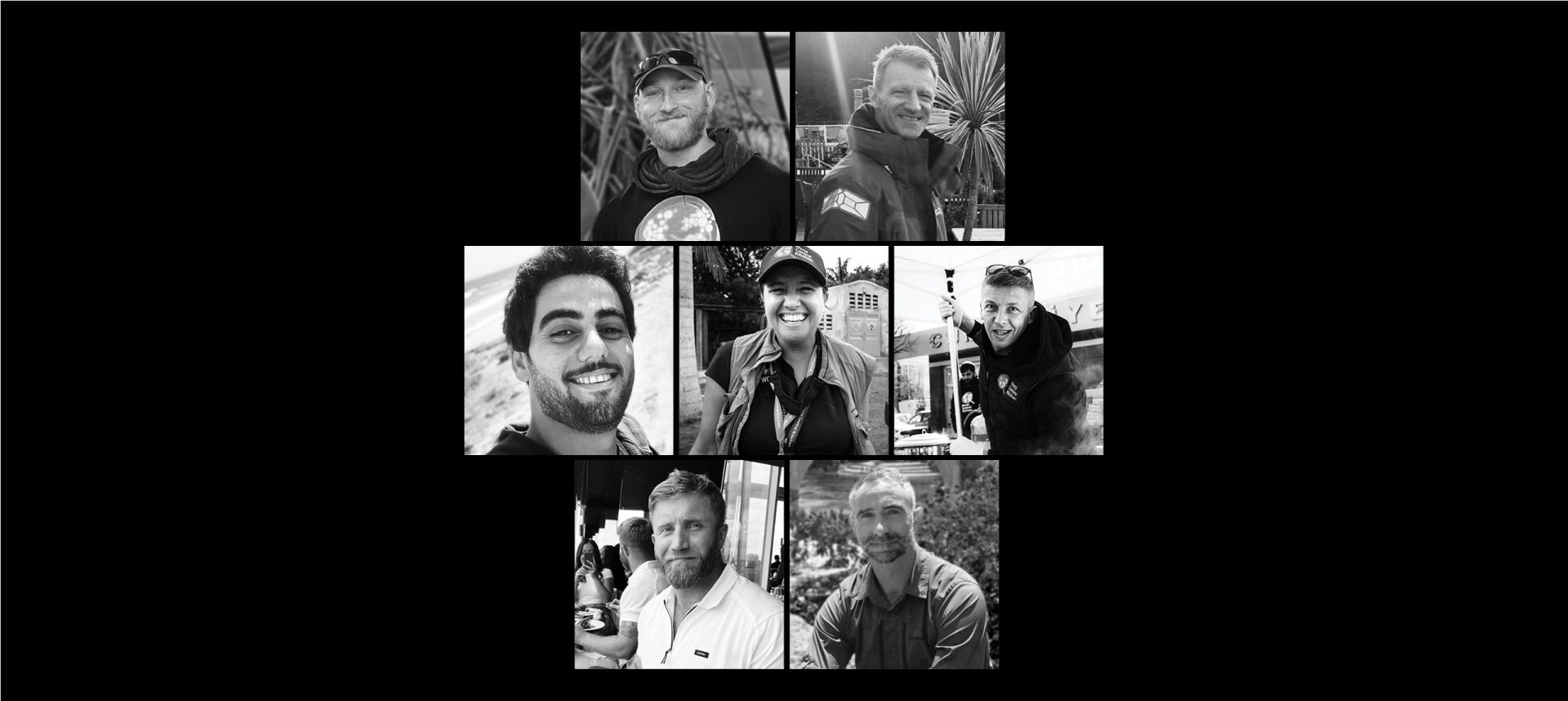
The killing of foreign aid workers drew the outrage that thousands of Palestinian aid-seekers had not, and forced, briefly, a reckoning the Palestinian dead had never compelled.
April 2, 2024
The toll reached 32,916. A short entry, but the count itself was the day’s event: another seventy-one Palestinians gone in the time it takes to read a page, on a date the world remembered mainly for the seven foreigners killed the day before.
April 3, 2024
The toll reached 32,975. The rampage went on at its established rate while the diplomacy convulsed over the World Central Kitchen killings, the disproportion, in the world’s attention, between seven foreign aid workers and thousands of Palestinians starkly visible in a single day’s record.
April 4, 2024
The toll reached 33,037. At least eight Palestinians were killed in shelling of homes in Rafah, the city still packed with the displaced and still, six weeks after the invasion was first announced, awaiting it.
The numbers had a terrible monotony now, fifty here, eighty there, each a building brought down on the people inside.
April 5, 2024
The toll reached 33,091. Under pressure after the World Central Kitchen strike, Israel agreed to open the Erez crossing and the port of Ashdod to let more aid into Gaza, concessions extracted by the deaths of foreigners that the deaths of Palestinians had not.
May the workers be honored; they died trying to feed the people Gaza was being starved into losing. But God, what are we supposed to do with the fact that the gates opened only after their blood was added to ours? Palestinian blood had been treated as permitted, ordinary, expected. Six months of it did not move the world. Then the world showed, in a single day, that it had known where the doors were all along.
April 6, 2024
The toll reached 33,137, six months to the day, with no end in view.
April 7, 2024
The toll reached 33,175. Israeli forces withdrew from the western neighborhoods of Khan Younis, leaving a single brigade in all of Gaza, a drawdown that was not an ending but a repositioning for Rafah later. As the troops pulled back from Khan Younis, the scale of what they left behind began to emerge from the rubble.
April 8, 2024
The toll reached 33,207. After the Israeli withdrawal, Palestinian medics recovered at least eighty-four bodies from beneath the rubble of destroyed buildings in Khan Younis. The withdrawals, throughout the spring, became the moments the true toll surfaced, the buried uncovered, the graves found, the count of the missing turning slowly into a count of the dead.
Netanyahu said a date had been set for the ground offensive in Rafah, where about 1.4 million displaced Palestinians were sheltering. The next city was being named before the last one had even finished being counted.
April 9, 2024
The toll reached 33,360. On the day before Eid, an Israeli airstrike killed at least fourteen Palestinians, including four children. Four children who should have been waiting for sweets and new clothes never reached the holiday.
April 10, 2024
The toll reached 33,482. It was the first day of Eid al-Fitr.
Ismail Haniyeh received the news that three of his sons and four of his grandchildren had been killed in an Israeli strike near Shati camp. The day Palestinians should have spent visiting family, kissing children, and passing sweets from hand to hand became, for him, a day of burial.
Eid arrived, and his family was carried to the grave.
April 11, 2024
The toll reached 33,545. An Israeli strike on a home in Gaza City killed sixteen. The daily entries had the quality of a metronome now, the count, a strike, a family, the count again, the rhythm of a catastrophe that had outlasted the world’s capacity to be shocked by it.
April 12, 2024
The toll reached 33,634. In the West Bank, hundreds of armed Israeli settlers stormed the village of al-Mughayyir near Ramallah, killing one Palestinian man and wounding at least twenty-five, burning homes, the settler violence escalating into pogrom under cover of the war.
April 13, 2024
The toll reached 33,686. A regional war broke into the open: Iran launched scores of drones and missiles at Israel, in retaliation for the Israeli strike on its consulate in Damascus on April 1, the first direct Iranian attack on Israeli soil. For a day the world’s eyes turned wholly to the exchange of fire between states, and the killing in Gaza, which did not pause, vanished from the front pages it had already been slipping from.
April 14, 2024
The toll reached 33,729. Israel’s planned ground assault on Rafah was pushed back as the cabinet weighed its response to Iran. The lives of Rafah’s million displaced people were, for a few days, suspended on the calculus of a wider war, the city’s invasion deferred not out of mercy but distraction.
April 15, 2024
The toll reached 33,797. The Health Ministry and Palestinian civil defense uncovered two mass graves, one at the Shifa hospital, one in Beit Lahia, the first of the graves that would, through the spring, give up their hundreds of dead.
April 16, 2024
The toll reached 33,843. An Israeli strike in Gaza City killed seven Palestinian law-enforcement officers and two passers-by; Israeli attacks on homes in Rafah, al-Maghazi, and Gaza City killed more than twenty. The killing of the police, the last thread of civil order, accelerated the collapse into lawlessness and hunger that the siege had set in motion.
April 17, 2024
The toll reached 33,899. Israeli strikes hit a playground and a crowded market in the al-Maghazi camp, the places of ordinary life, a market, a playground, struck as deliberately as the military ones.
April 18, 2024
The toll reached 33,970. The United States vetoed a Security Council resolution that would have granted Palestine full UN membership, twelve nations in favor, two abstaining, the lone American veto blocking statehood at the same hour it armed the genocide against it.
As if statehood was what the world needed in order to see Palestinian life clearly. As if a flag at the UN would have taught them that the blood being spilled in Gaza was human. It was all theater, staged while the killing was still underway.
April 19, 2024
The toll reached 34,012. Israel launched drones at Iran’s Isfahan province, another strike in a region already being dragged outward by the genocide in Gaza.
Barbados formally recognized the State of Palestine, one of a growing line of nations moving to recognition as the death toll climbed. But recognition had become its own ugly theater: states naming Palestine while Palestinians were being erased, as if the world needed another flag, another vote, another ceremony to understand that a people were being slaughtered in front of it.
April 20, 2024
The toll reached 34,049. The US House of Representatives passed a package giving Israel seventeen billion dollars in military aid, and Gaza around two billion in humanitarian aid, the same bill arming the bombardment and funding the bandages. Israeli strikes on Rafah killed at least ten, most of them women and children.
April 21, 2024
The toll reached 34,097.
Gaza’s emergency services uncovered a mass grave at the Nasser medical complex in Khan Younis and recovered at least 300 bodies over the days that followed, some showing signs of execution and torture, some with their hands bound. The graves at Shifa and Nasser, the two hospitals Israel had besieged and stormed, were giving up the dead in their hundreds, and the manner of their dying.
April 22, 2024
The toll reached 34,151. The head of Israeli military intelligence, Aharon Haliva, announced he would resign, taking responsibility for the failures that led to October 7, the first senior Israeli official to fall, for the intelligence failure, never for the genocide that followed.
April 23, 2024
The toll reached 34,183. Jamaica formally recognized the State of Palestine. The recognitions accumulated through the spring, each a small diplomatic weight set against a genocide that the weightier powers kept arming, the gap between the world’s words and the world’s weapons widening by the week.
April 24, 2024
The toll reached 34,262. The director of the Kuwaiti hospital in Rafah described what was arriving at his doors:
“Rafah governorate has become a continuous target of [the Israeli army]. The Israeli occupation uses internationally prohibited weapons, and the type of injuries we receive is unprecedented, such as amputation of limbs and laceration of the body.”
— Dr Suhaib al-Hams, the director of the Kuwaiti hospital, Rafah, April 24, 2024.
April 25, 2024
The toll reached 34,305. Officials in Gaza reported more than 300 bodies recovered from the mass graves at Shifa and Nasser, some bearing signs of torture and execution. Israel announced the withdrawal of the Nahal brigade from Gaza, another repositioning that uncovered another field of the dead.
April 26, 2024
The toll reached 34,356. The numbers were lower now than in the winter, fifty a day rather than two hundred, but the reduction in rampage was not mercy; it was that the north was already emptied and flattened, and the army was regrouping for Rafah. The quiet was the quiet before the last invasion.
April 27, 2024
The toll reached 34,388. Gaza’s only Catholic priest, Gabriel Romanelli, said at least thirty-three Palestinian Christians had been killed by Israeli forces since the genocide began, three percent of the Gaza’s small Christian population, a community as old as Christianity itself being extinguished along with everything else.
April 28, 2024
The toll reached 34,454.
Some days, the record held almost nothing else. Just the number. Just another rise in the count.
April 29, 2024
The toll reached 34,488. At least forty Palestinians were killed in Israeli strikes on Rafah, four in strikes on Gaza City. Rafah, still awaiting the full invasion, was being bombed steadily in the meantime, the city’s reprieve measured in the lower daily count of its dead.
April 30, 2024
The toll reached 34,535 as April ended.
Palestinian civil defense said more than ten thousand bodies remained buried under the rubble across Gaza, the missing whose decomposition was now spreading disease through the ruins. The visible toll of nearly thirty-five thousand sat atop an invisible one of ten thousand more, the true number unknowable beneath the concrete.
May 1, 2024
May opened with 34,568 killed. Aid convoys bound for Gaza were attacked by Israeli settlers, the food blocked not only by the army at the crossings but by settlers on the roads. A man was shot dead by Israeli forces on Rashid Street near the Wadi Gaza checkpoint.
May 2, 2024
The toll reached 34,596. Turkey suspended all trade with Israel over the humanitarian tragedy in Gaza, and Colombia’s president announced he was severing diplomatic relations entirely, the sharpest state responses yet. Trinidad and Tobago recognized the State of Palestine. The diplomatic costs mounted, even as genocide approached its Rafah climax.
May 3, 2024
The toll reached 34,622. In the West Bank, Israeli forces recovered a man’s body from the rubble of a home they had demolished in Deir al-Ghusun, having blocked ambulances from reaching him for eight hours. Northern Gaza was now experiencing “full-blown famine”, the head of the UN World Food Programme said, as Israel continued to restrict the flow of humanitarian aid.
May 4, 2024
The toll reached 34,654. Five Palestinians were killed by Israeli forces in a raid on a home in Deir al-Ghusun near Tulkarm, bringing the toll there to six since the 3rd.
The West Bank’s slower killing, a man here, five there, ambulances blocked, homes demolished, continued beneath the larger catastrophe in Gaza all spring.
May 5, 2024
The toll reached 34,683. A Hamas rocket attack from Rafah on the Kerem Shalom crossing killed four Israeli soldiers and wounded ten; in response Israel closed the crossing, shutting the main aid artery in the name of the soldiers killed at it.
The Israeli cabinet voted to shut down Al Jazeera in Israel and the occupied territories, and police raided its offices, the silencing of the genocide’s most persistent witness.
RAFAH INVASION
May 6, 2024
The toll reached 34,735. Overnight Israeli shelling killed twenty-two people in Rafah, eight of them children.
And Israeli planes dropped leaflets over the eastern parts of Rafah, ordering the residents of the Brazil camp, the Shaboura neighborhood, and al-Zuhour to move to Mawasi, claiming the displacement would be temporary. The leaflets were the opening move of the Rafah invasion the world had spent three months being told was coming. The last refuge was about to become the last killing zone.
May 7, 2024
The toll reached 34,789. Israeli ground forces seized the Gaza side of the Rafah crossing and rolled into the city, beginning the Rafah offensive the world had spent three months being warned against. The last crossing through which aid and the wounded had moved was now under the tanks. The leaflets of the day before had become an invasion, and the million people sheltering in Rafah, most of them already displaced two or three times, were ordered to move once more, into a “humanitarian zone” that was a stretch of sand.
May 8, 2024
The toll reached 34,844. The United States paused one shipment of weapons to Israel as Rafah came under threat, the first time in the genocide that Washington had held back a delivery. A small hesitation by the country that had armed it for seven months. The bombs already delivered kept falling. Inside Rafah, the displacement gathered pace.
May 9, 2024
The toll reached 34,904. Strikes hit homes in the al-Jnaina and Tel al-Sultan neighborhoods of Rafah, killing and wounding families in the districts people had just been told to flee. Around 80,000 Palestinians tried to escape Rafah as Israel shelled the city’s east, forcing movement through a place already sheltering nearly 1.5 million Palestinians.
Near the Shifa hospital, a seventh mass grave was uncovered, the dead of the hospital’s siege still being counted out of the ground months later. The graves and the new killing ran on at once, the past and the present of the same campaign of genocide.
May 10, 2024
The toll reached 34,943. An Israeli strike on a home in Abasan al-Kabira, east of Khan Younis, killed eight members of the Qdeih family living there.
The pattern of the spring held: a home, a family, a number, the same sentence rewritten each day with different names.
May 11, 2024
The toll reached 34,971. The army told the Palestinians of Jabalia and Beit Lahia in the north to evacuate to western Gaza City, and issued fresh evacuation orders in Rafah in the south, the population squeezed from both ends toward a shrinking middle.
May 12, 2024
The toll reached 35,034. At least 78,755 Palestinians had been wounded.
In the previous twenty-four hours alone, Israeli attacks killed sixty-three Palestinians and wounded 114 more. Many were still under the rubble or lying on roads rescuers could not reach. By then, Israel had killed 493 health workers, arrested 310, and left dozens missing.
Thirty-three hospitals and fifty-five health centers had been forced out of service. One hundred thirty ambulances had been targeted. Every hospital in northern Gaza was now out of service. This was not only the killing of the wounded. It was the killing of everything that might have saved them.
May 13, 2024
The toll reached 35,091. An Indian UN security staff member was killed when his vehicle was hit by Israeli fire near Rafah, the first UN international staffer killed in the war. At the Tarqumiyah checkpoint in the West Bank, Israeli activists attacked an aid convoy bound for Gaza, setting the vehicles ablaze and throwing the food onto the road, the now-familiar spectacle of Israelis burning the aid meant for a starving Palestinians while their army held the gates.
May 14, 2024
The toll reached 35,173. Netanyahu offered his own accounting of the slain, saying they included fourteen thousand fighters and “probably almost sixteen thousand civilians,” a sentence that conceded, in its own arithmetic, that most of the dead were civilians, and offered the figure as if it settled rather than damned.
Israeli strikes in central Gaza killed forty.
May 15, 2024
The toll reached 35,233, on the seventy-sixth anniversary of the Nakba. Israeli shelling hit an UNRWA clinic in the Sabra neighborhood, killing at least ten displaced Palestinians sheltering there. The UN estimated some 600,000 Palestinians had now fled Rafah since the Israeli offensive began, 150,000 of them in the previous forty-eight hours, a second mass expulsion on the anniversary of the first.
May 16, 2024
The toll reached 35,272. The United States completed its floating pier off the Gaza coast and said aid would soon arrive over it, a steel jetty built at great expense to bring food by sea because the land crossings, which the same government could have forced open, stayed shut. An Israeli strike on a family home in Khan Younis killed at least five.
May 17, 2024
The toll reached 35,303. An Israeli aircraft bombed the al-Jaouni school sheltering displaced Palestinians in the Nuseirat camp, killing four, the first of many strikes on that one school over the months to come. At least 7,000 Palestinian were unaccounted for, presumed dead under the rubble of their homes throughout the Strip.
In the West Bank the daily Israeli raids killed and wounded across Anabta, Qalqilya, and Bal’a.
May 18, 2024
The toll reached 35,386.
I want to stop here for a moment. Not because there is nothing to verify, but because there is too much. Different accounts give different strikes, different neighborhoods, different numbers, different fragments of the same day. A house here, a hospital there, people at water, people under rubble, people named in one report and folded into a total in another. This is what it means to chronicle genocide while it is still unfolding: the facts exist, but they arrive broken, overlapping, buried under smoke, carried by exhausted reporters, doctors, rescuers, and families who are still trying to survive the next hour.
There is something almost obscene about trying to make it neat. As if the right paragraph could hold the day. As if one verified strike could stand in for the ones I missed. As if a number, even a true number, could restore shape to lives destroyed faster than language can reach them. But the alternative is worse. To stop counting is to let the dead disappear into the very chaos that killed them.
So, the toll reached 35,386, and the work of writing it down must continue.
May 19, 2024
The toll reached 35,456. An Israeli strike on a house in the Nuseirat camp killed at least thirty-one Palestinians and wounded twenty.
The United Nations’ humanitarian chief warned of “apocalyptic” consequences as Israel’s offensive in Rafah blocked desperately needed food and fuel from entering Gaza. Martin Griffiths said that if fuel ran out, aid would not reach the people who needed it, and the famine long described as looming would no longer be looming. It would be present. That was the shape of the day: people killed in their homes, food and fuel kept from the living, and the apocalypse spoken of as logistical.
May 20, 2024
The toll reached 35,562. The prosecutor of the International Criminal Court announced he was seeking arrest warrants for war crimes and crimes against humanity against three Hamas leaders, Yahya Sinwar, Mohammed Deif, and Ismail Haniyeh, and against two Israeli leaders, Benjamin Netanyahu and Yoav Gallant.
For the first time, a sitting Israeli prime minister stood accused before the world’s criminal court. But even then, the international community could not resist prosecuting the victim beside the state annihilating him. Gaza was being starved, bombed, buried, and emptied in real time, and still the court staged its moral balance: the occupied beside the occupier, the besieged beside the siege, Palestinians under genocide made to stand in the same dock as the men carrying it out.
May 21, 2024
The toll reached 35,647. At least seven Palestinians, a schoolboy among them, were shot dead in an Israeli raid on Jenin in the West Bank. Three children were among five civilians killed in an Israeli drone strike on the Yibna camp in Rafah. Israel seized Associated Press equipment in Sderot and shut down its live feed of the Gaza border, citing the new law against supplying content to Al Jazeera, then reversed itself after an international outcry, the silencing tried and, for once, undone.
May 22, 2024
The toll reached 35,709. Ireland, Norway, and Spain announced they would recognize the State of Palestine, eight months into a genocide that had already made recognition feel obscene. What was being recognized by then? The rubble? The mass graves? The children pulled from tents? Palestine did not need Europe to discover its existence. It needed the world to stop helping Israel erase it.
The same day, Israeli airstrikes hit a house belonging to the Abu Zayda family in Bir al-Naja, west of Jabalia refugee camp, killing eight Palestinians, including two women and four children.
May 23, 2024
The toll reached 35,800. Israeli strikes killed twelve in Deir al-Balah and ten in Gaza City. The count climbed by its daily ninety, the world’s attention fixed on the diplomacy and the warrants while Israeli bombardment continued underneath, unmoved by either.
May 24, 2024
The toll reached 35,857.
At The Hague, the International Court of Justice ordered Israel to halt its military offensive in Rafah, responding to South Africa’s petition, the highest court in the world directing Israel to stop the very operation it was prosecuting. It did not order a full ceasefire, and Israel did not stop.
Twelve Palestinians were killed when the Israeli army bombed an aid storage warehouse in Deir al-Balah.
May 25, 2024
The toll reached 35,903. Ten Palestinians were killed and more than seventeen wounded in Israeli strikes on a school in the Saftawi neighborhood of the north. The Palestinian prime minister shared an image of an Israeli soldier reading in the burning library of al-Aqsa University in Gaza, a bookshelf in flames behind him, and noted that every university in the Strip had now been targeted, some completely destroyed.
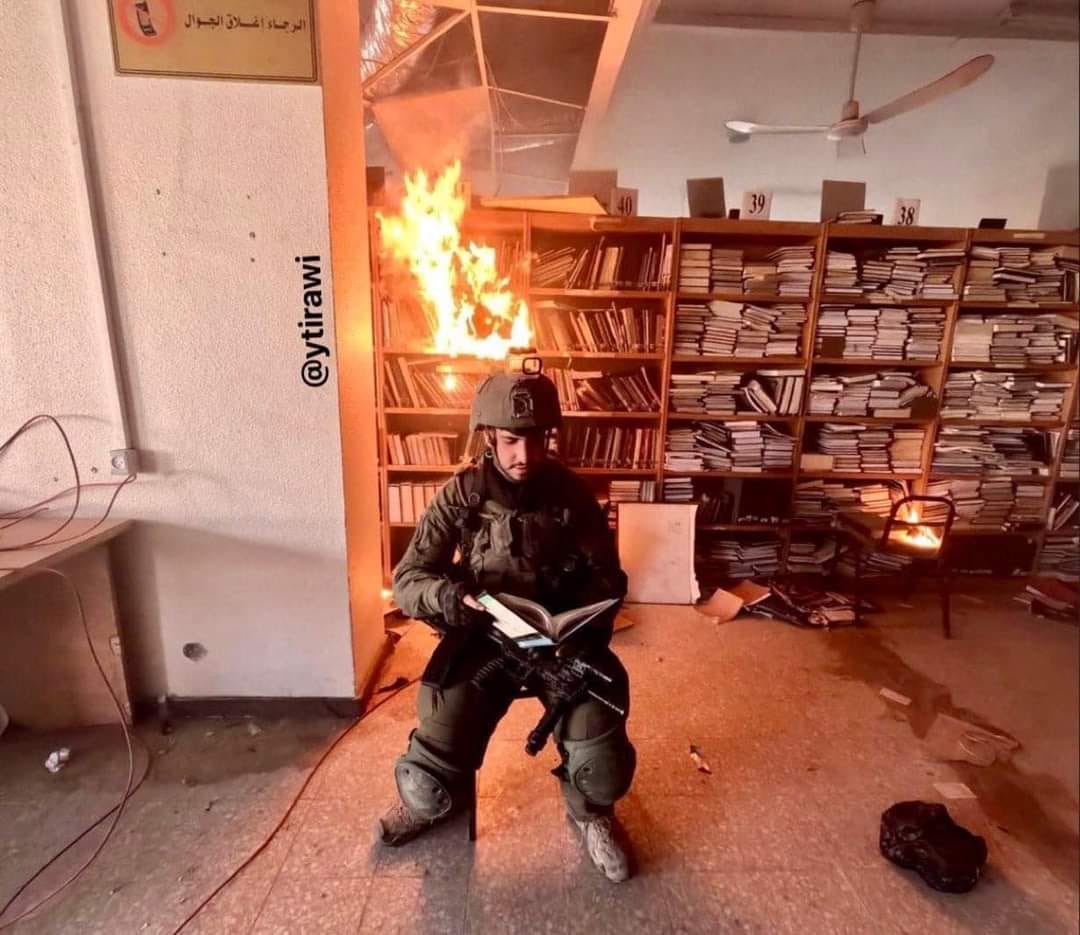
May 26, 2024
The toll reached 35,984. In the evening, Israeli strikes hit a displacement camp in the Tel al-Sultan neighborhood of Rafah, in the very “safe” zone Palestinians had been ordered into, killing at least forty and wounding more than sixty-five.
People burned alive in their tents.
The fire at Tel al-Sultan, the children incinerated where they had been sent for safety, drew a wave of global horror, and the word that spread with the images was the one the survivors used: a massacre.
May 27, 2024
The toll reached 36,050.
Israeli and Egyptian soldiers clashed near Rafah, killing one Egyptian soldier. For months, the Egyptian government had helped keep Gaza sealed from its side of the border, maintaining its coordination with Israel while Palestinians were trapped and bombed next door. But an Egyptian soldier is not his government. After the images from Tel al-Sultan, after children were burned alive in tents, it was not hard to understand how soldiers at the border could see Palestinians as his own people and refuse to treat their deaths as someone else’s problem.
The world was still absorbing the massacre; Israel did not pause for it to look.
May 28, 2024
The toll reached 36,096. Israeli tanks shelled the al-Mawasi tent camp, the designated “humanitarian zone,” killing twenty-one Palestinians, Israel denied it.
Israeli denials had become reflexive, issued for strikes the world could see, on zones Israel itself had drawn and called safe.
May 29, 2024
The toll reached 36,171. The Israeli army said it had taken operational control of the Philadelphi Corridor, the seam of land between Gaza and Egypt that Netanyahu had insisted on seizing, the ring around the Strip now closed on every side, including the one Egypt held. Rafah was fully encircled. The last door was shut from the outside.
May 30, 2024
The toll reached 36,224. Slovenia announced its intention to recognize Palestine, not even recognition itself, but the promise of recognition while Gaza was being erased in real time. By then, every new announcement sounded less like courage than delay. Palestine did not need another government to prepare to say it existed. It needed the governments that knew it existed to stop letting Israel destroy it.
May 31, 2024
The toll reached 36,284. The army announced its withdrawal from Jabalia after weeks of fighting; Palestinian officials reported that seventy percent of the refugee camp had been destroyed. President Biden announced an Israeli ceasefire proposal, the outline of a three-phase deal that would be debated, stalled, and revised for the next seven months while the killing continued. UNRWA reported Israeli forces setting displaced Palestinian tents on fire.
June 1, 2024
June opened with 36,379 killed. A thirteen-year-old child died of malnutrition and dehydration at the al-Aqsa Martyrs Hospital, the thirty-seventh person to die of starvation since the genocide began. The famine toll kept its own quiet count beneath the bombing, a child every few days, dying of the hunger the siege had built deliberately, in a strip of land beside the sea.
June 2, 2024
The toll reached 36,439. Seven Palestinians were killed in an Israeli strike on a civilian car in the az-Zawayda area of Deir al-Balah. Israeli forces attacked the Indonesian Hospital, destroying its specialized dialysis center, the kidney patients who depended on it now added to the list of those the collapse of care would kill. The Maldives banned Israeli passport holders in protest.
June 3, 2024
The toll reached 36,479. An Israeli strike on an apartment building in the Sabra neighborhood killed four.
The daily entries had the quality now of a ledger kept by exhaustion, the count, a building, a family, the count again.
June 4, 2024
The toll reached 36,550. Israeli forces launched an offensive in the Bureij refugee camp, killing at least fifteen and wounding dozens. A vehicle was bombed by Israeli forces near a shelter for the displaced in northern Deir al-Balah, killing five, children among them. Slovenia formally recognized the State of Palestine. The recognitions arrived one by one, small lights against the dark, while the camps the recognized state’s people sheltered in kept being bombed.
June 5, 2024
The toll reached 36,586. The Israeli army said it had taken operational control of the Bureij camp and Deir al-Balah. The offensive moved through the central camps as it had moved through the north and Rafah, each one entered, fought over, declared controlled, and left in ruins, the population pushed ahead of it into ever-smaller ground.
June 6, 2024
The toll reached 36,654. The army struck a UN school in Nuseirat sheltering the displaced, killing at least forty, claiming it had hit a Hamas compound inside it. The schools the UN ran as shelters, their coordinates handed to Israel, were being struck so regularly that the strikes had become a category of their own, each defended with the same claim, each leaving the same classrooms full of the dead.
June 7, 2024
The toll reached 36,731. Two Palestinians were killed in western Rafah; fishermen were wounded when the Israeli army fired on a port. Israeli settlers burned farmland near Ramallah and set property alight in Qusra. The two territories bled together in the daily record now, the bombs in Gaza and the settler fires in the West Bank, two methods of the same dispossession running in parallel.
June 8, 2024
The toll reached 36,801, and then, in a single day, jumped by hundreds.
Israel stormed Nuseirat refugee camp in daylight to retrieve four Israeli captives. The price was paid by the camp. At least 274 Palestinians were killed by Israeli forces, among them 64 children, 57 women, and 37 elderly. Nearly 700 more were wounded as Israeli forces fought through one of the most crowded places in Gaza, leaving bodies in the streets, homes shattered, and families searching through the blood and dust.
The same day, the UN added Israel to its list of states that commit grave violations against children in armed conflict, after verifying more than 5,600 such violations in 2023.
June 9, 2024
The toll reached 37,084, the sharp jump carrying the dead of the Nuseirat raid.
The world’s headlines led with the four rescued captives. The Palestinian count carried the 274 killed around them. Four names became the story. Two hundred seventy-four Palestinians became the cost. This was the arithmetic Israel had forced onto Gaza from the beginning: one Israeli life made sacred, whole Palestinian neighborhoods made expendable.
June 10, 2024
The toll reached 37,124. The UN Security Council approved a US-backed ceasefire proposal, the three-phase plan Biden had announced. The Council finally put on paper what Gaza had needed for eight months. The resolution passed in New York. In Gaza, the killing continued. That was the measure of the whole year: language moving through international chambers while American and Israeli bombs moved through Palestinian bodies.
June 11, 2024
The toll reached 37,164. Majed Abu Maraheel, the runner who had carried Palestine’s flag at its first Olympics in 1996, died at the Nuseirat camp of kidney failure, unable to get the care the blockade had destroyed.
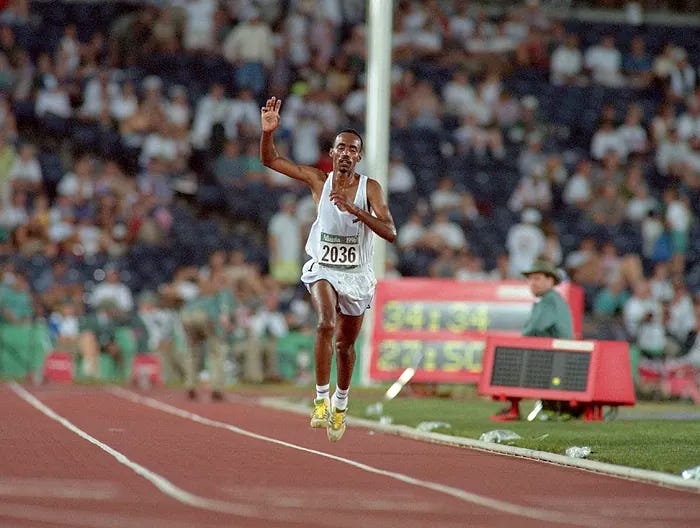
Eight Palestinians, mostly children, were killed in an Israeli strike on the Ashour family’s building in the Daraj neighborhood. Hamas and Islamic Jihad accepted the Security Council ceasefire resolution. The acceptance, like the resolution, changed nothing on the ground.
June 12, 2024
The toll reached 37,202. An eight-year-old girl died of starvation, another name in the famine’s separate ledger. The UN issued parallel reports accusing Israel and Hamas of war crimes and crimes against humanity, another document arranged in the language of balance while Gaza was being starved in front of the world. The charges against Israel named extermination, the deliberate starvation of civilians, and the targeting of the apparatus of life itself. A child had just died of hunger. No balanced sentence could make that balance.
June 13, 2024
The toll reached 37,232. The US secretary of state accused Hamas of stalling the ceasefire deal, shifting blame for the genocide’s continuation onto the side that had accepted the resolution, while the side that kept bombing was treated with softer hands. The obscenity was that Washington was not watching this from a distance. It was funding it, arming it, shielding it, then appearing in public to explain why the people under the bombs were responsible for the bombs still falling.
In Qabatiya in the West Bank, a twenty-one-year-old was shot dead and a house demolished with a bulldozer during an Israeli raid.
June 14, 2024
The toll reached 37,266. The United States sanctioned the Israeli group Tsav 9 for blocking and damaging aid convoys to Gaza, as if the problem was only the activists attacking trucks and not the state being armed to starve and bomb the people waiting for them. A sanction for spilled flour, weapons for flattened homes. The MK-83s kept moving.
June 15, 2024
The toll reached 37,296. A fourteen-year-old boy died of starvation, the twenty-eighth child to die of malnutrition since October. Two fishermen were shot dead off the coast. The sea, the fields, the aid lines, the schools, every place a person might go to live was a place they might be killed.
Israeli forces had now committed more than 3,300 massacres since October 7.
The number was almost too large to understand, and that was its own testimony. The genocide was no longer measured in incidents, but in catalogs of them.
June 16, 2024
The toll reached 37,337. The Israeli army announced it would observe daily “tactical pauses” along a route in southern Rafah, eleven hours a day, to let aid move, a pause for the trucks that did not pause the war, and that the aid agencies said changed little because the roads and the order inside Gaza had already collapsed. Nine Palestinians, five of them children, were killed in an Israeli strike on a house in Bureij.
June 17, 2024
The toll reached 37,347. Netanyahu dissolved the war cabinet, days after Benny Gantz quit it, the Israeli leadership fracturing over the management of the genocide and the fate of the captives while the genocide itself continued without interruption.
The cabinet could dissolve, ministers could resign, arguments could spill into public, but Gaza still received the same answer from the sky.
Meanwhile, an Israeli strike on a house in the Zarqa neighborhood killed two Palestinians and wounded thirteen.
June 18, 2024
The toll reached 37,372. Seventeen Palestinians were killed in an Israeli strike on the Nuseirat camp.
I want to stop here again. Not because this day is different, but because it is not. Because the sentence is so short and still contains seventeen dead. Because I can feel myself becoming tired of recording what my own had no choice but to survive. But that exhaustion belongs to the writer, not to the people under the bombs. It is a luxury to pause before a paragraph. It is a luxury to close the page, to look away, to decide that the repetition has become too much. In Gaza, repetition was not a literary problem. It was the sound of the next strike, the next ambulance that could not arrive, the next family counted only after it was gone.
So this must go on, not because it can do justice to the dead, but because stopping would do even less.
June 19, 2024
The toll reached 37,396. Israeli forces bombed tents in the al-Mawasi “humanitarian zone” again, killing seven and starting a fire.
The zone Israel had drawn and ordered Palestinians into was struck so often that “humanitarian zone” had become one of the genocide’s bitterest phrases, a name for the place the displaced were sent to be killed in greater concentration.
June 20, 2024
The toll reached 37,431. An Israeli strike killed eight in the Zeitoun neighborhood. Israeli settlers in Jericho blocked aid trucks bound for Gaza; the Israeli army shot a fifteen-year-old dead in a raid on Qalqilya. The summer’s days had a sameness that was itself part of the horror, the same neighborhoods, the same camps, the same ages of the dead, recurring until the mind refused to hold them as separate.
June 21, 2024
No new toll was given. The official number stayed where it had been the day before, but Palestinians were still being killed.
Five people were killed when the Israeli air force bombed the municipal building of Gaza City, the civil administration of the city struck along with everything else. At least twenty-two people were killed in Israeli shelling near the Red Cross office in Rafah, surrounded by refugee tents; the European Union condemned it and called for an independent investigation. Forty-five Palestinians were killed by Israeli forces across Rafah and central Gaza in the day.
June 22, 2024
The toll reached 37,551. In Jenin, an Israeli armored vehicle drove past a line of ambulances with a wounded Palestinian man strapped to its hood, a living human being used as a shield, filmed and circulated, an image that needed no caption.
At least forty-two Palestinians were killed by Israeli forces in the Tuffah neighborhood and the al-Shati camp; one Israeli strike on al-Mawasi killed twenty-five.
June 23, 2024
The toll reached 37,598. In his first Hebrew interview since October 7, Netanyahu rejected the possibility of a permanent ceasefire.
“We are committed to continuing the war after a pause, in order to complete the objective of destroying Hamas.”
— Benjamin Netanyahu, June 23, 2024.
The same day, two medics were killed by Israeli shelling at the Daraj clinic in Gaza City, among them Hani al-Jaafarawi, Gaza’s director of ambulances and emergency services.
I do not know why his face stopped me, except that he looks like the men I grew up around. My uncles, my father, the older men whose presence meant safety was near. There is something tired in his face too, the look of a man who had carried too much work for too long and kept going anyway. In Gaza, even that figure was not spared. He carried the work of rescue in a place where rescue itself was being hunted. Israel killed him at Daraj clinic on June 23, 2024, along with another medic.
In Beit Lahia, two infants died of malnutrition. The prime minister’s words and the day’s dead made the same point from opposite ends: there would be no pause, and the Palestinians would keep being killed in the particular ways the genocide had devised.
June 24, 2024
The toll reached 37,626. Netanyahu said the “war” was entering its “final phase,” a phrase that would prove to mean another year and more of killing. Israeli forces bombed the Bani Suheila traffic circle in Khan Younis, killing eight, among them guards protecting aid trucks. The IDF confirmed the death of another captive held in Gaza.
June 25, 2024
The toll reached 37,658. Israeli forces bombed the family home of Hamas political leader Ismail Haniyeh in the Shati camp, killing ten, his sister among them, the strikes on the negotiators’ families continuing as the negotiations dragged on. Ten Palestinians were killed by Israeli forces as they sought aid in Khan Younis. Five, including three children, were killed in an Israeli strike on a house in the al-Maghazi camp.
June 26, 2024
The toll reached 37,718. Eleven Palestinian homes were demolished by Israeli forces in Masafer Yatta, south of Hebron, the slow clearance of the West Bank’s south proceeding by bulldozer while Gaza burned. The summer settled into its grim arithmetic, sixty here, forty there, the count climbing toward thirty-eight thousand.
June 27, 2024
The toll reached 37,765. Israeli forces re-invaded the Shujaiya neighborhood of Gaza City in a surprise attack, forcing Palestinian families who had returned to their damaged homes when the Israeli army withdrew two months earlier to flee all over again.
The pattern of withdrawal and return had become a trap: Palestinians came home to the rubble, began to rebuild, and the Israeli army came back and drove them out a second time.
June 28, 2024
The toll reached 37,834. Israeli forces advanced in Rafah and Shujaiya; eleven were killed by Israeli tank shelling in Rafah, eleven more killed in Israeli strikes on tents in al-Mawasi, along with forty wounded. Three medics were killed when their headquarters in the Nuseirat camp was bombed by Israeli forces.
Smotrich, the Israeli finance minister, declared that for every country that recognized Palestine, Israel would build a new settlement.
“There are five countries that committed this mistake, so we will establish five settlements. This is our response.”
— Bezalel Smotrich, June 28, 2024.
Disgusting. Palestinians killed in the morning, Palestinian land promised away by afternoon. Recognition answered with theft. Grief answered with concrete. A genocide paired with a real estate plan.
June 29, 2024
The toll stayed at 37,834 over two days. Four members of the al-Ghazi family were killed when Israeli forces shelled a group of Palestinians trying to collect water in Gaza City; five more were killed in an Israeli strike on a gathering in a municipal park.
Mass demonstrations filled Tel Aviv, Israelis demanding Netanyahu resign and the captives be brought home, the genocide dividing Israeli society on who could wage it better.
June 30, 2024
The toll reached 37,877. Israeli forces were reported using Palestinian prisoners as human shields in Gaza, tying them with ropes, fixing cameras to their bodies, and forcing them into destroyed buildings and tunnels to search for explosives; many were wounded. A Palestinian man with mental illness who had gone missing was found with a fractured skull and gunshot wounds, his family saying he had been detained and tortured by Israeli forces for two weeks.
June ended as it had run, the cruelties accumulating faster than they could be recorded.
July 1, 2024
July opened with 37,900 killed. Fifty-five Palestinian detainees, among them the director of Shifa Hospital, Mohammed Abu Salmiya, were released by Israel for lack of any evidence linking them to Hamas, freed after seven months of detention that had helped destroy the hospital he ran.
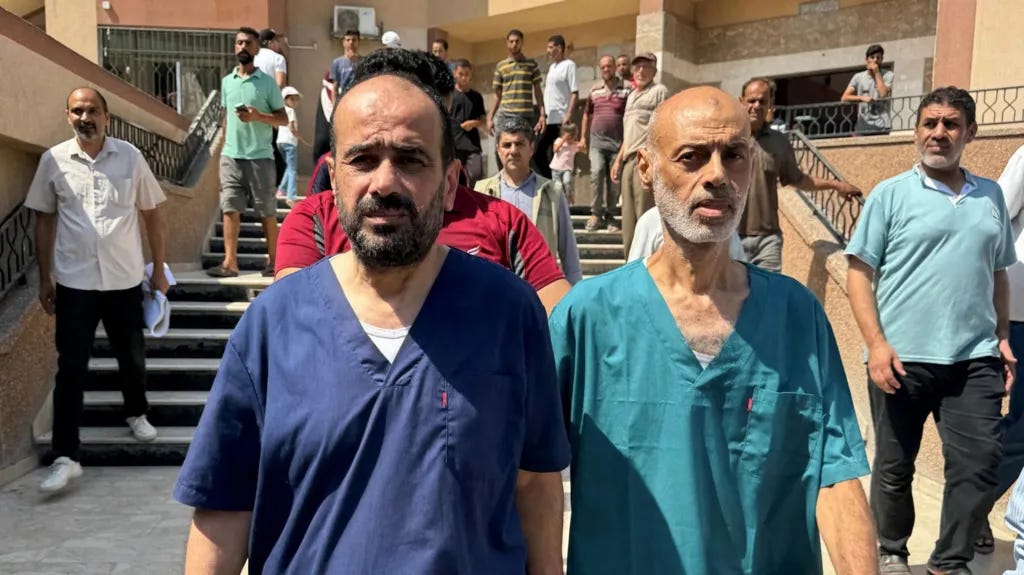
The army ordered a mass evacuation of eastern Khan Younis, pushing the displaced yet again.
July 2, 2024
The toll reached 37,925. Israeli forces bombed a building in the “safe zone” of Deir al-Balah, killing nine of the Hamdan family, five women and three children among them. Four Palestinians were killed in an Israeli strike on the Nur Shams camp in the West Bank. The “safe zones” had failed so completely and so often that the phrase survived only as a marker of where the displaced had been gathered to die.
July 3, 2024
The toll reached 37,953. An Israeli military combat dog mauled a Palestinian man with Down syndrome in his own apartment and the soldiers left him to die, one of the genocide’s small, deliberate cruelties that stood for the contempt beneath the larger ones.
July 4, 2024
The toll reached 38,011. Israeli forces killed two Palestinians in Gaza City’s Daraj neighborhood, five more, three of them children, in Jabalia.
Israel’s far-right heritage minister, Amihai Eliyahu, called publicly for the occupation of the Sinai Peninsula, the appetite for expansion spoken aloud by men in government as the genocide approached its tenth month.
July 5, 2024
Israeli forces bombed four schools sheltering the displaced in a single day, the Sharjah School in al-Shati, the Cairo School in Rimal, the Freedom School in Zeitoun, and the Musa bin Nusayr School in Daraj, killing at least nine. Seven Palestinian men were shot dead by Israeli forces in a raid on a house in Jenin.
The schools had been the last shelter; now they were struck four at a time, and the word “school” in the daily record had come to mean a place where the displaced were killed.
July 6, 2024
The toll reached 38,098. Israeli forces bombed the UNRWA-run al-Jaouni school in Nuseirat, the same school struck in May, killing at least sixteen and wounding seventy-five, most of them children.
By July, I could feel what this record was doing to me: the same shelters hit again, the same children counted again, the same horror repeated until even grief had to fight not to become numb.
July 7, 2024
On the 275th day of Israel’s genocide in Gaza, Gaza’s media office released its updated ledger:
3,376 massacres committed by the Israeli army
38,153 people killed
10,000 missing, their fate unknown
87,828 wounded
15,983 children killed
10,637 women killed
34 people dead from malnutrition
17,000 children without one or both parents
500 medical personnel killed
75 civil defense workers killed
158 journalists killed
520 bodies recovered from seven mass graves near Gaza hospitals
157 shelters targeted by Israel
Seventy percent of the victims were children and women.
There was almost nothing left to explain. The statistics had become a map of a Palestinians being dismantled.
July 8, 2024
The toll reached 38,193. A six-year-old child died of starvation and lack of medical supplies at the al-Aqsa Martyrs Hospital, the forty-first to die of malnutrition. The army ordered the evacuation of Tel al-Hawa, Sabra, and Rimal in Gaza City. The al-Ahli hospital was hit by two Israeli missiles. Ten people, women and children among them, were killed in an Israeli strike on Jabalia.
July 9, 2024
The toll reached 38,243. At least thirty-one Palestinians were killed in an Israeli strike on a tent camp beside the UNRWA-run al-Awda School in Abasan, east of Khan Younis; the munitions were American, made by Boeing. Across Gaza City and Deir al-Balah the Israeli army carried out coordinated strikes that killed at least fifty more Palestinians. A woman said an Israeli tank had killed her father and grandfather by driving over them. The American bombs in the wreckage of the tent camp were a fact the entire genocide turned on: the weapons were not incidental to it.
July 10, 2024
The toll reached 38,295. The army ordered the people of Gaza City to evacuate south to Deir al-Balah, another mass displacement of a population that had already been moved more times than it could count, herded back and forth across a strip of land being destroyed beneath them.
July 11, 2024
The toll reached 38,345. The United States sanctioned three Israeli individuals and five entities over settler violence in the West Bank, the useless gestures against Israeli settlers continuing alongside the unbroken flow of arms for Israel’s genocide in Gaza. The day’s count climbed by another fifty, the genocide ten months old and grinding on with no end that anyone in power seemed willing to force.
July 12, 2024
Israel pulled back from parts of Gaza City, leaving snipers to hold the high ground, the withdrawal that was never a departure. A strike in the center of the city killed three, a baby among them. Palestinian civil-defense teams recovered more than sixty bodies from Tal al-Hawa after the army left, the dead surfacing from the rubble as they had after every withdrawal of this genocide. And the Israeli foreign ministry released a list of 108 UNRWA employees it accused of belonging to Hamas or Islamic Jihad, the campaign against the agency that fed Gaza continuing in parallel with the bombing that made its food necessary.
THE WAR BREAKS OUTWARD
July 13, 2024
By the Health Ministry’s count, Israel had now killed 38,443 Palestinians in Gaza.
Israel dropped its bombs onto a stretch of sand in al-Mawasi, the very ground it had ordered the displaced into and called a humanitarian zone. It was hunting Mohammed Deif, the commander of the Qassam Brigades, the man who had built the resistance’s military wing in the shadows for twenty years while Israel tried and failed to find him. To reach for him, Israel killed around ninety Palestinians, families in tents who had been promised that patch of sand was safe. Whether Deif was even there, Israel could not say for weeks. The dead in the tents were certain. This was the equation Israel had imposed on Gaza: one name it wanted, and a crowd of Palestinians made to pay for the wanting.
July 14, 2024
Israel moved its bombing through Gaza City and the Nuseirat camp, a house in Sheikh Radwan, a residential block, then the Abu Oreiban school where displaced families sheltered. Israel killed seventeen people there and wounded more than eighty. It said the school hid fighters; it said that about every school it struck. The word had worn smooth from use, a license Israel wrote itself in advance, and wherever it ordered Palestinians to go, it followed them there with the same excuse and the same bombs.
July 15, 2024
In al-Walaja, south of Jerusalem, Israeli soldiers demolished four houses belonging to one family and put fifty people into the street, the slower theft of the West Bank grinding on beside the faster slaughter in Gaza. In the Strip, Israel struck Maghazi, Deir al-Balah, a road east of Rafah, killing dozens through the day, the ordinary toll of an ordinary day under Israeli fire, which is to say dozens of people who had woken that morning with plans.
July 16, 2024
Two schools in a single day. Israel bombed the al-Razi school in Nuseirat and killed twenty-three of the people sheltering there, then bombed the tents of the al-Mawasi camp and killed seventeen more, and across the south the dead of what passed for a quiet day climbed past sixty. These schools were not targets Israel stumbled onto; they were where the displaced were, because Israel had ordered them there, and so its bombing of schools had become, simply, its bombing of Gaza.
July 17, 2024
Israel struck the Cairo School in Rimal and killed nine, three of them children. It struck the Abdullah Azzam Mosque and killed two more. It struck a house in az-Zawayda and killed eight. The places that had held a neighborhood’s life together, its prayer, its lessons, its mornings, Israel took down one after another.
July 18, 2024
The Knesset voted, formally and on the record, that it firmly opposed the establishment of a Palestinian state west of the Jordan, the parliament of the occupier closing the door on Palestinian statehood out loud, even as the world’s diplomats kept pretending the door was open. The same day, Israel’s far-right national security minister marched into the al-Aqsa compound under the guns of his police.
July 19, 2024
For the first time, the violence reached Tel Aviv from the air. A drone the Houthis named “Jaffa,” for the Palestinian city their movement said it was avenging, crossed two thousand kilometers and struck near the American consulate, killing one man. The next day Israel flew that distance in reverse and bombed the fuel tanks and power plant at the Yemeni port of Hodeidah. Israel had drawn its war across the whole region now, Yemen to Tel Aviv and back, and at the center of it, genocide, Palestinians kept dying by the houseful, in Nuseirat that day eight at a time, under bombs Israel never stopped dropping.
July 20, 2024
Israel bombed the home of the Ayyad family in Sheikh Radwan and killed five. It bombed the Abu Jasser family in Jabalia and killed four, two of them children. It bombed the al-Batran family in Bureij and killed three, the al-Sharihi family in Nuseirat and killed four, the Abu Sidra family nearby and killed eight.
The record of the day reads like a roll call of households, each name a building Israel brought down and a family it made smaller or ended, and this was the genocide on a day when nothing in particular was said to be happening.
July 21, 2024
In Tel Aviv the crowds filled the streets again, demanding their government bring the captives home, while that government answered that only more genocide would do it. In Gaza, Israel kept killing, three in the Tuffah neighborhood that day.
July 22, 2024
Israel’s bombing of eastern Khan Younis was among the heaviest of the summer: it killed at least seventy-seven Palestinians in a day, wounded two hundred, and left thirty buried under concrete where no one could reach them. Israel confirmed that two of its own captives had died in Gaza, a sound technician and a historian, killed by the same bombardment it claimed was meant to recover them. The bombs Israel dropped on eighty-one Palestinians were the bombs it dropped on their own hostages above them.
July 23, 2024
The West Bank carried its own part of the day. Five Palestinians were killed in an Israeli drone strike in Tulkarm, among them local resistance leaders. Israeli forces shot and killed two Palestinian men in Sa’ir and ash-Shuyukh, arrested a man south of Tulkarm, and arrested a fifteen-year-old in Silwan. In occupied East Jerusalem, Israel forced a Palestinian man to demolish his own two-story home in at-Tur. South of Nablus, settlers set olive groves on fire in Burin and stormed Huwara, injuring two Palestinians.
Japan imposed sanctions on four Israeli settlers, a small foreign gesture that arrives after the land and people have already been burned.
Gaza was still being bombed. Houses were struck in Sabra, al-Sahaba, Jabalia, and Bureij, killing families and children. But the West Bank made clear what this had always been: not only bombs over Gaza, but a whole system moving across Palestine, killing, arresting, uprooting, burning, demolishing, and calling each act separate so no one has to say the whole thing at once.
July 24, 2024
Israeli soldiers shot a customs officer dead in Tubas. They ran a man over and bulldozed a home in the Qalandiya camp. In Khan Younis, Israel pulled the bodies of five of its hostages from the rubble it had made of the city. The killing in the West Bank and the killing in Gaza sat in the same paragraph because Israel had made them the same campaign, run at two speeds.
July 25, 2024
Thirty more. That’s it. Is there anything else?
July 26, 2024
A quieter day in the record, which only meant Israel spread its killing thin rather than concentrating it, and the largest horror it was preparing, the Khadija School, was a day from being given its name.
July 27, 2024
Israel put three missiles into the Khadija School in Deir al-Balah, where displaced families slept in classrooms, and killed at least thirty, wounding more than a hundred. It struck a house in Abasan al-Kabira and killed fifteen more. And in the occupied Golan Heights, a rocket struck a football pitch in the Druze town of Majdal Shams and killed twelve children. Hezbollah denied firing it; Israel blamed it anyway, because the blame was the pretext it had been waiting for. Israel would make the killing of these children, Arab children of a town it occupied, the reason for the war it had already decided to bring down on Lebanon.
July 28, 2024
Tanks pushed deeper into Gaza’s two main southern cities. In the last twenty-four hours, Israel killed sixty-six Palestinians and wounded over two hundred.
July 29, 2024
Nine Israeli soldiers stood accused of raping and severely abusing a Palestinian detainee at Sde Teiman. When military police came to arrest them, Israelis did not pour into the streets in horror at what had been done to the prisoner. They stormed in anger that the soldiers might be punished for it. Protesters broke into Sde Teiman, lawmakers pushed into the base, and the Knesset became another stage for the same sickness. The detainee’s body carried the violence. Israeli public outrage gathered around the inconvenience of the accused.
There are moments when a society shows you what it has become without needing interpretation. This was one of them. A Palestinian could be tortured and raped in custody, and the offense, for Israelis, was that anyone had dared to arrest the men accused of doing it. The machinery of genocide did not stand alone. It had a public ready to defend even its most obscene acts.
July 30, 2024
Israel withdrew from Khan Younis, ending its second battle for the city, and as it pulled back the dead surfaced, nine Palestinians were killed by Israeli fire while trying to recover bodies from the Bureij camp. That night Israel struck the southern suburbs of Beirut and killed the Hezbollah commander Fuad Shukr, blaming him for Majdal Shams, killing five civilians alongside him. And the Gaza Health Ministry, almost lost in a day so full of Israeli violence, declared a polio epidemic in the Strip, a disease the world had nearly buried, loose again in the sewage and the ruin Israel had made.
July 31, 2024
Before dawn in Tehran, in a guesthouse where he had come for the new Iranian president’s inauguration, Israel killed Ismail Haniyeh, the political leader of Hamas and its chief negotiator, with a bomb it had reportedly planted weeks before. Israel assassinated the man it was supposedly negotiating with, on Iranian soil, and buried much of what remained of the talks with him.
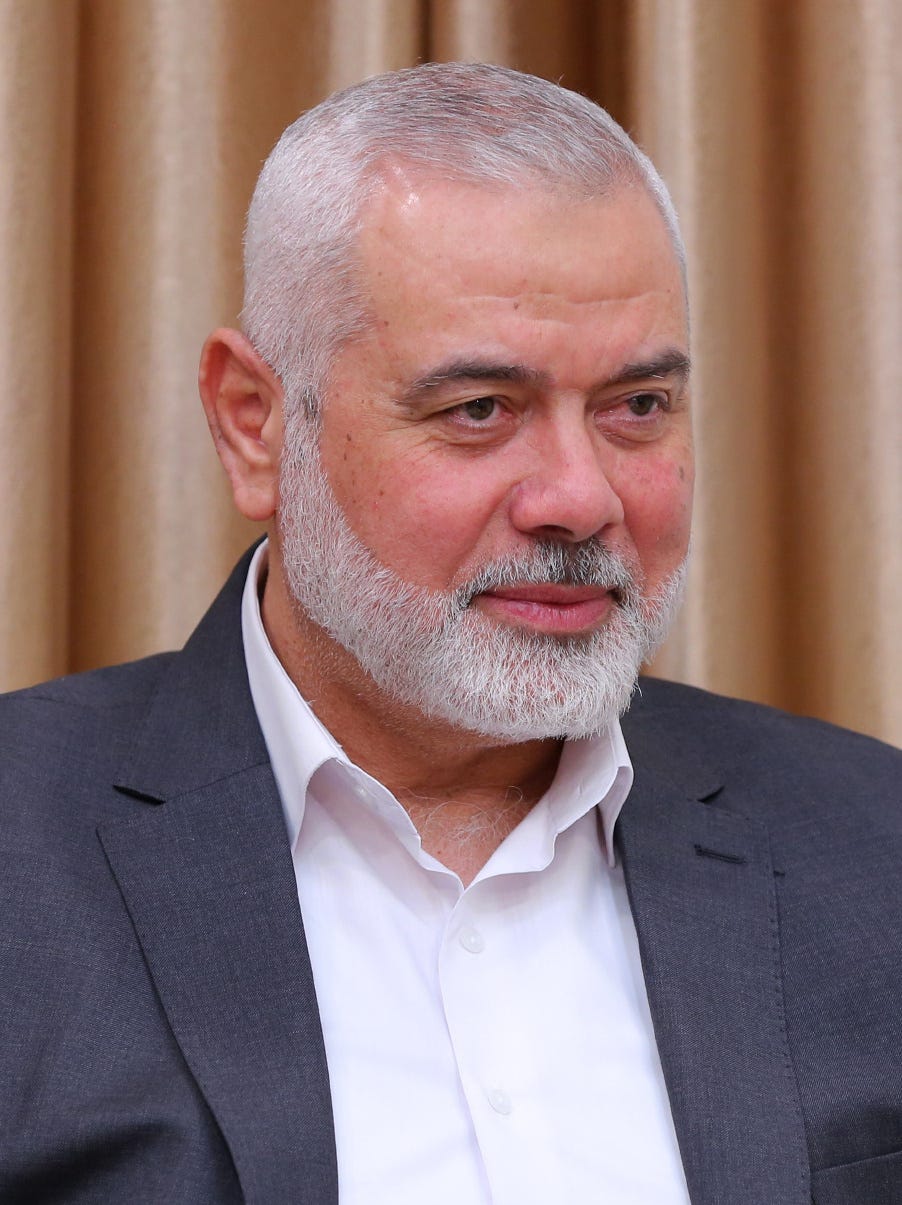
The same day, in the al-Shati camp where he was raised, Israel killed the Al Jazeera correspondent Ismail al-Ghoul and his cameraman Rami al-Rifi, the blast taking off Ismail’s head. The negotiator and the witness, killed by Israel on the same day at two ends of the region, told you what Israel was fighting to destroy: the Palestinian voice at the table and the Palestinian voice before the camera.
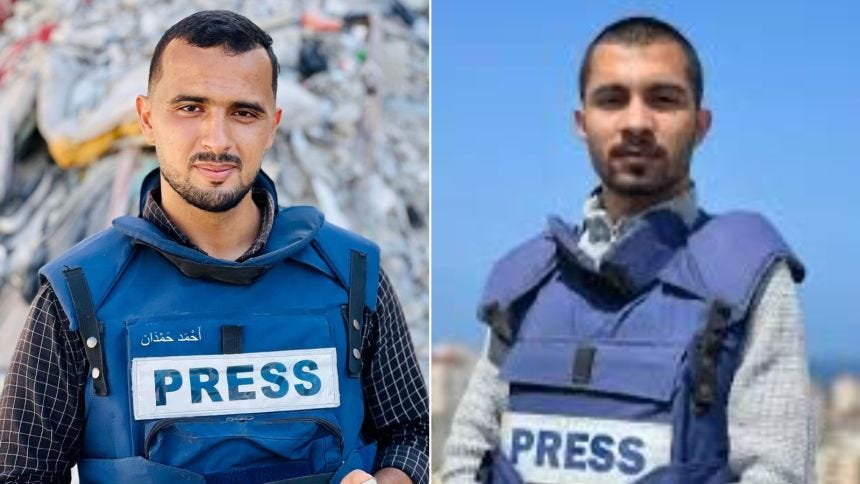
August 1, 2024
Israel announced that its strike on al-Mawasi two weeks before had killed Mohammed Deif, the name it had chased through the crowd. True or not, ninety Palestinians in the tents had already paid for the chase, and Israel offered the killing as a victory rather than a confession. The same day it struck a school in Shujaiya and killed fifteen, and seized another seven hundred and ninety hectares of the West Bank, its hunger for Gaza’s ruin and its hunger for Palestinian land feeding side by side.
August 2, 2024
Israel struck an apartment on al-Jalaa Street and killed four. It struck a house in Zeitoun and killed a child. Israeli police arrested the former grand mufti of Jerusalem, an old man, for calling Haniyeh a martyr, the word itself now a crime in the eyes of the occupier. Across the Strip the dead of an unremarkable day gathered in the ones and twos, not in the headline massacres but in Israel’s steady erasure of a household here and a household there.
August 3, 2024
Israel bombed the Hamama School in Sheikh Radwan, full of the displaced, and then bombed it a second time, the second strike timed for the rescuers, killing more than seventeen.
The double strike tactic employed by Israel, hit the building and then hit the people running toward it, had become familiar enough that Gaza’s medics approached every ruin knowing Israel had marked them as the next target. They went in anyway, which is its own testimony about who the people of this genocide were.
August 4, 2024
Israel bombed two more schools in Sheikh Radwan, the Hassan Salama and the Nasr, and bombed a home in Deir al-Balah and another home in al-Fakhoura where it killed men, women and children together, entire families closed like a book. Israel’s bombing of schools and homes had become so routine that it no longer interrupted the day’s flow.
August 5, 2024
Bezalel Smotrich, Israel’s finance minister, said aloud what the siege had been doing in silence.
“We bring in aid because there is no choice… We can’t, in the current global reality, manage a war. Nobody will let us cause 2 million civilians to die of hunger, even though it might be justified and moral, until our hostages are returned.”
— Bezalel Smotrich at a conference in Yad Binyamin hosted by the right-wing Israel Hayom outlet, August 5, 2024.
Blocking food to Gaza, he said, was justified and moral even if it starved two million Palestinians to death, and he complained that the world would not let him finish. A man in Israel’s government described the deliberate starvation of two million people as a thing he wished he were free to complete. The famine was no accident anyone in that government regretted. Some of them regretted only that Israel was not allowed to make it faster.
August 6, 2024
Israel spread its killing across the West Bank and the south again, a raid here, an airstrike there. In Deir al-Balah it struck a place it had itself designated a safe zone and killed three more in the ground it had promised would be spared. Israel had emptied the phrase “safe zone” so completely that to be sent to one was understood, by now, as being marked, not protected.
August 7, 2024
Israel struck an apartment in Tuffah and killed three. It killed a Palestinian World Central Kitchen worker in Deir al-Balah, the aid workers dying with the people they fed. Israel’s strikes had taken on a sameness that was itself the point: it had turned the killing of Palestinians into weather, a thing that fell on Gaza daily and was reported the way one reports rain, and the world’s attention, which had burned in the autumn, had cooled into the dull acceptance the numbers were built to produce.
August 8, 2024
Israel bombed the al-Zahraa and Abdel Fattah Hamoud schools in eastern Gaza City and killed twelve. It bombed a house in Bureij and killed ten. Israel moved its bombs from school to camp to house in a rotation that had lost the power to shock, which meant it had achieved one of its aims, the exhaustion of horror itself.
August 9, 2024
Israel re-invaded Khan Younis for the third time, returning to ground it had taken and abandoned twice, and the families who had crept back to their broken homes fled once more. This was the rhythm Israel had imposed on the south, take, leave, return, each cycle grinding the same neighborhoods finer, each return finding fewer walls standing and the same people, more tired, with less.
August 10, 2024
Israel struck the al-Tabin school in Gaza City during the dawn prayer, where hundreds slept.
Israel killed more than ninety Palestinians in a single strike, many of them burned alive in the fire its bombs set, the bodies so destroyed that families knew their dead by a watch, a shoe, a scrap of cloth. It was among the deadliest single strikes Israel had carried out, and it came down on people at prayer in a place of refuge, which by August was no contradiction at all but a category Israel had created.
August 11, 2024
Israel ordered Khan Younis emptied again. Thousands of victims still remained trapped under the rubble, with no way to get to them.
August 12, 2024
A guard holding Israeli captives killed one and wounded two others after learning Israel had killed his own children. Abu Obeida, the spokesperson for al-Qassam Brigades, said the guard had acted “in a vengeful manner, contrary to instructions,” and that the incident did not represent the movement’s ethics or religious teachings in dealing with prisoners.
“We hold the enemy fully responsible for all the suffering and dangers that its prisoners are exposed to as a result of its violation of all the rules of humane and humanitarian treatment and its practice of brutal genocide against our people.”
— Abu Obeida, August 12, 2024.
A father heard that his children had been killed and broke. That does not make the killing right. It shows what genocide does to every boundary around it. Above ground that same day, Israel killed ten more Palestinians in a single house in Abasan al-Kabira, and the count climbed toward forty thousand, though nothing about the number made the dead more countable.
August 13, 2024
Israeli forces shot dead a sixteen-year-old boy in Anata. Israeli reports said he had been throwing Molotov cocktails over the separation wall. Palestinian reports said he was working at a car wash when he was sniped.
That gap was the entire Zionist machinery in miniature: a Palestinian child killed, and then a story produced around the body to make the killing legible, necessary, clean. Gaza was nearing forty thousand dead, and still Israel needed each dead Palestinian to arrive with an accusation attached. The death came first. The justification followed.
August 14, 2024
An Israeli drone killed four in Tammun and Israeli forces seized the bodies. Israel shot a US citizen. Israel killed three children among five in a home in Khan Younis. And Israel’s government approved a new settlement near Battir, a UNESCO site, the theft of Palestinian land running on its own track no matter the genocide.
August 15, 2024
40,005.
The Health Ministry’s count passed forty thousand, and the Ministry said plainly in the same breath that the true number was likely above fifty thousand once the missing under the rubble were counted, the official toll always a floor Israel kept Palestinians beneath, never a ceiling. Forty thousand was the figure the world had once called unimaginable. Israel had made it imaginable.
Around it, settlers attacked Palestinians in Jit and Huwara so savagely that even the Israeli army called it terror, the word it almost never turns on its own.
August 16, 2024
A ten-month-old boy in Deir al-Balah became Gaza’s first polio case since 1999, an infant paralyzed by a disease Israel’s siege had brought back. That day Israel killed four Palestinians, three of them children, in a tent camp in al-Mawasi.
The baby and the tents told one story between them, of a people Israel had stripped of every defense at once, against its bombs and against the oldest diseases alike, forced back by Israel into a condition the world had thought it had left behind.
August 17, 2024
Israel killed eighteen members of one family in a warehouse sheltering the displaced in az-Zawayda. An Israeli quadcopter shot a six-year-old boy in the head as he slept in a tent in Hamad City. Israel’s drones had learned to find a sleeping child in a tent, and did, and the killing was reported and absorbed and replaced by the next day’s report.
August 18, 2024
Israel struck a home in Deir al-Balah and killed a man, a woman, and their six children. It struck a house in Nuseirat and killed seven, three of them children.
Israel took the families down one after another, and the entries recording them grew shorter because there were too many to dwell on, and the dwelling itself had become a luxury the sheer volume of Israel’s killing would not allow.
August 19, 2024
For the first time in eighteen years, a Palestinian from Nablus carried a bomb into Tel Aviv. It killed only him and wounded one other person. The Qassam Brigades announced a return to a tactic they had set down in 2006, the resistance reaching back toward the weapons of an older and more desperate period after a year in which Israel had answered every other path with slaughter.
It changed little on the ground, but it said something about the atmosphere of this genocide: Israel had not erased resistance. It had helped drag Palestine back toward the bleakest forms of it.
August 20, 2024
Israel bombed the Mustafa Hafez school in western Gaza and killed twelve. It bombed a market in Deir al-Balah, killing at least twenty, where witnesses said most of the dead were children. Israel found the bodies of six hostages in the rubble of Khan Younis, buried in the destruction it had made. Israel’s strikes at this point had left so many parts of Gaza unidentifiable.
August 21, 2024
Israel committed four massacres against families in twenty-four hours, killing fifty and wounding 124. Thousands were still under the rubble or on the roads. Ambulances and civil defense could not reach them. The count was incomplete because the machinery needed to count the dead had been destroyed too.
August 22, 2024
Israel’s rhythm held, a drone strike in Tulkarm killing three, the count climbing by its daily increment. Israel’s genocide had reached the phase where its continuation no longer needed events, only the passage of time, each day adding its forty or fifty to a total that had lost its power to mean anything to those reading it from far away.
August 23, 2024
I want to stop here for the prisoners.
More than forty Palestinian prisoners from the West Bank were released that night after completing their sentences, among them administrative detainees held without charge or trial. Some came out of Naqab Prison with skin diseases. Some were taken straight to hospitals. Their bodies showed what the prisons had done: starvation, exhaustion, neglect, the violence that does not need a bomb to leave a man broken.
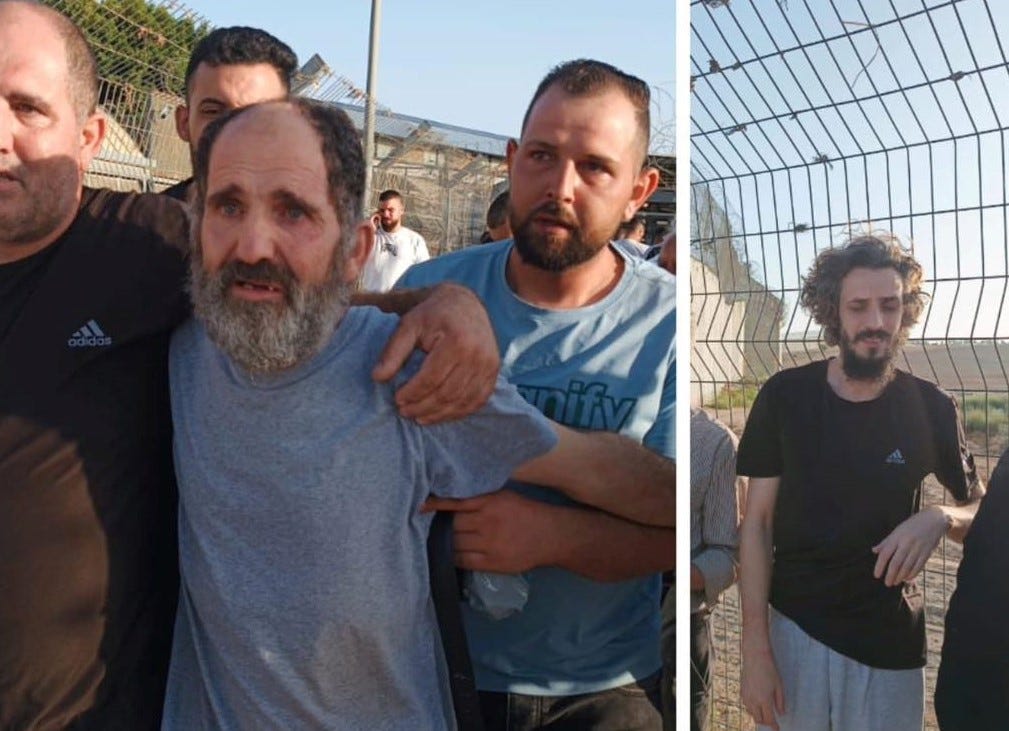
Palestinian prisoners are dear to me because they carry the oldest shape of this struggle. Before this genocide, before this year, before the world learned the names of Gaza’s camps, there were always Palestinians behind Israeli bars. Men taken from homes, boys taken from streets, people held without charges, families living around court dates, visit permits, hunger strikes, released bodies, and names that disappear into prisons. The prisoner is one of the clearest proofs of the whole system: Palestine is not only bombed from the sky. It is caged, interrogated, starved, delayed, and returned damaged when Israel is done with it.
Since October 7, more than 10,200 Palestinians had been detained in the West Bank, with thousands more from Gaza held beyond the count. As of early August, more than 9,900 Palestinians were in Israeli prisons, not including those from Gaza held in military camps subject to rape, abuse, and torture.
August 24, 2024
Israel killed thirty-six Palestinians in and around Khan Younis, eleven of them from a single family.
The single-family massacre had become Israel’s signature, an entire line, grandparents to infants, ended in one strike.
August 25, 2024
Israel launched what it called preemptive strikes on Lebanon, hundreds of jets at once, and dragged the northern war closer to the full one everyone could feel coming. In Gaza the killings went on beneath the new headlines, as it had gone on beneath every set of headlines since October, the one constant the widening of Israel’s war could not push aside.
August 26, 2024
Israel bombed the al-Ezz bin Abdul Salam school in Gaza City and killed and wounded women and children. It shot and killed a man in Yatta. Its drone strike in Nur Shams killed five, two of them children.
Israel’s war and genocide had spread so wide, across Gaza, the West Bank, Lebanon, Syria, Yemen, the Red Sea, that the killing of Palestinians, the thing that had started it all, now had to compete for room in Israel’s own war record.
August 27, 2024
Israel rescued one hostage alive from a tunnel in the south, and the world’s coverage led with the rescue, as it always did. The Palestinians killed by Israel in the same hours became the lower line, the part of the story most readers would never reach. That was the shape of the coverage by then: an Israeli life returned to the center, Palestinian death pushed back into the count.
Israel also fired on a World Food Programme vehicle at one of its checkpoints. The agency halted its work in Gaza. Another thread of the lifeline was cut by Israel, and the hunger it had built was left to deepen.
August 28, 2024
Israel launched its largest assault on the West Bank in years, into Jenin, Tulkarm, Tubas, Hebron, Nablus, and the camps. It killed, raided, bulldozed roads, tore up infrastructure, and brought the methods it had used in Gaza north. The West Bank had been the quieter wound all year; now Israel turned on it with the full machinery of the Strip.
By September 12, at least fifty Palestinians had been killed in the offensive: twenty-one in Jenin, twelve in Tulkarm, thirteen in Tubas, three in Hebron, and one woman in Nablus.
August 29, 2024
Israel killed nine members of one family, five of them infants and two of them women, one pregnant, in an apartment in central Gaza. It struck an aid convoy in the south killing four.
Israel’s killing of the very young had become so constant that the entries recording it had flattened into a kind of liturgy, infant, child, woman, pregnant woman, the same words in the same order, day after day after day.
August 30, 2024
Israel withdrew from Khan Younis and Deir al-Balah after a month, announcing the resistance fighters it had killed while Palestinians counted the women and children it left behind. Two car bombs struck illegal settlements near Hebron, the West Bank reaching back toward its own buried tactics, and the entire landscape seemed to be sliding backward at once under the weight of what Israel was doing, toward the oldest and most desperate forms of a struggle a year of Israeli slaughter had not resolved but only deepened.
August 31, 2024
In a tunnel in Rafah, Israeli soldiers found the bodies of six hostages killed shortly before, among them Hersh Goldberg-Polin. Their deaths triggered the largest Israeli protests of the genocide, a general strike, and hundreds of thousands in the streets accusing Netanyahu of refusing the deal that could have freed them.
That was the line Israeli society finally mobilized around: not the tens of thousands of Palestinians killed, not the families erased by the household, not Gaza buried under the bombs, but the six captives Israel’s own government had sacrificed to keep the genocide going.
September 1, 2024
September began with Gaza’s children rolling up their sleeves: the first polio vaccinations, a fragile pause the agencies and negotiators wrung from Israel hour by hour so the disease its siege had loosed could be pushed back. For a few days Israel eased its bombing in the corridors where the vaccinators worked, proof that the killing could stop when there was a will to stop it, and therefore proof of what Israel meant by keeping it on the rest of the time. More than half a million children would be reached.
Israel was letting them be saved from polio so that they might survive into its next airstrike.
September 2, 2024
Israel struck a bread line outside the al-Fakhoura school in Jabalia and killed at least eight people waiting to buy bread. Britain suspended thirty arms licenses to Israel, a small crack in the Western supply, and Israel’s own largest union called a general strike for a hostage deal before a court shut it down for being too political. The pressure on Israel was building from inside and out, and still its bombs fell on the bread line, because pressure that stops short of stopping the weapons does not stop the weapons.
September 3, 2024
An Israeli sniper shot a boy in the head in Tulkarm and wounded his father beside him. It killed nine Palestinians, two of them children, in Gaza City.
In Paris, Fadi Aldeeb was carrying Palestine at the Paralympics. He was the only Palestinian athlete there, a shot putter from Gaza who had been left paraplegic after an Israeli soldier shot him in the back during the Second Intifada. His brother had been killed in an Israeli attack on Gaza in December. He said he was not speaking for himself, but for millions of Palestinians, and that raising the flag meant Palestinians were still alive, still demanding freedom, still refusing to disappear.
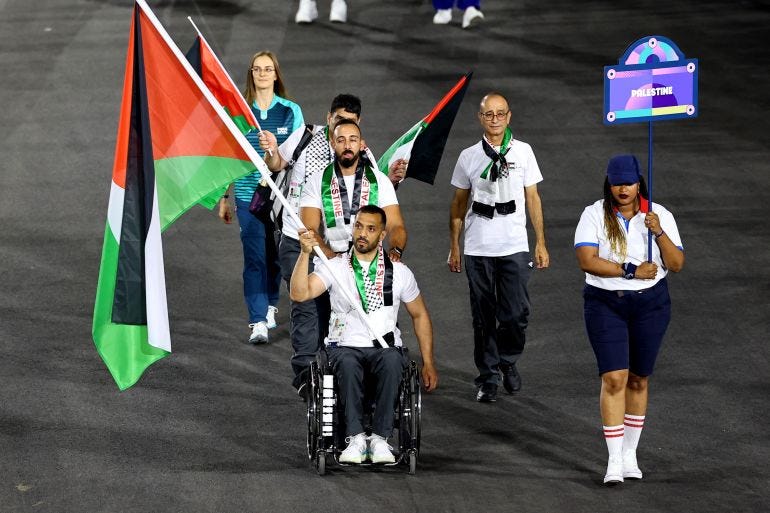
September 4, 2024
The first round of polio vaccinations closed with more than 187,000 children reached, a real and strange achievement in the middle of a genocide, the same world that could organize the inoculation of a city’s children unwilling to make Israel stop bombing them. Israel struck the Sheikh Zayed Towers in the north and killed six.
The genocide held both facts without strain, the child Israel let be saved and the child Israel killed, often the same child a week apart.
September 5, 2024
Israeli bombed a car in Tubas and killed five. Israeli soldiers shot a boy of sixteen in the Far’a camp and dragged his body away behind a bulldozer. Israel’s desecration of the dead, the bodies seized, bulldozed, withheld, denied a grave, an insistence on humiliating Palestinians past the point of death, as though killing them were not enough and the indignity had to follow them into the ground.
September 6, 2024
An Israeli sniper shot Ayşenur Ezgi Eygi, a Turkish-American woman of twenty-six, in the head as she stood at a protest against the settlements in Beita.

Her death drew the world’s notice in a way the thousands of Palestinians Israel had killed beside her never had. The old calculus appeared again: whose killing could still interrupt the world, and whose had already been made ordinary.
September 7, 2024
Israel moved its strikes through Bureij, Nuseirat, the Amr ibn al-Aas school in Sheikh Radwan, the day’s dead gathered in the threes and fours and eights that had become its resting pulse.
September 8, 2024
A gun attack at the Allenby Bridge killed three Israelis and closed the crossings to Jordan. After everything already recorded here, there was little left to explain about where such violence came from. Gaza was in ruins, the West Bank was under raids, the prisons were full, the crossings were cages, and the dead were approaching numbers no language could hold. The violence now came from every direction at once, but its weight was not equal. The heaviest and most relentless force still fell, as it had for eleven months, from Israel onto the people of Gaza.
September 9, 2024
Israel struck al-Mawasi again, its own humanitarian zone again, a strike so deep it left craters where the tents had stood; twenty tents struck, it killed somewhere between nineteen and forty Palestinians, the count uncertain because the bodies were buried in sand and scattered. Israel said it had aimed at fighters. It had aimed into a zone it had created and filled, and the precision of the munition only sharpened the question of what, exactly, Israel had precisely struck.
September 10, 2024
Israel killed Palestinians in homes in Khan Younis and Jabalia, an infant and children among them, and shot a fisherman off the coast near al-Mawasi. Israel’s strikes had reached every kind of place a person could be, a home, a boat, a tent, a queue, a school, a hospital, until the geography of safety in Gaza had shrunk to nothing and the only honest thing left to say about any spot of ground was that Israel’s bomb had not yet found it.
September 11, 2024
Israel struck the al-Jawni school in Nuseirat again, the same UNRWA school it had bombed in May and July, and killed eighteen, six of them the agency’s staff. A school could be a known shelter, its coordinates filed with Israel itself, its dead recurring, and Israel’s bombing would continue, because the point was no longer any particular building but its steady demonstration that nowhere in Gaza was exempt.
September 12, 2024
The WHO reported that the polio campaign had reached its target, Gaza’s children inoculated against a disease Israel’s genocide had helped bring back. In Khan Younis, Israel killed one man with a drone while he was riding a bicycle south of the city. Earlier that day, Israeli warplanes bombed a house in Khan Younis, killing at least four people, including two brothers, and wounding others. Children were being vaccinated against one danger while the larger danger moved overhead, choosing homes, roads, and bicycles.
September 13, 2024
Israel struck its own designated safe zones and killed at least nineteen Palestinians, women and children among them, a woman and a child in Nuseirat, five in al-Mawasi. Israel had used the phrase so often and meant so little by it for so long that to record a massacre in a safe zone was no longer to record an irony, only a location, the word “safe” surviving in Israel’s paperwork long after Israel had killed it in fact.
September 14, 2024
Israel struck a three-story house in Tuffah and killed eleven, four children and three women among them. It struck a school in the northwest and killed five.
Israel’s single-family and single-school strikes continued at their settled rate, and the entries recording them had grown spare from the impossibility of giving each its due, Israel producing grief faster than any language could honor it.
September 15, 2024
A Houthi missile crossed two thousand kilometers from Yemen and fell in central Israel, the longest-range strike the country had absorbed, wounding nine as they ran for cover. The violence Israel had set loose kept traveling farther from Gaza, reaching Yemen, Lebanon, and Tel Aviv, while at its center Israel killed a Palestinian girl and an elderly man in Sheikh Radwan and six more people in Zeitoun.
September 16, 2024
Israel struck a bakery in al-Mawasi and killed five. It struck near the al-Nada towers in Beit Hanoun and killed three men. It killed ten in a single attack on the Nuseirat refugee camp sheltering thousands in tents. Israel moved through the bakeries and the tents and the towers in its rotation, and the world that had once counted each of these as an atrocity now received them as the background hum beneath the louder news Israel was making in the north.
September 17, 2024
Across Lebanon, thousands of pagers exploded at once. They went off in hands, pockets, cars, homes, shops, streets, markets, and clinics. Israel had turned a small object of daily use into a hidden bomb and scattered it through civilian life, then detonated the country into panic in a single moment. At least a dozen people were killed and thousands were wounded. Fighters were maimed. Bystanders were maimed. Children were wounded. People who had no idea they were standing beside an explosive were suddenly part of the blast.
There was something especially vile about the method. It hid in the ordinary. A device on a belt. A device in a hand. It made daily life itself suspect. The point was not only to kill, but to make an entire society feel that anything around it could be turned against it at any moment.
The same day in Bureij, an Israeli strike trapped an estimated fifty Palestinians under the rubble of a single building. When rescuers came, Israel struck them too. Lebanon was bleeding from devices planted inside the day. Gaza was digging through rubble and being bombed for trying. Different methods, same contempt for the human body. Same message to the whole region: there is no civilian space Israel will not enter, no object it will not weaponize, no rescue it will not interrupt.
September 18, 2024
The next day, Hezbollah’s walkie-talkies exploded across Lebanon in Israel’s second wave. Thirty more were killed. Hundreds were wounded. A country was still counting the people maimed by pagers when another set of devices began tearing through bodies.
In Gaza, Israel kept killing across the Strip. Schools, homes, camps, streets, and families were struck through the same day Lebanon was still counting the wounded from the devices. Forty-eight Palestinians were killed in Gaza that day. The reports were too many to make one scene carry them all.
September 19, 2024
Hassan Nasrallah, Hezbollah’s leader, called the device attacks an unprecedented blow and said Israel had declared war, which by any honest measure it had.
In Gaza, Israel kept killing. Israel was moving the center of attention north before everyone’s eyes. The danger for Gaza was not that the killing would stop, but that it would continue with less of the world looking, pushed into the margins of the wider war Israel had opened around it.
September 20, 2024
Israel struck the southern suburbs of Beirut and killed Ibrahim Aqil, a top Hezbollah commander, along with more than forty other Lebanese, women and children among them, in one strike on a residential building.
In Rafah, Israel killed thirteen Palestinians in two houses, women and children among them. In Gaza City, it killed six more in a home in Daraj.
What Israel had been doing in Gaza was now being carried north with the same language and the same method: commanders named first, families buried beneath them, whole buildings made acceptable to destroy because one target was said to be inside.
September 21, 2024
Israel struck the Zeitoun school in Gaza City, where the displaced sheltered, and killed at least twenty-one, thirteen of them children, six of them women, one of them pregnant. Israel said it had aimed at a command room. It always said it had aimed at a command room, and the dead were always children, and Israel had issued the two statements together so many times that they had fused into a single formula it recited over the bodies it made.
I need to stop here for a moment on the record itself.
By this point, English sources were harder to find, thinner, delayed, scattered across live updates and brief wires. Some days took hours to reconstruct. Some strikes appeared in Arabic reports and barely anywhere else. Some names disappeared into totals. This was not an accident outside the genocide. Israel had been killing the people who could report it.
By early October, at least 128 journalists and media workers had been killed, almost all of them Palestinian, and nearly all by Israeli forces. The record was becoming harder to write because the witnesses were being killed with the people they were trying to document.
September 22, 2024
Israel struck the Kafr Qasim school in al-Shati and killed seven, two of them children. Israeli forces raided Al Jazeera’s bureau in Ramallah, tore down a poster of Shireen Abu Akleh, and ordered the office shut.
I want to stop here for Shireen.
Before Gaza, before this year of murdered journalists, Israel had already shown the world what it does to the people who document Palestinian life. Shireen Abu Akleh was shot dead in Jenin in 2022 while wearing a press vest, her voice known across Palestinian homes for years before Israel made her another name in the long record. And even after killing her, Israel could not leave her image alone. Two years later, its soldiers were still tearing her poster from a newsroom wall.
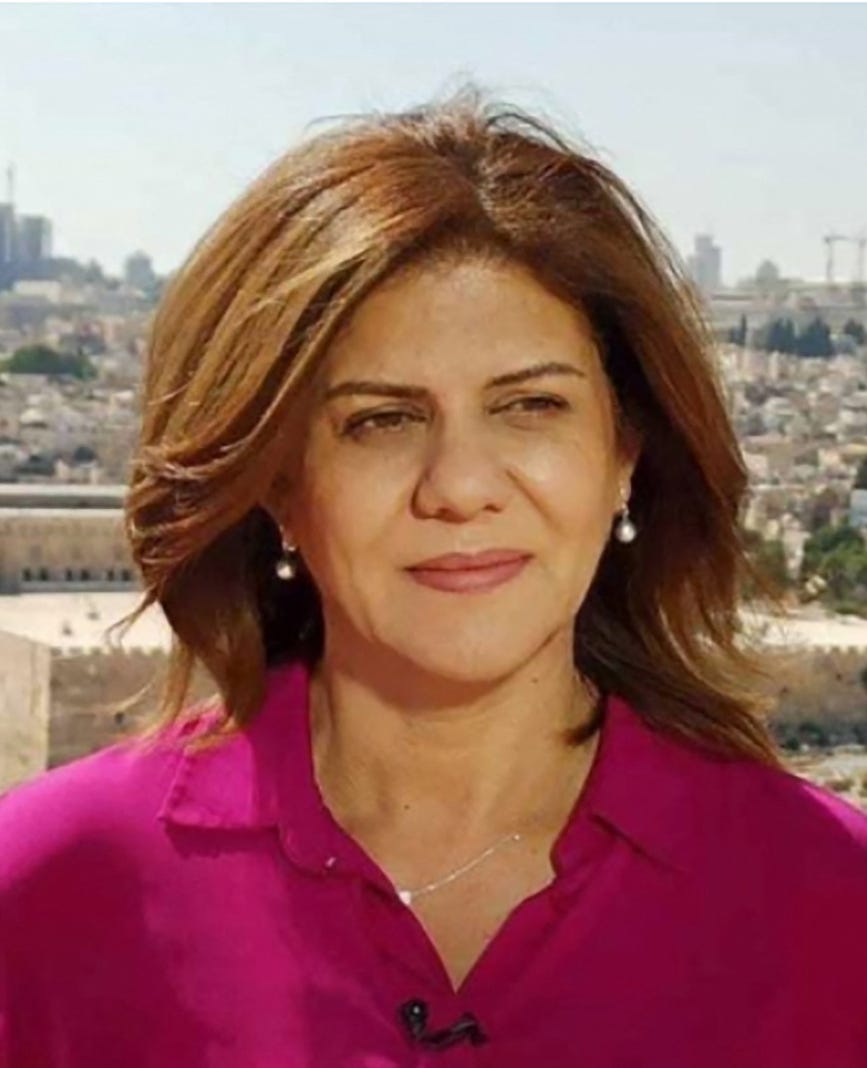
That is the part that says everything. Israel does not only kill the witness. It returns to the memory of the witness. It raids the office, shuts the camera, pulls down the face, as if the image itself is a threat. And it is. The camera keeps showing what Israel needs hidden.
September 23, 2024
In a single day, Israel struck Lebanon more than 1,600 times and killed at least 500 people, the deadliest day Lebanon had seen since its civil war. Whole families fled north as Israel emptied the south from the sky. Israel named a Hamas field commander in one strike and buried entire households in the others. The northern front had now matched, and on this day surpassed, the daily horror of Gaza, and the catastrophe Israel had begun in one besieged strip had become a regional one measured in the hundreds per day.
September 24, 2024
Israel returned eighty-eight Palestinian bodies to Gaza in a container truck, nameless, undated, with no record of where or how Israel had killed them, and the staff at Nasser Hospital refused to bury them until they could be named, unwilling to let even the anonymous dead suffer the final erasure of an unmarked grave.
Israel killed a woman and her four children in Rafah, as it had killed a woman and her five children the day before. This was what the genocide kept returning to: mothers killed with their children, families erased together, murdered bodies sent back without names, and even death denied the dignity of being known.
September 25, 2024
Israel blanketed southern Lebanon with strikes, town after town, Ain Qana, Joun, Bint Jbeil, Tebnine, the dead gathered in the threes and sevens and fifteens, a journalist among them, a French woman, two Canadians, Israel’s reach now pulling in the nationals of a dozen countries.
In Gaza Israel killed a pregnant woman and her four children, one of them seven months old, in Bureij.
Israel bled its two fronts in parallel. In the north, its chief of staff said openly what the strikes were for: not defense, not deterrence, but preparation for soldiers to enter Lebanon after the jets had softened the ground with bodies. He stood before his men waiting at the border and told them the airstrikes were clearing the way.
“You hear the jets overhead; we have been striking all day. This is both to prepare the ground for your possible entry and to continue degrading Hezbollah… We keep striking and hitting them everywhere.”
— Lt Gen Herzi Halevi, September 25, 2024.
Israel was announcing the next invasion while Gaza was still being killed, opening one front with the same appetite that had devoured the other.
September 26, 2024
Israel struck another two hundred and eighty sites across Lebanon and killed seventy-two more, admitted by their own papers.
In Younine it brought down a three-story building and killed nineteen Syrians and a Lebanese, most of them women and children, refugees from one of Israel’s wars dying in another. In Jabalia Israel struck the Hafsa al-Faluja school, full of the displaced, and killed at least fifteen. And in Gaza City and Khan Younis Israel killed the ordinary day’s dead as it always did, in the homes and the camps and the streets, while the world’s eyes turned north toward Beirut and the ground invasion everyone could now see Israel preparing.
Eleven months and three weeks into the genocide, Israel was still killing Palestinians at the same steady rate. The difference was attention. Gaza had not become quieter. The world had simply found a louder front to look at while the killing there continued.
PALESTINE AND LEBANON, AS ONE
September 27, 2024
Israel killed a family of nine in Shebaa, four of them children, one a pregnant woman.
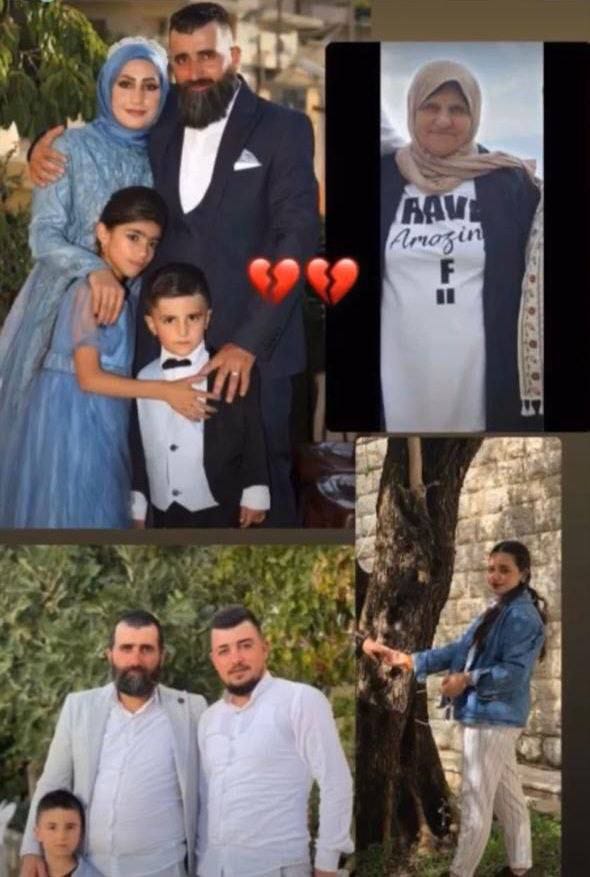
Then, in the evening, Israel dropped more than eighty bombs on a residential block in the Dahieh, the southern suburb of Beirut, flattening four buildings to reach one man beneath them. Hassan Nasrallah had led Hezbollah for thirty-two years, since Israel killed his predecessor in 1992. He was the most consequential figure the resistance in Lebanon had produced, a man whose voice an entire generation across the region had grown up listening to. Israel buried him under an apartment complex along with everyone who happened to be living above him.
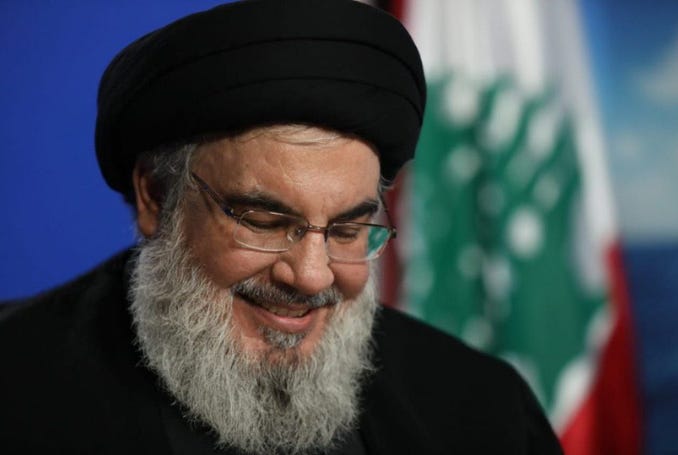
It would take a day for the confirmation to come. The bombs were certain. Earlier that day in Shebaa, Israel had killed a family of nine, four of them children, one of them pregnant. By night, it had brought the same logic to Beirut. This was the world Nasrallah had spent his life naming and fighting: a state that reaches for one man by crushing the homes around him, that kills families and calls it a target, that makes protection itself the reason resistance exists.
September 28, 2024
41,586 dead in Gaza.
Hezbollah confirmed it. Nasrallah was dead. Across the Arab world people who had argued about him all their lives stood still for a moment, because whatever he had been to them, his killing meant the ground was moving.
Israel did not pause to let the region absorb it. In Taybeh and Deir Siriane it struck civil defense centers and a medical clinic and killed eleven Lebanese medics. Through the day it struck what the Lebanese Health Ministry counted as thirty-three more dead. The bombs that had perfected themselves over Gaza were now falling on Lebanon at the same tempo, on the same kinds of places: the clinic, the rescue center, the people who come to help.
September 29, 2024
Israel killed 105 people in Lebanon in a single day. It struck a home in Dahr-al-Ain and killed at least eleven. It killed four members of the Lebanese Scouts. In Zboud it brought down a building and killed at least seventeen members of one family, the same single-family erasure it had made routine in Gaza, now exported north.
And in Gaza it went on. Israel struck the Umm al-Fahm school in western Beit Lahia, where the displaced sheltered, and killed at least four, wounding fifteen. In Ain El Delb, near Sidon, an Israeli strike killed forty-five people and wounded seventy-five. Palestine and Lebanon were sharing blood again and again, all of it struck by the same Israeli hand.
September 30, 2024
Wafa al-Udaini was a Palestinian journalist and a teacher who had spent years trying to get Gaza’s story past the siege, founding an initiative to train young Palestinians to write to the world in its own languages. Israel killed her in an airstrike on her house in Deir al-Balah, along with three members of her family, two of them her children.
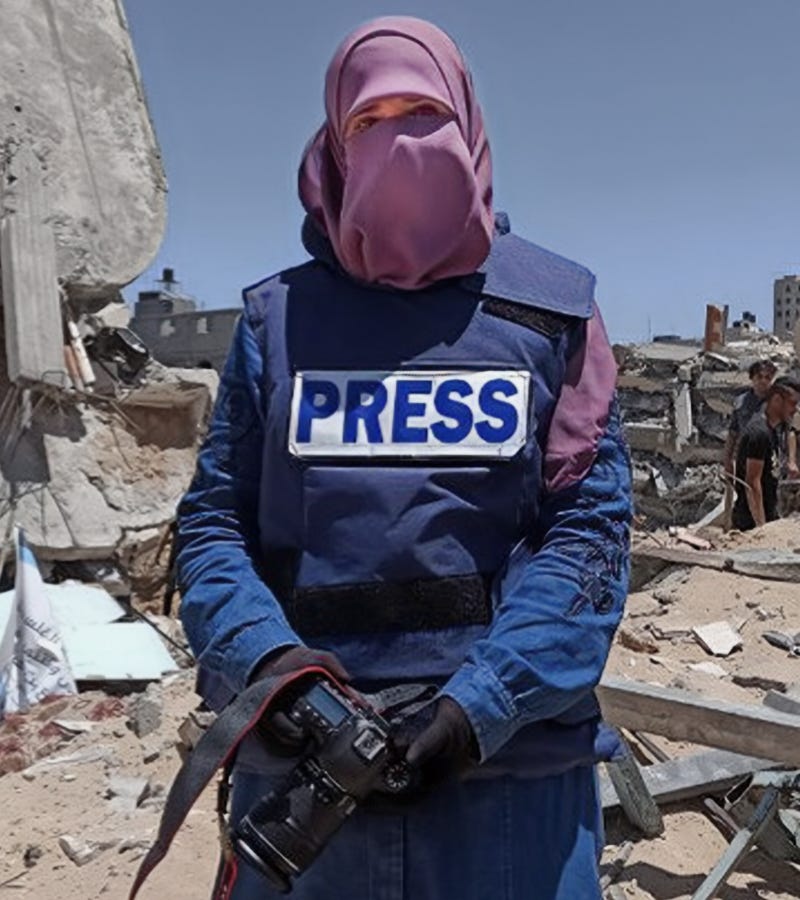
That same day Israel killed Fateh Sherif Abu el-Amin, Hamas’s leader in Lebanon, in a strike on his house in the al-Bass camp in the south, and killed his wife, his daughter, and his son with him. In Tyre, Israel killed a Lebanese soldier and five of his relatives, most of them women and children. The Lebanese army began pulling back from the border, more than five kilometers, and Israeli tanks massed on the other side, and everyone could read what was coming. Israel’s defense minister said it plainly to the Israeli soldiers waiting north for their next rampage:
“All the means that may be required ... from the air, from the sea and on land. Good luck.”
— Yoav Gallant, September 30, 2024.
October 1, 2024
Israel began its ground invasion into Lebanon, calling it limited and localized, the same words it always reached for. By day’s end eight Israeli soldiers were dead in south Lebanon, killed by the resistance that had been written off in headlines a week before and was waiting in the border villages it knew.
In Gaza Israel did not let up for the new front. It struck the Shujayea Boys school sheltering the displaced in Tuffah and killed at least six. In southern Khan Younis it destroyed homes and killed at least twelve members of one Palestinian family, and held the civil defense back from the rubble for five hours. It struck a tent in an evacuation center in western Khan Younis and killed five of one family, children among them.
Then, at nightfall, Iran answered. Around two hundred ballistic missiles rose out of the east and crossed into historic Palestine, fired for Nasrallah, for Haniyeh killed in Tehran, for the Iranian general killed beside Nasrallah. Israel and the Americans knocked most down; some got through and struck near military sites. The region had crossed into something it had not been in before, Iran and Israel trading direct blows over the body of Gaza, and still, under all of it, Israel kept killing Palestinians by the family.
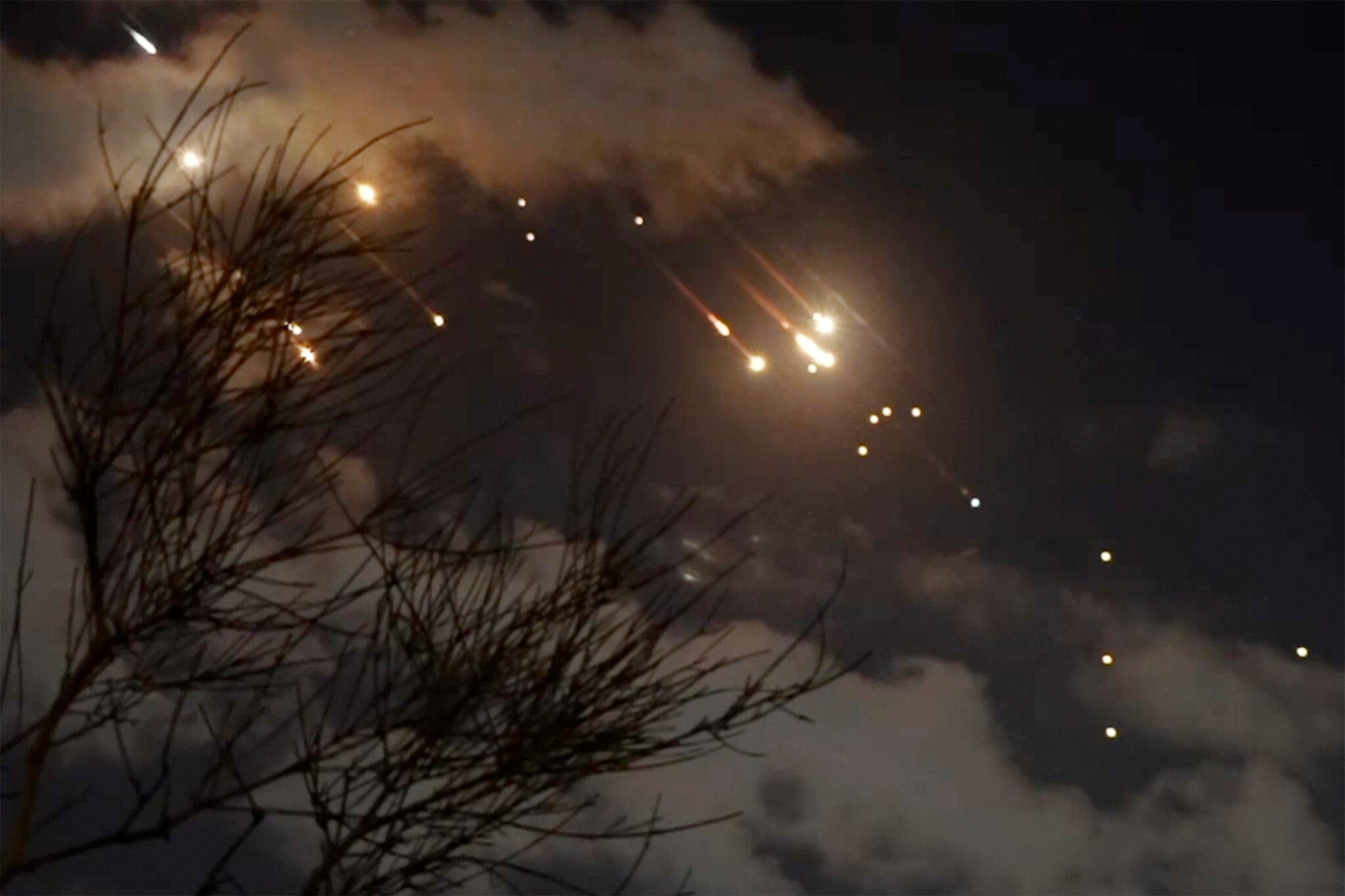
October 2, 2024
Israel struck the al-Amal Institute for Orphans in western Gaza City, an orphanage sheltering the displaced, and killed at least eight. It struck the Muscat school, also full of displaced families, and killed at least nine more.
In southern Lebanon the resistance ambushed Israel’s soldiers in Odaisseh and Maroun al-Ras and Kafr Kila, and Israel’s dead mounted, eight in a day, the most it had lost on a single day of ground fighting in a long time.
October 3, 2024
Israel killed ninety-nine Palestinians in Gaza in a day, the count climbing fast again under the cover of the louder northern front. Its soldiers had been hit in southern Lebanon the day before. In Gaza, the killing sharpened. Israel struck a building in Bashoura, in central Beirut, and killed at least seven rescue and medical workers. The World Health Organization said twenty-eight health workers had been killed in Lebanon in a single day. In Tulkarm, in the West Bank, an Israeli strike on the camp killed at least twenty people. Nour Odeh called it
"the largest and deadliest air strike that we’ve seen in the occupied West Bank for over 20 years."
And in Beit Lahia, an Israeli drone fired on Palestinians gathering firewood because there was no fuel left in Gaza and they had been reduced to burning what they could find. Four were killed for that too.
October 4, 2024
UNICEF said 690 children had been wounded in Lebanon in six weeks. In northern Gaza, Israel killed ten-year-old Rasha and her eleven-year-old brother Ahmed in an airstrike on their home. Three months earlier, Israel had bombed the same building and the family had survived with minor injuries. This time the children did not survive.
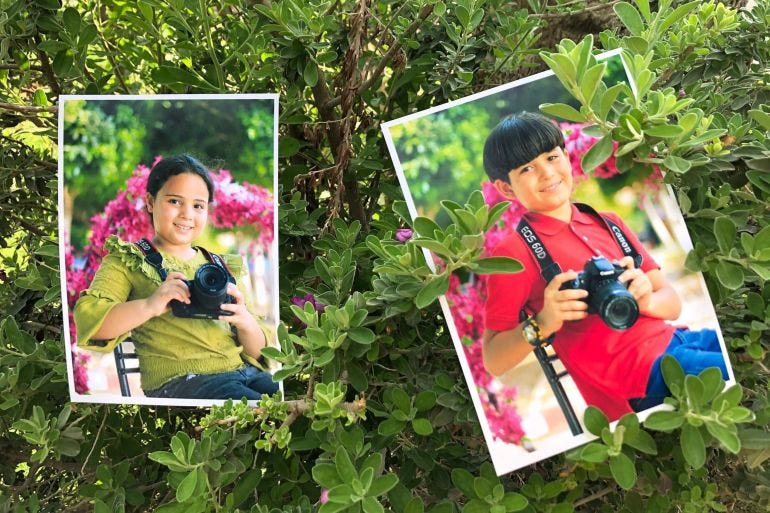
After they were buried together, the family found Rasha’s will. A ten-year-old had written instructions for her own death. She asked them not to cry because their tears hurt her. She divided her clothes, her accessories, her bead kits, her stories, her notebooks, her toys, and her monthly allowance. Twenty-five shekels for Rahaf. Twenty-five for Ahmed. She asked them not to shout at Ahmed, as if he would still be there to receive the money and the mercy she left for him.
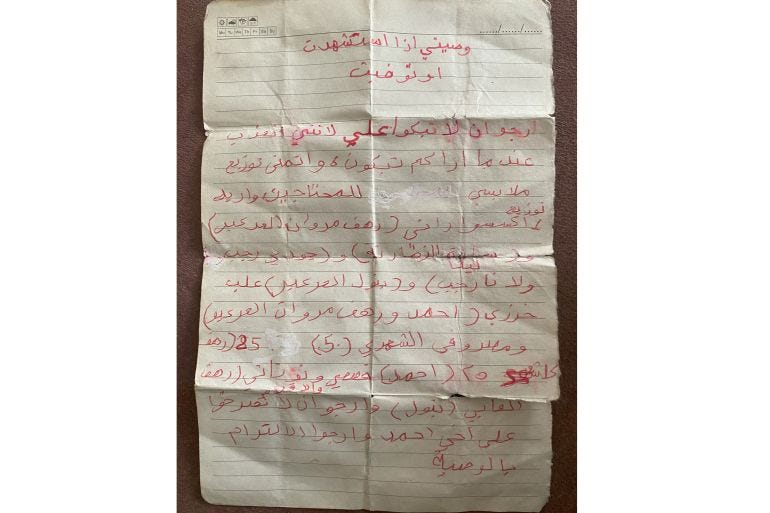
October 5, 2024
In the Beddawi camp near Tripoli, in the far north of Lebanon, Israel killed Saeed Atallah Ali, a Hamas military official, with a drone, and killed his wife and his two young daughters with him. Israel was reaching the length of Lebanon now, from the southern border to the northern camps, to kill Palestinians who had been refugees there for generations and the children who were born to them.
In Lebanon, Israel struck a mosque in Bint Jbeil and the hospital beside it, wounding nine medical staff. Macron called for halting weapons to Israel. It was the kind of sentence Western leaders had learned to say when the dead became too many to ignore. But the failure was never a shortage of words. The bombs kept falling because the weapons kept arriving.
October 6, 2024
Israel struck the Shuhada al-Aqsa mosque in Deir al-Balah, full of displaced people, and the Ibn Rushd school sheltering more of them, and killed at least twenty-six Palestinians, wounding more than ninety. It killed ten in a home in northern Gaza, and seventeen in a strike on the Jabalia camp, nine of them children.
Hassan Hamad was a nineteen year old Palestinian journalist who had kept filming northern Gaza when almost no one else was left to. Israel killed him in an airstrike on his house in Jabalia. He had received a threat from an Israeli number, telling him to stop, before they killed him.
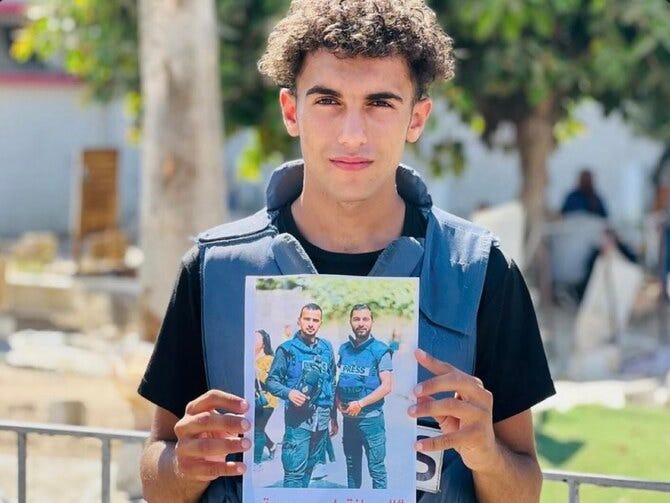
October 7, 2024
A year. Israel marked it by lowering its flag to half-mast for its own dead and beginning, that same morning, a new wave of strikes across all of Gaza. It killed a twelve-year-old with live rounds in the Qalandia camp during a raid. In Baraachit in Lebanon it struck a fire station and killed ten firefighters.
Ziad Abu Helaiel was a Palestinian who had taken part in peaceful protest in Hebron, my hometown. Israeli soldiers beat him to death in his own house.
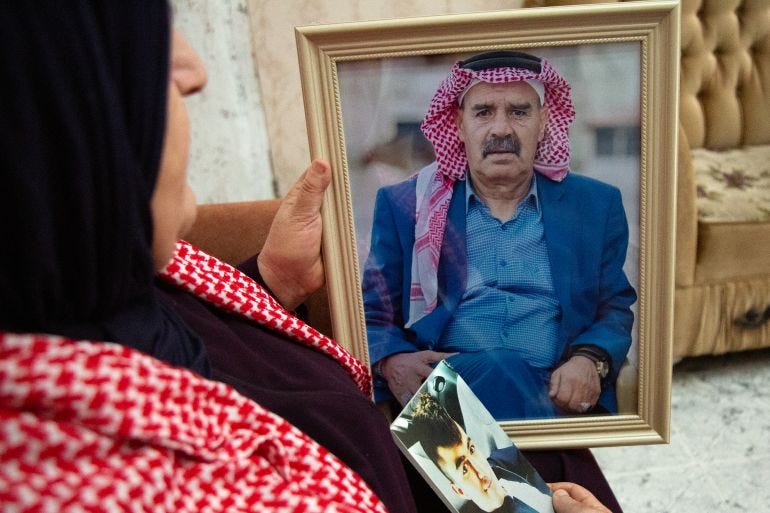
A year to the day since October 7, and Israel answered the mark the only way it knew, with more of the killing that the year had been made of.
October 8, 2024
Israel struck two sites in the Bureij camp, tents among them, and killed at least seventeen, wounding dozens more. It struck central Gaza and killed thirty more, six of them children, two of them women. In Damascus an Israeli strike on an apartment killed ten Syrian civilians.
October 9, 2024
The count passed forty-two thousand.
Israel killed nine of one family in a strike on a house in Shujayea. It ordered the evacuation of Kamal Adwan Hospital, and the Awda and Indonesian hospitals, emptying the north of the places that could still treat the wounded as it tightened the siege around Jabalia. UNRWA stopped its lifesaving work in the north under the weight of the operation. Forty-three Palestinians had been killed by Israeli forces in five days in Jabalia alone.
Fadi al-Wahidi was an Al Jazeera cameraman. An Israeli quadcopter shot him in the neck in northern Gaza and he fell into a coma, and Israel refused to let him leave Gaza for the treatment that might have saved his function, even as press-freedom groups begged. An Al-Aqsa TV journalist was killed the same day in a strike on journalists at the Abu Shrekh roundabout. Israel was killing the people who filmed it, one after another, and refusing even to let the wounded ones out.
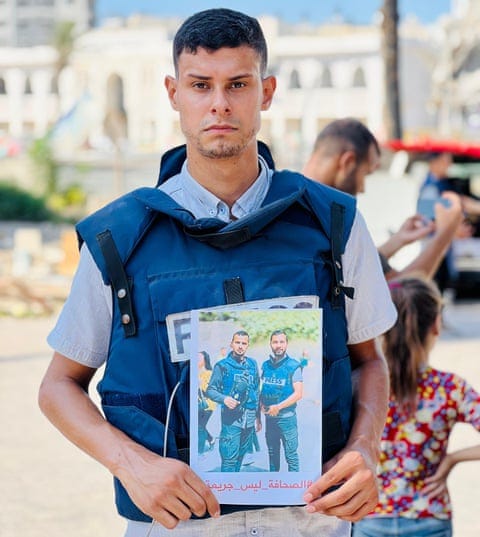
October 10, 2024
Israel struck the Rufaida school sheltering the displaced in Deir al-Balah and killed at least twenty-eight, wounding fifty-four, women and children among them. It struck a home in al-Fakhari in Khan Younis and killed five, a woman and her three children among them, one a seven-month-old girl.
In central Beirut Israel struck to reach Wafic Safa and killed at least twenty-two people, wounding 117; he reportedly lived. Israeli soldiers fired on three UNIFIL positions in the south and wounded two peacekeepers, shooting at the United Nations itself now, because nothing was to be allowed to watch.
October 11, 2024
I need to stop here for a different reason.
There are killings from this day that I can find in pieces, but not hold together cleanly anymore. A clinic sheltering the displaced. A dead infant. A girl crying, saying the dead were children. A building in Jabalia brought down with families inside it. Twenty-two killed, ninety wounded, fourteen left under the rubble. The fragments are there, but the trail is broken across live updates, wire reports, Arabic posts, dead links, repeated strikes, and the same places being bombed again and again until one massacre bleeds into another.
This is also what genocide does. It does not only kill people. It destroys the ability to return to the killing with precision. It overwhelms the record until the dead become difficult to place, even when they were never hidden. For a year now I have been trying to give each day a shape, to keep the names, numbers, homes, schools, hospitals, camps, and streets from disappearing into one enormous total. But some days resist reconstruction because Israel made the violence too constant to separate.
So I will leave the uncertainty inside the entry. Israel killed Palestinians in Gaza that day. Children were among them. Families were under the rubble. The count rose to 42,126. That much is clear. The rest is what happens when a people are killed everywhere at once, and the world leaves the record to be gathered afterward from the ruins.
October 12, 2024
Israel threatened now to fire on ambulances in southern Lebanon, accusing Hezbollah of riding in them, the same accusation it had used to justify striking Gaza’s ambulances for a year. The threat was the permission.
Francesca Albanese, the UN special rapporteur, said Israel was committing another massacre in Jabalia. The Palestinian ambassador to the UN called the operation in the north a genocide within the genocide. Osama Hamdan said the same: what is happening in northern Gaza is genocide. Two hundred Palestinians had been killed in seven days in the siege of the north. Nicaragua broke relations with Israel and called it what it was.
October 13, 2024
An Israeli quadcopter dropped explosives to drive Palestinian civilians, children among them, out of the Jabalia camp on foot, filmed and verified. Israel struck a house in Nuseirat and killed eight, a Palestinian woman and her six children among them. It shelled a school sheltering the displaced in Nuseirat and killed at least twenty-two, including fifteen children, and wounding eighty.
An Israeli drone struck the al-Shati camp and killed at least five Palestinian children who had been playing football. In Nabatieh, Israel destroyed a market that had stood since 1910, taking the memory of a place along with its people.
October 14, 2024
Israel struck the tents on the grounds of the al-Aqsa Martyrs Hospital again and killed four, wounding seventy, women and children among them. It struck a food distribution center in the Jabalia camp and killed ten, women and children among them, because in the besieged north it was now striking the places people went to eat. It struck the Hafsa school sheltering the displaced in Jabalia and killed many, children among them.
In Aitou, in the Christian north of Lebanon far from any front, Israel struck an apartment building and killed at least twenty-one people, twelve of them women, two of them children, displaced people who had fled north thinking the north was far enough.
No relief supplies had entered northern Gaza since the first of October.
A strike on a US citizen’s family in Jabalia wounded seventeen, seven of them children, and when the ambulance came Israel struck it and killed a doctor and several children.
October 15, 2024
Israel killed six in a home in al-Fukhari, two of them children. It killed at least ten in a home in Bani Suheila. Residents of the al-Faluja neighborhood in the Jabalia camp said Israel was planting explosive-filled barrels in the ground to bring down their houses, while drones and artillery struck overhead and the medics could not reach the wounded, and soldiers shot at anyone who moved across the north, in al-Balad, an-Nazla, Beit Lahia, Beit Hanoun. In Qana, the town Israel had massacred in 1996 and again in 2006, Israel killed ten more and wounded fifteen.
October 16, 2024
Shaaban al-Dalou was nineteen. He had survived an earlier strike and was lying in a hospital bed in Deir al-Balah, connected to an IV, unable to move. Israel struck the courtyard of Al-Aqsa Martyrs Hospital, where displaced families had been sheltering in tents, and the fire took him where he lay.
The video is one of the images I do not know how to write around. His body was burning. His arm was raised. The IV was still beside him. People screamed around him because there was nothing they could do. He was alive inside the fire, and the world saw it. A hospital courtyard. A patient in a bed. A boy who wanted to be an engineer, burned in front of everyone because Israel had made even the place of treatment into another killing field.
There are images from this genocide that collapse the distance people try to keep. Shaaban burning in that bed was one of them. It made every excuse obscene. No tunnel, no command center, no language about targets could survive the sight of a wounded teenager burning alive in a hospital courtyard while his mother and brother were killed in the same fire. This was not collateral. This was Gaza as Israel had made it: the wounded burned in their beds, the displaced burned in their tents, the hospital turned into a furnace.
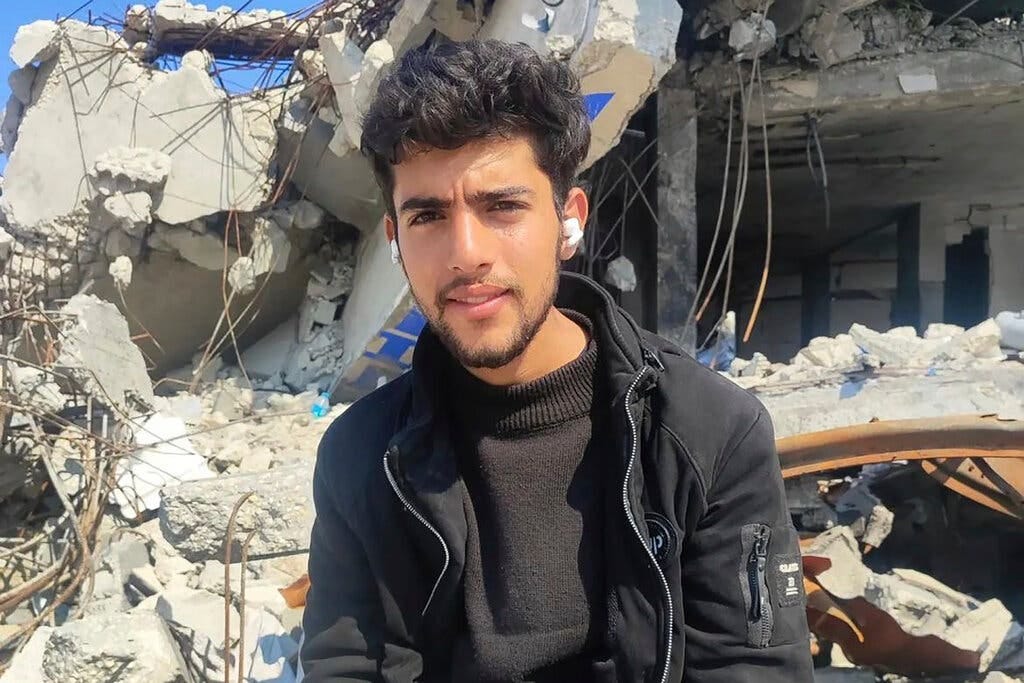
In Nabatieh, Israel struck the municipal building and killed at least six people, among them the town’s mayor, Ahmad Kahil, who had stayed to run what was left of his city, and wounded fifty-two. Around three hundred and fifty Palestinians had been killed since the second battle of Jabalia began. Eighty-five Palestinian children sat arbitrarily detained in Israeli prisons while their families in the north were buried under the barrels and the drones.
The siege of the north was three weeks old and the world was looking at Beirut, which is what the noise had been for. Israel had opened a second front loud enough to kill northern Gaza in the quiet behind it. But Shaaban’s fire broke through anyway. For a moment, the world saw what Palestinians had been trying to say for a year: there was no safe place left, not even a hospital bed.
YAHYA
October 17, 2024
42,438 killed in Gaza.
Israel struck an UNRWA school sheltering the displaced in Jabalia and killed at least twenty-eight, women and children among them, wounding 160. It struck a residential building in the Maghazi camp and killed at least ten, women and children among them.
And in Tal as-Sultan, in Rafah, Israel killed Yahya Sinwar.
They thought our leaders were like theirs, sending young men to die while they lavished in comfort and abundance. But they found him, a martyred soldier, fighting on the front lines with his men. He was an indigenous son of the land, a son of Palestine’s fabled ancient past, of her trees and rivers and wind. He was a king among the wretched of the earth, a refugee, a political prisoner, a fighter, a man of faith, resolve, and bottomless love for his people. Colonizers can never understand the native, but we understand them well. They think the resistance dies with the martyrdom of leaders, as if the burning yearning for liberty, home, and heritage in our chests can be extinguished when they break our hearts. Farewell, noble son.
— my notes, October 18, 2024
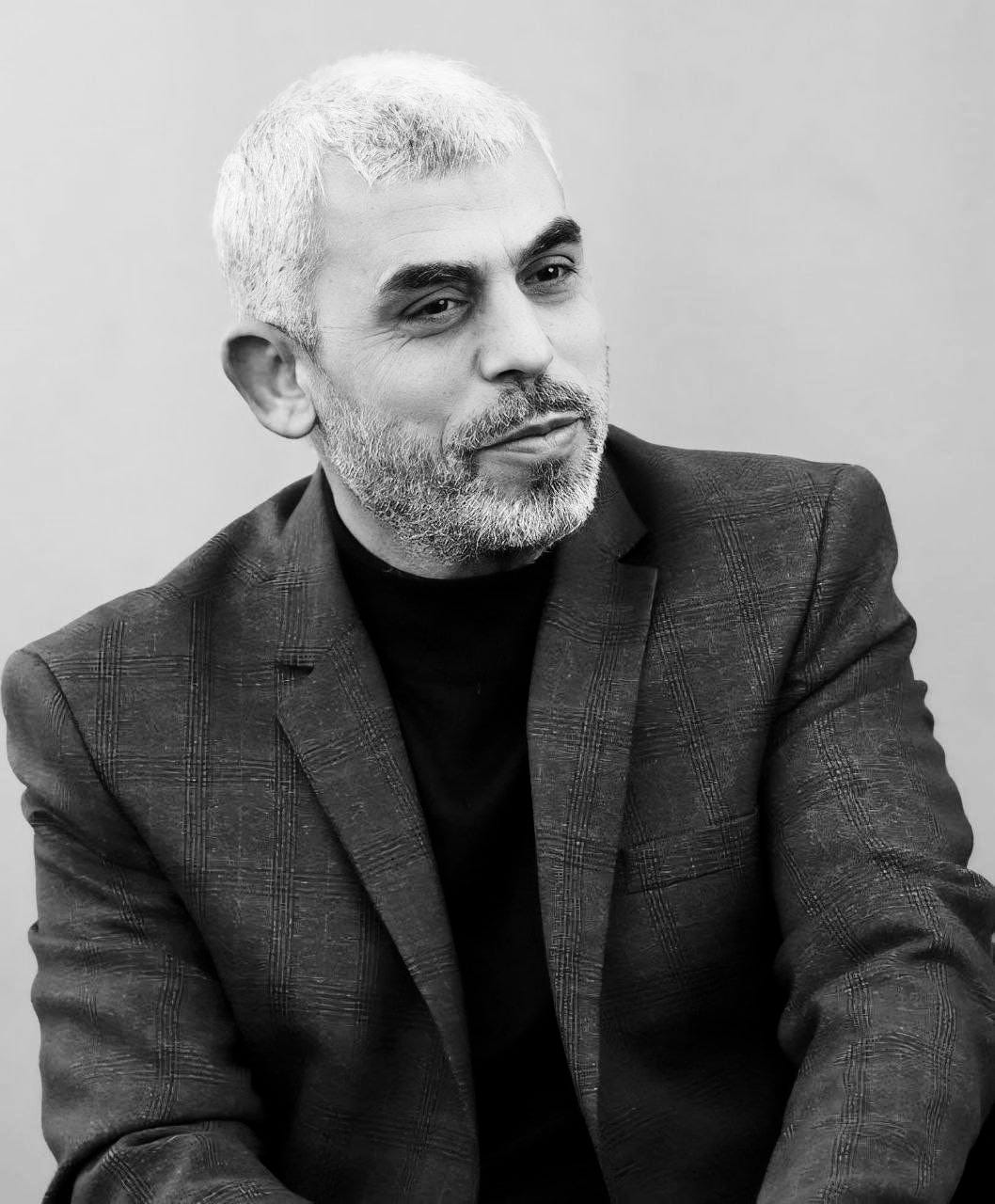
The details of his last moments made the story impossible to contain. Israeli soldiers had not found him through some grand intelligence operation. They came upon three fighters in Tal as-Sultan by chance, in the ruins of Rafah, not knowing Yahya was among them. The men split under fire. Two went one way. Yahya went alone into another shattered building, in battle fatigues, armed, already wounded by a tank shell.
He climbed to the second floor. Israeli soldiers came up after him. He threw two grenades. One exploded. They pulled back and sent a drone in to see what was still alive inside.
The drone found a man alone in the dust, sitting in a broken chair, his face wrapped in a keffiyeh, one arm badly damaged, the room around him blown open. There was no tunnel, no hostage shield, no hidden command room. Just a wounded Palestinian fighter in a ruined house in Gaza, facing the machine that had come to watch him die. Even then, with almost nothing left, he lifted what looked like a stick and threw it at the drone.
Israel released the drone footage, thinking it had filmed defeat. It had filmed the opposite. A man hunted for a year, wounded, surrounded, with an army outside and a drone in his face, still refusing the last posture of surrender. It was almost too old a scene for the modern world: the broken room, the wounded body, the empire’s machine hovering inches away, and the final useless gesture that somehow became larger than usefulness.
That is why Palestinians understood it immediately. Not because death is victory. Not because any one man is larger than Gaza’s dead. But because Israel had spent a year saying he was hiding behind his people, and then found him at the front where the killing was, dressed for battle, fighting until the last thing his body could still do was resist.
October 18, 2024
The day after Israel killed Yahya Sinwar, northern Gaza was pushed deeper into silence. Israel cut communications and internet across the north, Jabalia above all, so that the siege it was tightening there would happen in the dark, with no one able to call an ambulance or send out a picture. An Israeli bulldozer brought down a house in the al-Faluja area of Jabalia with a displaced family still inside it. The World Health Organization said Israel was blocking medical specialists from entering Gaza at all.
Israel had just shown the world the last minutes of the man it had hunted for a year. In Jabalia, it was making sure the people it kept killing would be seen less and less.
October 19, 2024
Two patients in the intensive care unit of the Indonesian Hospital died after Israel destroyed its generator. There was no machine left to keep them breathing, so they stopped breathing. Israel carried out a mass arrest sweep through the evacuation centers of the north and took those it seized to places it would not name. It struck a clearly marked vehicle, despite coordination with Israel itself, and killed four water engineers who were on their way to repair the water system in Khuza’a, killing the men who keep a population alive along with the work they were going to do.
October 20, 2024
Israel killed eighty-four Palestinians in a day. It struck a small grocery shop in Deir al-Balah and killed four, an elderly woman among them. In the north the siege ground on, and the world’s eyes were still on Lebanon, where Israel had just confirmed it killed Hashem Safieddine, the man expected to succeed Nasrallah.
By this point, you know the structure. Gaza is being starved, bombed, buried, cut off, counted, and counted again. Lebanon is being pulled into the same fire. The West Bank keeps appearing in the margins with its own dead. The names change, the places change, but the shape of the day does not.
I am asking you to keep moving because Palestinians had no choice but to keep moving. Read the next entry. Count the next dead. Carry the last ones with you.
October 21, 2024
Israeli artillery struck a crowd fleeing UN schools in Jabalia after Israel’s own evacuation order sent them onto the road, and killed at least seven. Israel killed six men in Jabalia who were trying to reach drinking water. It shelled a school sheltering the displaced in the same camp and killed at least ten, children among them. Near the Rafik Hariri University Hospital in Beirut, an Israeli strike killed at least eighteen, four of them children.
The pattern of the genocide mastered by Israeli forces: order people to flee, then strike them fleeing; strike the schools they shelter in; kill the men who go for water; bury the camp in the dark with its phones cut, so the killing leaves the smallest possible record.
October 22, 2024
Israel killed an eleven-year-old in Nablus, shot for throwing a stone at an armored jeep in the distance. It struck a group of Palestinians in Beit Lahia with a drone and killed at least fifteen, women and children among them. Israeli drones with loudspeakers ordered the families of Beit Lahia to flee down roads that led to military checkpoints, and at the checkpoints Israel took the men away to undisclosed locations and pushed the women south.
This was the General’s Plan working as designed, the scheme some of Israel’s own former generals had pressed, to empty the north of its people, declare anyone who stayed a combatant, and seal them in to be starved or killed.
October 23, 2024
Israel detained five Gaza civil-defense rescuers and destroyed their only fire truck and forced their work in the north to a halt, then struck them deliberately, the agency said, to drive them out of Jabalia. The IDF accused six Al Jazeera journalists in the north of being fighters, the prelude it lays down before it kills reporters. The UN said two water stations in the north had stopped because Israel was denying the fuel to run them.
October 24, 2024
More than 770 Palestinians had now been killed since the second battle of Jabalia began. Israel struck the Shuhadaa al-Nuseirat school sheltering the displaced and killed at least seventeen, women, elderly, and nine children among them. It destroyed at least ten residential buildings in the al-Hawja area of the Jabalia camp; the civil defense estimated 150 people killed or wounded under them. The director of Kamal Adwan Hospital said Israel had shelled his intensive care unit and arrested most of his surgeons.
“We are providing the bare minimum to patients. Everyone is paying the price of what is happening now in northern Gaza.”
— Dr Hussam Abu Safia, October 24, 2024.
The civil defense said Israel had threatened to bomb and kill its crews if they kept working in the north.
October 25, 2024
Israel struck residential buildings in the al-Manara area of Khan Younis and killed at least thirty-eight, fourteen of them children. It struck an oxygen station at Kamal Adwan Hospital and infants and children died for lack of oxygen. It carried out mass arrests of the men sheltering at that hospital and took them away for interrogation, among them Abdul Rahman Batah, eighteen years old, a young media worker.
Abdul Rahman was known online for his humor. His videos came out of northern Gaza at a time when almost everything from the north was death, siege, rubble, and hospital corridors. People watched him because he made them laugh from inside the place everyone else was mourning. That was its own kind of mercy. He gave Gaza a little light in months that had almost none.
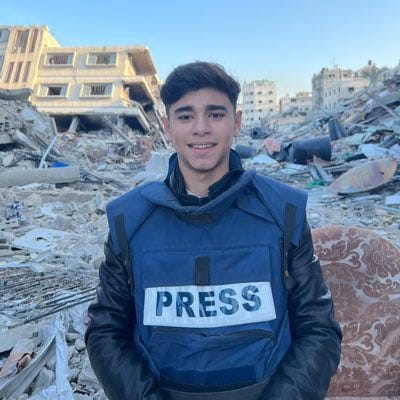
October 26, 2024
Israel struck a residential area in Beit Lahia and killed at least thirty-five Palestinians. At Kamal Adwan Hospital it killed the child of the hospital’s own director, Hussam Abu Safia, and tore apart the pharmacy and the intensive care unit, arrested the male medical staff, and locked the women in a room without food or water.
Dr. Abu Safia would later lead the funeral prayer over his own son in his white coat, tears on his face, his voice breaking over the body before he returned to work.
The Knesset, meanwhile, passed a law to brand UNRWA a terrorist organization, moving to outlaw the one agency feeding the people it was starving.
October 27, 2024
Israel struck the UN-run Asmaa school sheltering displaced families in the al-Shati camp and killed at least eight, among them children, and three of them journalists. It struck a building housing the displaced in Beit Lahia and killed ten. It struck a rescue center in Ain Baal in Lebanon and killed seven, three paramedics among them.
The medics and the journalists kept dying in the same week because they were the two kinds of witness Israel most needed gone, the ones who carry the wounded and the ones who carry the story.
October 28, 2024
The count passed forty-three thousand.
Israel killed at least sixty people, two of them children, in strikes on the Baalbek area of Lebanon.
The Knesset passed its law branding UNRWA a terror organization, to take effect within ninety days, an attempt to dismantle the agency that ran the schools and the food and the clinics for the refugees of 1948 and their children, in the middle of the worst hunger Gaza had ever known.
An Israeli brigadier general would soon say it plainly: there were no more civilians left in north Gaza, and the aid would not be allowed back, and the people would not be allowed to return.
October 29, 2024
Israel destroyed a five-story residential building housing the displaced in Beit Lahia and killed at least 109 Palestinians, women and children among them, dozens more wounded, more buried. In a single strike on a single building Israel killed more than a hundred people, and because the north was sealed and dark, the number arrived almost without faces, a count where there should have been 109 names.
October 30, 2024
Israel struck one of the main markets in Beit Lahia and killed ten. It struck a car in the Maghazi camp and killed three, a woman among them.
The siege of the north of Gaza was a month old now and its purpose was clear, to make it uninhabitable and call the making of it a battle.
October 31, 2024
Israel struck two homes near the Nuseirat camp and killed sixteen. In Daraj, in Gaza City, an Israeli shell hit a group of people and killed four, a child among them.
November 1, 2024
Israel struck the Baalbek-Hermel area of Lebanon and killed fifty-two people, wounding seventy-two. In Gaza it struck a market in Sheikh Radwan, west of Gaza City.
The two countries’ dead in the same daily ledger, Lebanon’s in the dozens, Gaza’s in the dozens.
November 2, 2024
More than fifty children, the reports said, had been killed in Israeli strikes in Jabalia in two days. An Israeli quadcopter struck the car of a UNICEF worker on the polio campaign as she passed through Jabalia, and missed her.
Two Israeli soldiers were killed in the north in a single blast and Israel lost more in the south, the resistance still fighting in the ruins it had been declared dead within.
November 3, 2024
Israel struck the children’s floor and the nursery of Kamal Adwan Hospital, and its water tanks, and shelled it again during a visit by a WHO delegation, wounding a child. More than 1,300 Palestinians had now been killed since the siege of the north began, the civil defense said. Over 100,000 people in the north of Gaza were without food, water, or medicine. The hospital was being killed floor by floor with the patients still inside it.
November 4, 2024
Israel struck a home in Beit Lahia and killed at least twenty-five people, thirteen of them children, and buried more under the rubble. Israeli settlers attacked olive pickers in the the West Bank, people who had gone out to gather the year’s harvest. Gaza’s government media office said every hospital in the north was now out of service.
November 5, 2024
Israel struck tents in az-Zawayda and killed six people, among them a child of six and a child of four. Two elderly Palestinian patients, one of them a cancer patient, died at an Israeli checkpoint near the Indonesian Hospital while they were fleeing Beit Lahia, dead in the line, waiting for a soldier’s permission to pass. In Lebanon rescuers pulled thirty bodies killed by an Israeli strike in Barja in Central Lebanon.
That same day Netanyahu fired his defense minister for disagreeing about the after, as though there would be an after, while the killing went on exactly as before.
November 6, 2024
Israel struck a building sheltering the displaced in the al-Manshiyya area of Beit Lahia and killed at least fifteen. It struck a home in Beit Lahia and killed the wife of a Palestinian prisoner and her three children, killing a man’s whole family while the man himself sat in a cell.
Across the ocean an election had just been decided, and an Israeli soldier with a clear American accent celebrated by firing grenades from an automatic launcher into buildings in Gaza, and the army said he would be disciplined for the celebration, not the grenades.
November 7, 2024
Israeli Brigadier General Itzik Cohen said: Israel would not let the people of the north return to their homes, the aid would not regularly come, there were no more civilians left in north Gaza.
It was a confession of the plan, spoken aloud, that the north was to be emptied and kept empty. That day Israel struck a home in the Jabalia camp and killed twenty-seven, and a school sheltering the displaced in al-Shati and killed twelve, women and children among them.
November 8, 2024
The UN human rights office said it had verified the identities of 8,119 of Gaza’s dead and that almost seventy percent of them were women and children. Israel answered that the ratio of civilians to fighters was one to one and blamed Hamas.
The UN had counted the children. Israel offered a ratio. Two ways of speaking about the same dead.
November 9, 2024
Israel’s navy shot three Palestinian men dead from warships off the coast northwest of Gaza City, men it had just released from detention, killing them at the water’s edge moments after letting them go. It struck the Fahd al-Sabah school sheltering the displaced in Tuffah and killed at least six from two families, two of them journalists. It struck the tents of its own designated safe zone in al-Mawasi and killed at least nine, women and children among them.
November 10, 2024
Israel destroyed a home on Old Gaza Street in the northern Jabalia camp and killed at least thirty-six Palestinians, thirteen of them children, nine of them women. It struck a home in Almat in Lebanon and killed twenty-three, seven of them children. Netanyahu acknowledged for the first time, to his cabinet, that Israel was behind the pager and walkie-talkie attacks, claiming the credit now that the audacity had paid. The day’s dead in Gaza and Lebanon ran past in their dozens beneath the boast.
November 11, 2024
Israel struck a small café in the al-Mawasi humanitarian zone, the zone it had ordered people into, and killed ten, five of them minors. It killed at least twenty Palestinians in the Nuseirat camp. Israel had now destroyed more than thirty-seven towns in southern Lebanon, some forty thousand housing units, razing the south village by village while it sealed the north of Gaza.
November 12, 2024
Israel struck a group of Palestinians waiting for aid and killed twelve. It struck a crowded area near the al-Noor Mosque in Deir al-Balah and killed at least six. International aid organizations said together that Israel had failed to meet even the American demands to let more aid in, and that conditions were worse than at any point since the genocide began. Israel had created the conditions for mass hunger and the conditions for it to persist.
November 13, 2024
A nine-year-old girl died of wounds from an Israeli strike that had killed her parents two days before. Israel struck a home in the Jabalia camp and killed at least ten, children among them. Haaretz reported the army was preparing to stay in Gaza until at least the end of 2025, planning years more of this. The UN special committee had already found that Israel’s methods in Gaza were consistent with genocide. By this point, the argument over the word had become its own obscenity. Palestinians were being killed, starved, displaced, buried under their homes, burned in their tents, and people were still debating whether the language was too strong. The word had almost lost meaning from the effort to keep proving it.
November 14, 2024
A one-year-old boy died in the Al-Aqsa Martyrs Hospital because the supplies that would have saved him were not there, after Israel rejected the WHO’s request to let him leave Gaza. A Human Rights Watch report said Israel’s forced displacement of hundreds of thousands of Palestinians amounted to crimes against humanity. Israel struck a civil defense center in Duris in Lebanon and killed at least fifteen, and another strike in the same city killed eight, five of them women. The same day, in the Negev, inside historic Palestine, Israeli forces demolished the mosque of the Bedouin village of Umm al-Hiran, the war on Palestinian life reaching even the citizens it claimed as equal.
November 15, 2024
The family of Fadi al-Wahidi, the Al Jazeera cameraman Israel had shot in the neck in Jabalia and left in a coma, began a hunger strike to force his evacuation, after Israel rejected every appeal to let him out for treatment. Israel killed a woman and her three children in a home in Ain Qana in Lebanon. Israeli border police killed a young Australian-Palestinian dental student in the West Bank. The killing reached across every border Israel held, from a coma it would not relieve to a student in a car.
November 16, 2024
Israel struck the Abu Assi school sheltering displaced families in al-Shati and killed at least ten, women and children among them. The UN said 109 aid trucks had been violently looted in Gaza, the desperation Israel had engineered now turning the starving against one another for the little that got through. The Khan Younis municipality announced it had run out of fuel to operate its water and sewage facilities depriving 1.2 million Palestinians of clean water. The machinery that keeps a city alive was stopping, piece by piece, exactly as the siege intended.
November 17, 2024
Israel struck a multistory residential building in Beit Lahia and killed at least fifty people, burying more under the debris, children among them. It struck a building in Beirut and killed Mohammad Afif, Hezbollah’s media chief, along with civilians, killing the spokesman as it kept killing the cameramen, the whole apparatus of telling turned into a target. Later in the day, it was reported that the death toll from the single strike on a residential building in Beit Lahia had reached seventy-two.
November 18, 2024
Israel struck a home near Kamal Adwan Hospital and killed at least seventeen. It killed paramedics in Houmine El Tahta and Hanaway and Nabatieh, six in one day in the south of Lebanon. The siege of the north of Gaza was producing its dead faster than they could be named, and the hospital that should have received them was itself under daily fire.
November 19, 2024
The Gaza Government Media Office said 17,492 of the dead were children. Hussam Abu Safiya, the director of Kamal Adwan Hospital, said the malnutrition cases had begun to arrive, the children and the elderly first, because the famine had reached the point of starving people to death. Seventeen thousand four hundred and ninety-two children. Seventeen thousand four hundred and ninety-two homes, if there is any, with an empty place in them.
November 20, 2024
Israel struck a residential neighborhood in Beit Lahia near Kamal Adwan Hospital and killed sixty-six people, most of them women and children, wounding more than a hundred, burying three disabled people including a blind girl. It struck a home in Sheikh Radwan and killed twenty-two, ten of them children. In Palmyra in Syria, Israel killed more than a hundred in a single day of strikes. The hospital’s own director said an elderly man had starved to death in the north. The famine now had its dead, named one at a time, while the buildings came down sixty at a time around them.
November 21, 2024
The International Criminal Court issued arrest warrants for Benjamin Netanyahu and Yoav Gallant for crimes against humanity and war crimes in Gaza, and for Mohammed Deif of the Qassam Brigades.
After thirteen months, the court that moves so slowly had named the Israeli prime minister a wanted man. It changed nothing on the ground that day; Israel struck on. But the warrant existed now, in the world’s record, with his name on it.
November 22, 2024
An infant died in an incubator at Kamal Adwan Hospital after Israel struck its oxygen station and generators and the power failed. Israel struck the hospital for a seventh straight day. The Gaza Health Ministry said every hospital in Gaza would have to stop or cut its services within two days for lack of fuel.
The same day the Israeli government sanctioned Haaretz, its own newspaper, for publishing criticism of the genocide. Israel was killing the witnesses in Gaza and silencing those from within in the same week.
November 23, 2024
Israel struck a building in the Basta district of central Beirut to reach one Hezbollah official, who was reportedly not even there, and killed at least twenty-nine people, wounding sixty-seven, women among them. The method it had perfected over Gaza, bring down the building, count the target later, was now standard in Beirut. Shrapnel from an Israeli quadcopter wounded Hussam Abu Safiya, the director of Kamal Adwan, in the leg, the man who kept reporting his hospital’s killing now bleeding inside it himself.
November 24, 2024
Israel struck the Kamal Adwan Hospital for an eighth consecutive day. It killed Palestinians in Bureij and Nuseirat by the family, children among them. In Lebanon it fired on a Lebanese army center near Tyre and killed a Lebanese soldier and wounded eighteen, then apologized, the apology as routine by now as the killing. The hospital in the besieged north had become the single most besieged object of the genocide, struck every day, its incubators going dark, its director wounded, its staff arrested, and still it was trying to function.
November 25, 2024
Israel shot dead two people in Ya’bad in the West Bank, one of them a boy of thirteen. The Gaza Government Media Office said roughly ten thousand tents had been washed away or wrecked by winter storms, the displaced who had been driven into tents now losing even the tents as the cold came. Winter was arriving on a population Israel had stripped of its houses, and the season itself was becoming another weapon.
November 26, 2024
Israel struck the Al-Hurreya school sheltering the displaced in the Zeitoun neighborhood of Gaza City and killed at least thirteen, wounding more than forty.
And then, that evening, Israel approved a ceasefire with Hezbollah. The northern front, the loud one, the one the world had watched, was to stop. Lebanon would get its truce. Gaza would not. The genocide that had begun the whole catastrophe, the killing that the war in Lebanon had been built on top of and used to bury from view, was to continue exactly as before, with no ceasefire, no pause, no end. Israel had opened the second front loudly enough to kill northern Gaza in the quiet behind it, and now it was closing that front and leaving Gaza where it had left it all along: alone, besieged, starving, and still dying at the same steady rate, with the world’s attention departing northward toward a peace that was not for them.
THE NORTH ALONE
November 27, 2024
44,282 dead in Gaza.
At four in the morning the Lebanon ceasefire took effect, and the guns in the north went quiet for the first time in fourteen months.
Gaza woke to the same morning it had woken to every day since October, the bombs falling exactly as before. Israel struck the al-Tabin school in Gaza City, the same school it had massacred in August, and killed men, women, children alike. It struck a home in al-Faluja in the Jabalia camp and killed four, a pregnant woman among them. And in Lebanon, on the first day of the truce, Israeli soldiers fired on people returning to their own villages in the south and killed at least six. The ceasefire was a paper laid over the south. It was not laid over Gaza, and it barely held over Lebanon.
November 28, 2024
Israel struck a camp for the displaced in Abasan with a drone and killed four. It struck a tent sheltering the displaced in Khan Younis and killed four, a child among them. The northern front was silent and the southern one was not, and the difference told you which killing the world had been willing to stop and which it was content to let continue.
November 29, 2024
Two children and a woman were crushed to death in a stampede outside a bakery in Gaza, the hunger Israel had built now killing people in the crowd for bread. An Israeli quadcopter killed Ahmed el-Kahlout, the head of the intensive care unit at Kamal Adwan Hospital, on his way to work, killing the doctor on the road before he could reach his patients.
Israel struck Beit Lahia twice, one strike on a residential building, and killed seventy-five people; most were women and children.
The World Food Programme said all the bakeries in central Gaza had been forced to close for lack of supplies. The bread was gone, and the people died for the bread that was gone.
November 30, 2024
Israel struck a car on the Salah al-Din road in Khan Younis and killed five, three of them workers for World Central Kitchen and one for Save the Children, the aid workers dying again in the act of bringing aid. It struck a group of Palestinians waiting for food from an aid convoy in Khan Younis and killed at least twelve. An Israeli drone killed Mahmoud Almadhoun, the chef who had founded the Gaza Soup Kitchen, killing the man who fed people for feeding people.
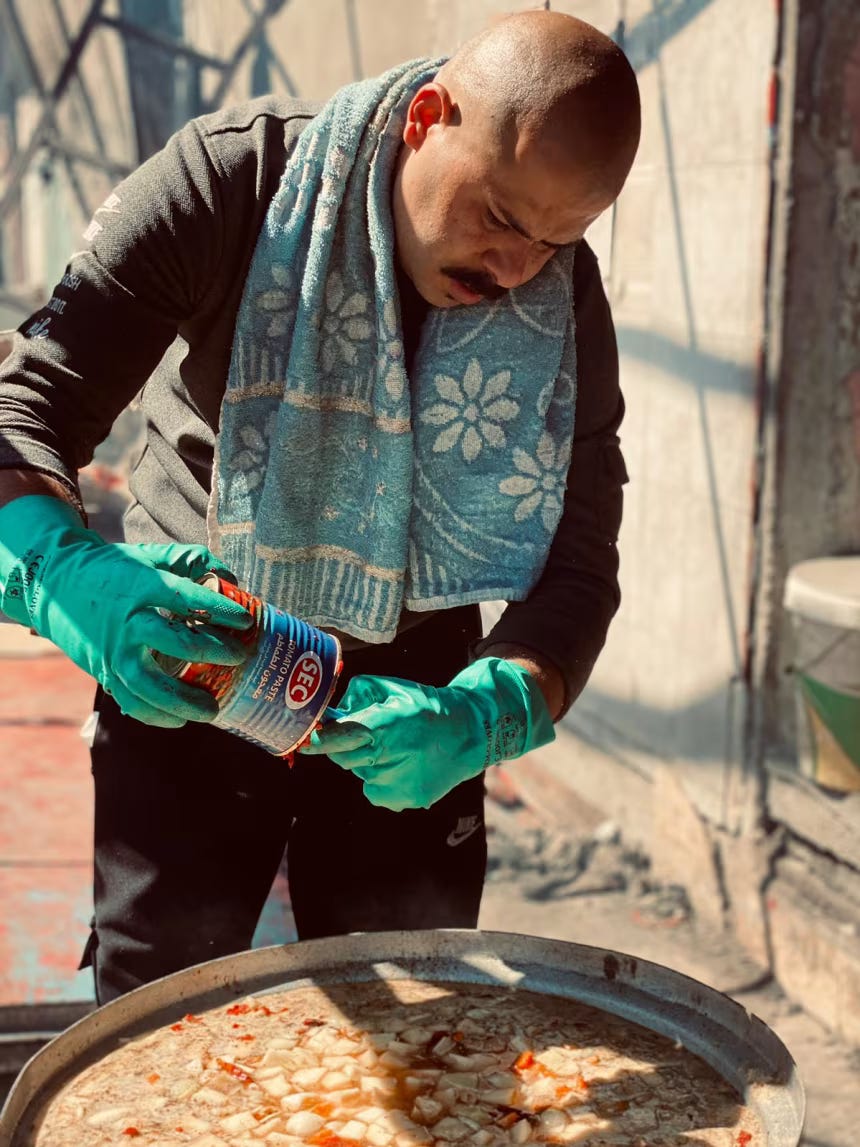
A six-story building came down in the Tel al-Zataar area of Jabalia and killed dozens, women and children among them.
A health official said the famine had now spread to all of Gaza.
December 1, 2024
UNRWA paused its aid deliveries through Kerem Shalom for fear of the gangs and the gunfire that the hunger had loosed. The agency said more than 415,000 displaced people were sheltering in its school buildings, and hundreds of thousands more in worse conditions still. Israel killed Palestinians in Beit Lahia, ten in a single home, and shot two more dead off the fishermen’s port west of Gaza City. The machinery of survival was being dismantled piece by piece, and what it left behind was a population crowded into schools and tents with the food cut off.
December 2, 2024
The UN said Gaza now had the highest number of child amputees per capita in the world. A generation of children with limbs gone, the wounds of this genocide written into the bodies that would carry it the rest of their lives. France accused Israel of violating the Lebanon ceasefire fifty-two times in five days and killing three Lebanese civilians; Israel said it was enforcing the terms. The truce in the north was a truce Israel broke at will, and the genocide in the south never paused at all.
December 3, 2024
The Food and Agriculture Organization said food availability across Gaza was at an all-time low. Israel struck a residential building in Beit Lahia and killed a number of people. Even the number was hard to hold there by then. The north of Gaza had been sealed so tightly that the dead arrived as fragments: a building hit, bodies under rubble, families missing, no full count able to come out. Israel struck the al-Falah School sheltering the displaced in Zeitoun and killed at least six, and the al-Jazeera Club sheltering more of them and killed two.
The schools and the buildings full of the displaced came down one after another, and the hunger deepened beneath them, and the north was sealed so that almost none of it reached the world intact.
December 4, 2024
Amnesty International accused Israel of genocide in Gaza. The largest human rights organization in the world used the word, in a full report, and Israel denied it, and the killing continued past the denial. Israel struck the tents of its own designated safe zone in al-Mawasi twice and killed at least twenty, women and children among them. It struck a home in Sheikh Radwan belonging to ad-Dalu family, killing ten, children among them. It struck the al-Mawasi tents again and killed twenty more, and a residential block in central Gaza City and killed and wounded dozens.
The word genocide was now in the mouths of the world’s institutions, and the genocide answered each new naming with another day of exactly itself.
December 5, 2024
Israel struck Kamal Adwan Hospital again and killed a sixteen-year-old boy in a wheelchair who had just been discharged, and seven others. Israel announced it had “evacuated” 90,000 Palestinians from Jabalia, Beit Lahia, and Beit Hanoun, and killed at least 1,750 people in the north since October, the figure it offered as achievement being the emptying of the north by death and expulsion. The scenes from Beit Lahia told a different story. And the killing never stopped either, fifteen Palestinians were killed by Israel that day in a single home in Beit Lahia.
Israel’s General’s Plan was working, which is to say the north was being unmade.
December 6, 2024
Israeli shelling around Kamal Adwan Hospital killed at least thirty-three people. Then Israel completely evacuated the hospital, ordered everyone out through a checkpoint, detained seventy of them, using hospital detainees as human shields, then taking them to an undisclosed place for interrogation, and left the hospital barely functioning, no surgeons remaining. The last functioning hospital in the north was being killed methodically.
It struck a home in Nuseirat and killed at least twenty-six, many women and children among them.
December 7, 2024
Kamal Adwan ran out of electricity after Israeli gunfire hit its generators, and then Israel struck the hospital itself, its intensive care unit among the sections hit, wounding three children. Reporters Without Borders would soon say that more than 145 journalists had been killed in Gaza by Israeli forces since October. The hospital going dark and the journalists going silent were the same project: to make the north a place where the dying could neither be treated nor seen.
December 8, 2024
Next door, the Assad regime fell. Within hours Israel moved its forces into the UN buffer zone in the occupied Golan, took the towns of Khan Arnabah and Madinat al-Baath, and seized the whole of Mount Hermon without resistance, taking more Syrian land in a single day amid the collapse. The opportunism was total: a regime falls, and Israel’s first act is to grab the territory the chaos left undefended.
In Gaza that same day it struck a camp for the displaced in Deir al-Balah and killed five of one family, children among them, and a home in Bureij and killed at least eleven, and shelled Kamal Adwan again, a hundred shells and bombs, wounding staff and patients. Two catastrophes at once, and Israel found a way to profit from both.
December 9, 2024
Israel struck people lined up to buy flour in Rafah and killed ten, the bread line a target again. It struck a residential building in Bureij and killed at least nine of one family, mostly women and children. A drone killed three people in Jabalia who were searching for food. Israel struck a building sheltering a displaced family in the north, the building came down and killed twenty-four, children, women, and elderly among them. Hunger drove people into the open to look for food, and Israel killed them where the hunger had driven them.
December 10, 2024
Israel struck a multi-floored building in Beit Hanoun and killed at least ten. It struck a home in Nuseirat and killed at least seven, woman and children among them, and the footballer Mohamed Khalifa with them. The killing in the north had become so routine that it no longer required a reason given or a target named, only a building and the people inside it.
December 11, 2024
Israel struck a residential building near Kamal Adwan Hospital and killed dozens, women and children among them. Iman al-Shanti was a Palestinian journalist; Israel struck a building in Sheikh Radwan and killed her, her husband, and her three sons together.

Reporters Without Borders put it on the record: more than 145 journalists killed in Gaza since October, and a war-crimes complaint filed with the court. They were killing the people who told the story and the families of the people who told the story, in the same strikes, in the same week.
December 12, 2024
Israel struck a post office sheltering the displaced and the homes around it in the Nuseirat camp and killed more than thirty people, women and children among them, fifty wounded. An Israeli drone killed Saeed Jouda, the only orthopedic surgeon left in northern Gaza, on the road between Kamal Adwan and al-Awda hospitals, killing the one man who could set the bones of the wounded in the entire north.
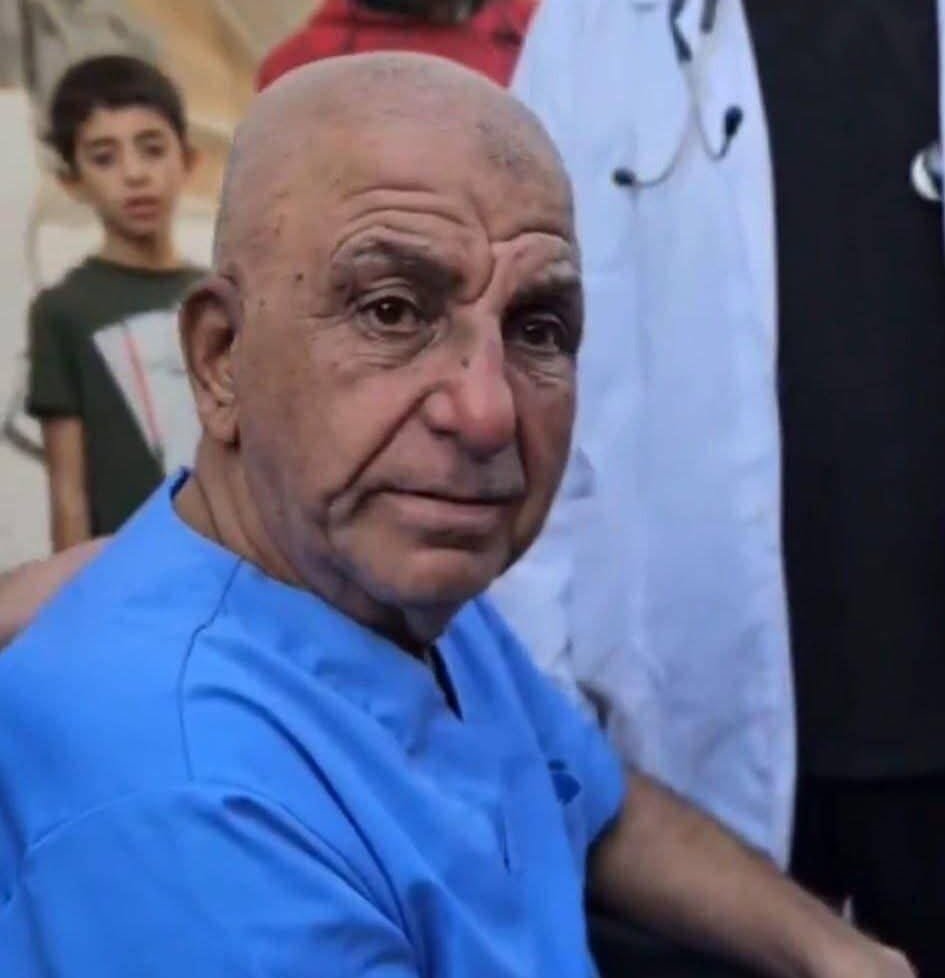
The method was precise in its cruelty: kill the surgeon, and every broken body after him goes unset.
December 13, 2024
Israeli strikes around Kamal Adwan Hospital wounded three more medical staff and set an ambulance ablaze. The hospital killed by attrition, a strike here, a generator there, a doctor on the road, an ambulance burned, until what remained could no longer be called a hospital at all.
December 14, 2024
Israel struck near the municipality building in Deir al-Balah and killed at least ten, among them the mayor of Deir al-Balah, killing the man who ran the city. Mohammed Jabr al-Qrinawi was a Palestinian journalist; Israel struck a house in Bureij and killed him with his wife and his children. Another journalist, Mohammed Balousha, killed the same day.
The mayors and the journalists, the surgeons and the rescue workers, everyone who held a place together or told the world about Gaza, Israel was murdering one by one.
December 15, 2024
Israeli artillery struck the Khalil Oweida School sheltering the displaced in Beit Hanoun and killed at least forty-three, two of them children. Ahmed Al-Louh was a video journalist for Al Jazeera; Israel struck a civil-defense position in the Nuseirat camp and killed him and five others, among them the head of the emergency service in Nuseirat, then accused him of being a fighter without evidence, the accusation it lays down over the bodies of the journalists it kills. Four journalists killed in the span of forty-eight hours.
It struck the Ahmed bin Abdul Aziz school sheltering the displaced in Khan Younis and killed at least twenty more, women and children among them. The schools that sheltered the displaced were no longer even pretextually distinct from the killing fields; they were the killing fields.
December 16, 2024
The count passed forty-five thousand, as if that meant anything.
Israel struck a home in Shujaiya and killed ten, two of them children. It shot dead a disabled Palestinian man during a raid in Hebron. In the West Bank the settlers seized sixty more dunams south of Hebron and the soldiers forced farmers off 250 more, demanding Israeli permits to return to land that had been theirs for generations. Forty-five thousand, with no pause, the genocide constantly adding its dead.
December 17, 2024
At least ten bombs from Israeli quadcopters hit Kamal Adwan Hospital and cut its power. Then Israel planted booby traps around the hospital, rigging the ground around the wounded. It struck a residential building in Daraj and killed at least ten, women and children among them, and a home in Beit Lahia and killed at least fifteen. The hospital was now surrounded by explosives Israel itself had buried.
December 18, 2024
Israeli strikes on two houses in northern Gaza killed fourteen, most of them women and children, one of them a Palestinian doctor. A strike near Kamal Adwan killed eight and buried children under the rubble. Israeli shelling near al-Awda Hospital wounded seven medics and a patient.
Every hospital still standing in the north was being struck, and the people who ran them killed, in a campaign whose object was a north without medicine.
December 19, 2024
Human Rights Watch accused Israel of genocide for deliberately denying clean water to Palestinians in Gaza. A Médecins Sans Frontières report found clear signs of ethnic cleansing. The naming kept coming, from Amnesty, from Human Rights Watch, from MSF, from the UN’s own committees, and Israel rejected each one and continued. Israeli soldiers told Haaretz the army had ordered them to kill anyone who entered the Netzarim Corridor, to shoot on sight in the strip of Gaza Israel had cut across the middle of the territory. Israel struck two schools sheltering the displaced in Tuffah and killed at least seventeen, five of them children.
December 20, 2024
Israeli settlers set fire to a mosque in Marda and wrote racist slogans on its walls. Israel struck a home in Jabalia and killed at least twelve, seven of them children and two of them women, and a building in al-Shati and killed at least ten, and a building in Nuseirat and killed eight, four of them children.
The Israeli settlers burned the mosques in the West Bank while the Israeli army burned the families in Gaza, the two hands of the same project working their separate ground.
December 21, 2024
A seven-year-old child was killed by a landmine Israel had left behind in the Bethlehem hills, Israel killing children even in the ground it had left. Israel issued evacuation orders for the medical staff of Kamal Adwan Hospital and then struck the hospital’s critical areas, its intensive care unit and its incubators, claiming it housed fighters. It struck a house in Deir al-Balah and killed eight, three women and two children among them, and a home in northern Gaza and killed a woman and her three daughters. The incubators of the last hospital in the north, struck deliberately, with the newborns inside.
December 22, 2024
Israel struck the Musa bin Nusair school sheltering the displaced in Daraj and killed at least eight, among them children. It struck Kamal Adwan again, killed three, and the director, Hussam Abu Safiya, said Israel had ordered the whole hospital evacuated. Oxfam said only twelve aid trucks had reached the north of Gaza since October. Twelve trucks in nearly three months, for a population Israel had sealed in to starve.
December 23, 2024
Israel struck people guarding an aid convoy in central Gaza and killed four, then was accused of protecting the looters and blamed Hamas. The Gaza Government Media Office said Israeli strikes killed and wounded over fifty people, children and women among them, in the Nuseirat camp. And Israel admitted, openly now, that it had assassinated Ismail Haniyeh in Tehran, claiming the killing it had carried out in July, the negotiator it had killed while pretending to negotiate. Israeli shelling hit Kamal Adwan Hospital again and wounded at least twenty. The hospital was struck nearly every day now.
December 24, 2024
Israel launched a large operation against Tulkarm in the West Bank and killed at least eight, bulldozing the camp’s schools, shops, houses, a mosque, the water network, cutting the power and the internet, bringing Gaza’s methods fully into the West Bank now.
Israel struck the third floor of al-Awda Hospital and forced patients out of the Indonesian Hospital. Four separate strikes across Gaza killed at least nine, among them a civil emergency worker. Fifteen months to the season, and Israel spent the eve of the Christian holiday in the land where that holiday was born bulldozing a refugee camp in Tulkarm, emptying hospitals in Gaza, and killing the people who carry the wounded.
THE COLD
December 25, 2024
45,361 dead in Gaza. Christmas.
A three-week-old Palestinian girl froze to death in a displacement camp near Khan Younis. She was the third infant in recent days to die of the cold. Israel had driven these families out of their houses and into tents, and then the winter came, and the tents did not hold it, and the smallest bodies could not keep their own warmth through the night. Israel struck a four-story building sheltering the displaced in Jabalia and killed at least nine, five of them children. It struck water and fuel tanks at Kamal Adwan Hospital and destroyed them and blew out the doors and windows.
The world marked the holiday born in this land, and in this land a newborn died of cold in a tent because the people who occupy the territory had decided she would have no roof.
December 26, 2024
Five journalists were killed in an Israeli strike on a vehicle clearly marked “press” in front of al-Awda Hospital in the Nuseirat camp, and Israel said they were fighters, without evidence, the accusation it lays over the bodies of the reporters it kills. A fourth infant died of the cold in seventy-two hours. Israel struck a building near Kamal Adwan Hospital and killed about fifty people, five of them hospital staff.
The New York Times reported what the soldiers had been operating under: an order, the first of its kind in Israeli military history, permitting strikes on the homes of suspected Hamas members that risked killing up to twenty civilians each as acceptable collateral. The number was set in advance. The families in the homes were the collateral set against it.
December 27, 2024
Israel raided Kamal Adwan Hospital after forcing most of its staff and patients and their families out, then set fire inside the facility, the last functioning hospital in the north. A health worker from the Gaza European Hospital froze to death in his tent in al-Mawasi, a man who tended the sick dying of the cold himself. Israel struck a home in Sheikh Radwan and killed at least fifteen, women and children among them. The hospital that had been struck nearly every day for a month was now burning, and its director, Hussam Abu Safiya, who had stayed through all of it, was inside Israel’s reach.
December 28, 2024
Israel raided Kamal Adwan and detained more than 240 people, took the hospital’s director, Hussam Abu Safiya, for interrogation and called him a suspected fighter without evidence, and the Gaza Health Ministry said fifty people, hospital staff among them, were killed.
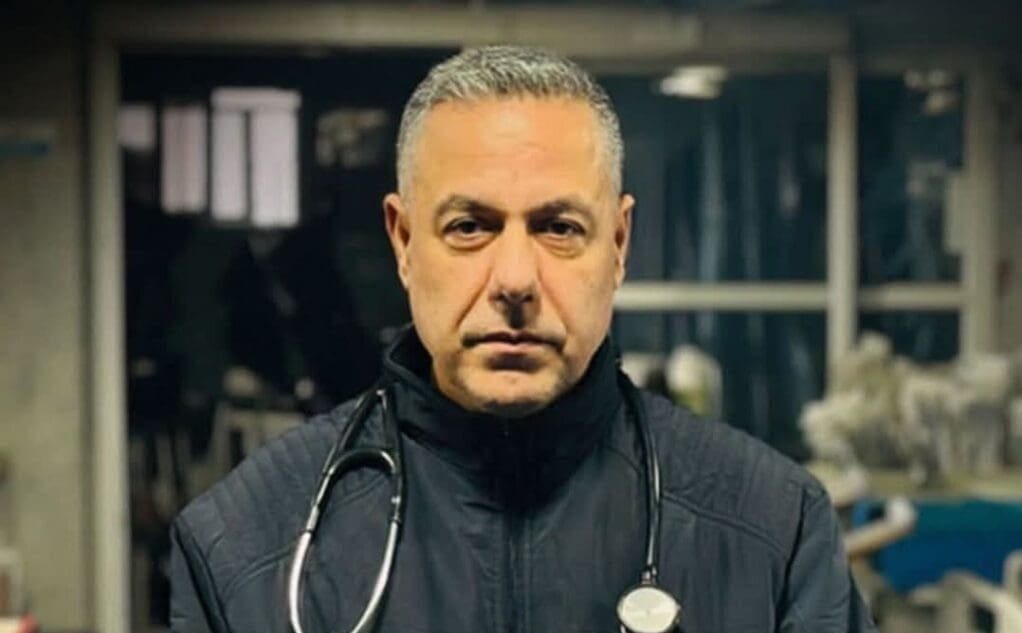
Euro-Med said Israeli forces committed field executions and sexual abuse there. The Gaza Government Media Office said 110,000 of the 135,000 tents sheltering the displaced had deteriorated past use. Most of the displaced now had nothing between them and the winter at all.
December 29, 2024
A fifth Palestinian infant died of hypothermia in Deir al-Balah. Israel struck a floor of al-Wafa Hospital in western Gaza City and killed at least seven. It shelled the top floor of the Baptist Hospital, the Ahli hospital it had massacred in the first weeks of the genocide, struck again now at the far end of the year. Five infants frozen, and three hospitals struck in a single day, the war on the sick and the war on the newborn proceeding together.
December 30, 2024
A sixth Palestinian infant died of the cold. Five Palestinian detainees died in Israeli custody, bringing the number who had died in Israeli detention since October to fifty-five, amid accusations of torture and abuse that Israel said it was investigating while categorically denying.
The Washington Post and +972 reported that Israel had used artificial intelligence to choose its targets in Gaza. The machine that picked the homes, the order that priced twenty civilians per strike, the prisons where the detainees died: a system, built and running, and a minister who called the dying of prisoners the end of a summer camp.
December 31, 2024
The year ended. Israel admitted it had assassinated Saleh al-Arouri, the Hamas deputy political leader, in Beirut. The Palestinian Central Bureau of Statistics put numbers to the ruin: Gaza’s economy had shrunk by more than 82 percent, unemployment had reached 80 percent. The UN human rights office said Israel’s strikes on and around hospitals had pushed Gaza’s healthcare system to the brink of total collapse.
Fifteen months in, the year closed with the hospitals dying, the economy was gone, and the infants were freezing, and the men who had done it were claiming their assassinations by name.
January 1, 2025
A seventh Palestinian infant died of the cold. The new year opened the way every day had opened for fifteen months. Israel struck a house sheltering the displaced in Jabalia and killed at least seventeen, four children and a woman among them. A nurse died of wounds from an Israeli strike on Kamal Adwan Hospital. Seven newborns dead of cold now, and a year turned, and nothing in the turning changed for the people of Gaza.
January 2, 2025
Israel struck the al-Mawasi humanitarian zone, its own designated safe zone, and killed twelve, a woman among them, fifteen wounded, children among them. It struck a group in Deir al-Balah and killed members of local committees securing the aid convoys, killing the people who guarded the food. It struck the interior ministry building in Khan Younis and killed six. The Gaza Government Media Office said the number of aid workers killed since October had reached 736. Seven hundred and thirty-six people killed for the work of keeping others alive.
January 3, 2025
Israel struck across Gaza, schools sheltering the displaced among the sites it hit, and ordered al-Awda Hospital evacuated after wrecking its emergency department. The al-Qassam Brigades kept fighting in the ruins, firing a surface-to-air missile at an Israeli helicopter over Gaza. Israel struck the entrance at al-Shifa Hospital in Gaza City and killed five and a home in Sheikh Radwan and killed three, and wounded ten others. The hospitals were being emptied one by one, by evacuation order and or by strike, until the wounded would have nowhere left to be taken.
January 4, 2025
Israel struck a vehicle on the Salah al-Din road and killed six Palestinian guards securing humanitarian aid, the aid-securers killed again. It struck a home in Shujaiya and killed at least eleven, children among them. The Indonesian Hospital went out of service. Israel struck Sheikh Radwan and killed eleven with five still under the rubble. Another hospital gone, more of the people who protect the food convoys dead, and the count climbing through its now-routine dozens.
January 5, 2025
Mohamed Hijazi was a Palestinian writer, poet, and journalist. In August of the previous year, he wrote:
“I don’t know if I will write to you again. I keep what I have written and am writing. Maybe it will come to light one day. I refuse a cheap death. I curse the murderer. Let us in this bottom that we have finally reached, arm ourselves with patience and prayer, and count the days we have lived as a historic achievement, while awaiting what is coming with a broken heart, an extinguished eye, a head held high, and a spirit that fights until the end of the road.”
That morning, the Israeli murderer came for him in Beit Lahia, in northern Gaza.
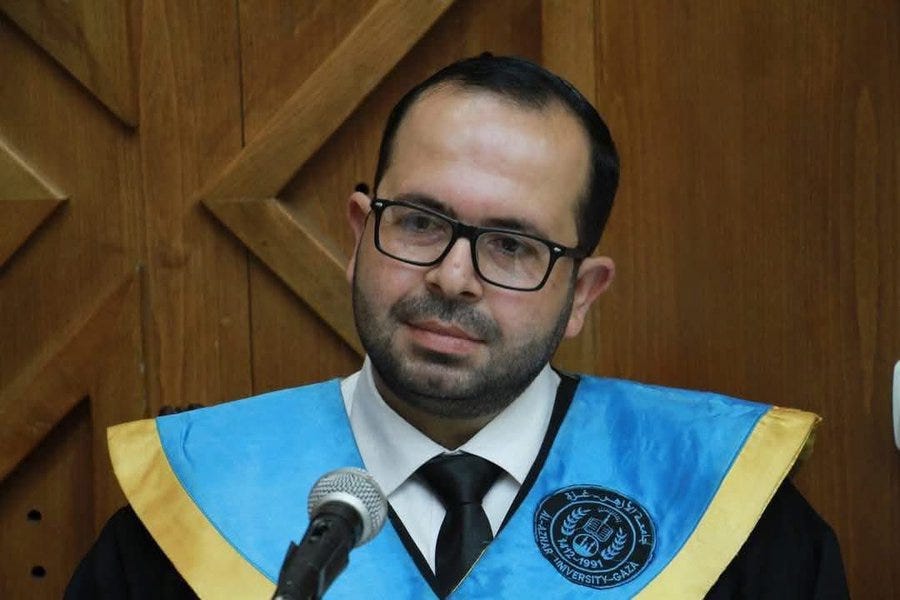
An eighth Palestinian infant died of hypothermia. Israel struck more than a hundred targets in Gaza over the weekend, it said, killing dozens.
A court in Brazil opened an investigation into a visiting Israeli soldier for war crimes in Gaza, and he fled the country. Eight infants frozen now, and a poet killed, and the accountability that arrived was a soldier slipping out of Brazil ahead of a court.
January 6, 2025
45,854.
Israel struck al-Awda Hospital and destroyed its fuel tank and its last generator. It struck Bureij and killed three, a five-year-old among them. Thabat Salim was a volunteer doctor at the Al-Aqsa Martyrs Hospital; Israel killed her in a strike on the Nuseirat camp, and another strike that day killed twins in the north.
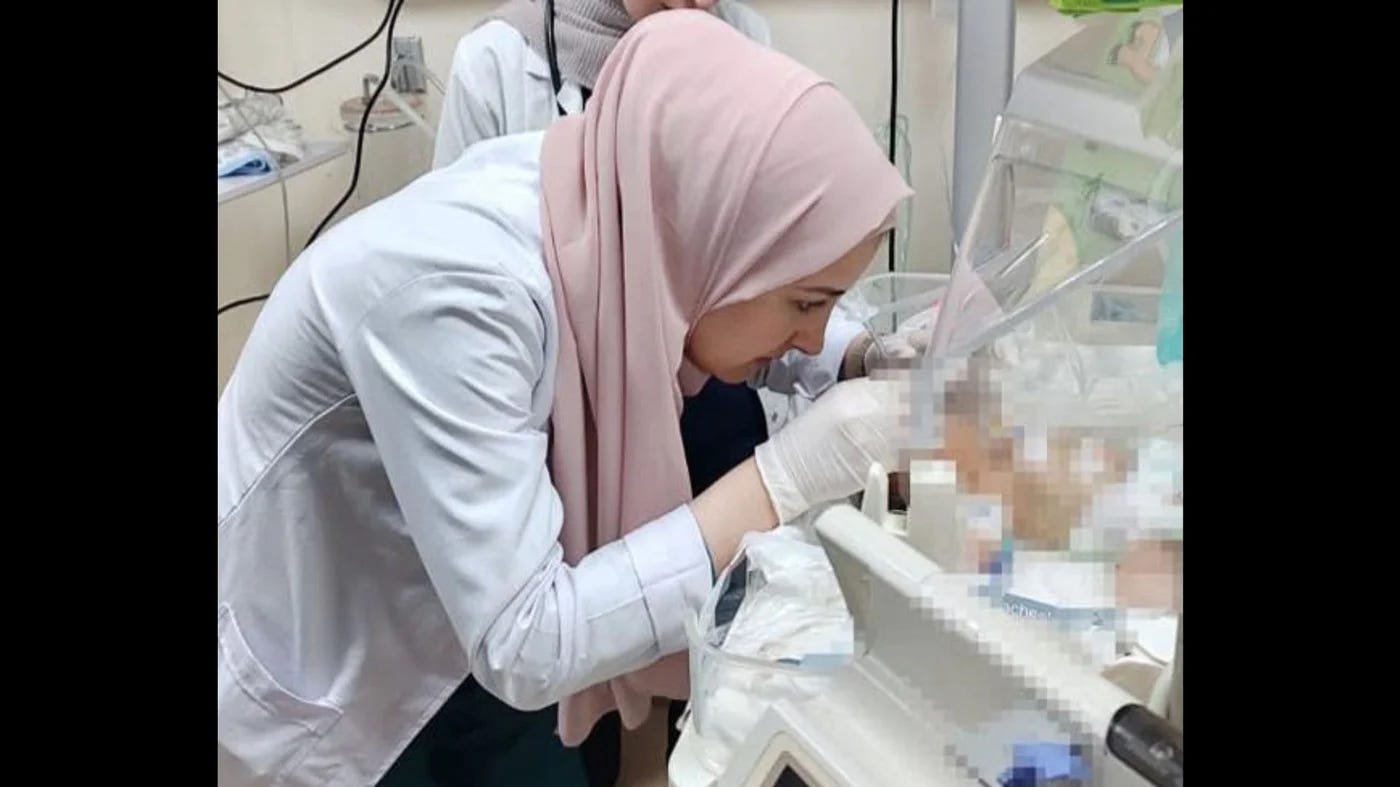
A gun attack near a West Bank settlement killed three Israelis, and Netanyahu approved a wave of operations across the West Bank in response, and settlers from the Hilltop Youth burned Palestinian cars and homes in revenge. The doctor, the twins, the generator of the last hospital, and then the collective punishment turned loose on the West Bank.
January 7, 2025
Israel struck tents and houses in Khan Younis and killed at least thirteen, eight of them children and five of them women, and a car that killed four more, saying it targeted October 7 participants without evidence. An aid worker died of wounds from a strike on a distribution point. An Israeli magazine reported that a Palestinian being used as a human shield by Israeli soldiers in Gaza had been shot dead by an Israeli officer, killed by the army that was using his body as cover. Israel’s chief of staff said the army would force Hamas to release the hostages, as the negotiations that might actually free them ground on in Qatar.
January 8, 2025
A woman with kidney disease died at Nasser Hospital when the power failed while she was on the dialysis machine, killed by the cutting of the electricity. Israel struck Bureij and killed ten, most of them women and children of one family, and another strike there killed two, an infant among them, and a strike on Sheikh Radwan killed a fifteen-day-old baby. Three Israeli soldiers were killed in Beit Hanoun when their tank hit an explosive device. The resistance was fighting soldiers in the north. Israel was fighting dialysis machines and infants.
January 9, 2025
The count passed forty-six thousand. Israel struck the Erbakan school in the north and killed three, a woman and a child among them. The Lancet, the medical journal, published a peer-reviewed study finding the true death toll in Gaza was likely 41 percent higher than the official count, that the dead were being undercounted by tens of thousands, buried in rubble the ministry could not reach. The official figure had always been a floor. Now one of the world’s foremost medical journals said the floor itself was far below the truth.
January 10, 2025
The Lancet’s finding settled over the record: the count Israel disputed as too high was, the science said, far too low. Israel struck Yemen, hitting the Heyzaz power plant and the ports at Hodeidah and Ras Isa, killing one person there. An Israeli sniper killed the Palestinian freelance journalist Saed Nabhan as he covered Israel’s advance in the Nuseirat camp.
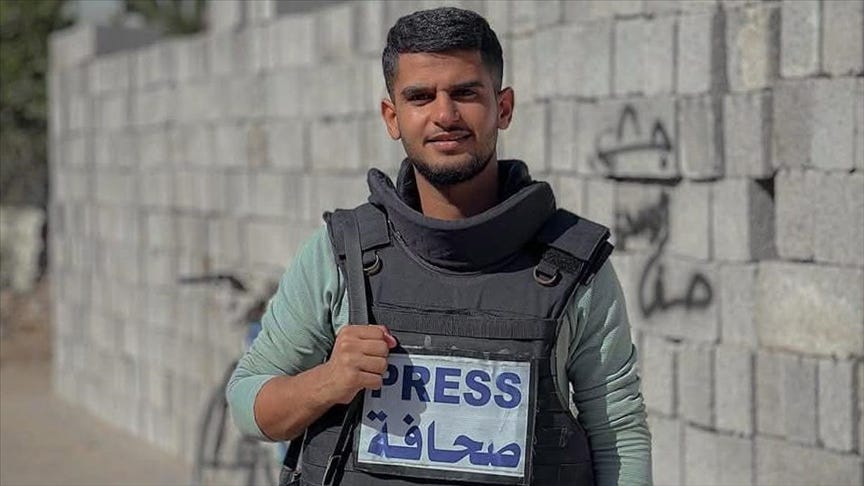
Mahmoud Abu Shahada, the head of orthopedics at Nasser Hospital, was released after a Supreme Court appeal, reportedly tortured during the months since Israel seized him at the hospital in February. The doctor came out of detention broken; the journalist was shot covering the advance; and the true number of the dead was, by the best measure available, tens of thousands more than anyone had said.
January 11, 2025
The Health Ministry added 499 previously unreported deaths to its total, names finally confirmed from the long backlog of the missing, the count jumping as the dead were identified. Israel struck the Halawa school sheltering the displaced in Jabalia and killed at least eight, two children and two women among them, nineteen children among the wounded. The Gaza Municipality said 75 percent of its water wells had been damaged. Four Israeli soldiers were killed in Beit Hanoun.
January 12, 2025
A medical source said 5,000 Palestinians had been killed or gone missing and 9,500 wounded since the siege of the north began. The Gaza Civil Defense said seventy children had been killed in Israeli strikes in five days. An ambulance officer died of wounds from a bombardment in the north. The siege of the north was now a self-contained catastrophe inside the larger one, five thousand dead or vanished in a few square kilometers, seventy of them children in a single week.
January 13, 2025
Israeli drone strikes on Gaza City killed nearly forty-five people, most of them women and children. Five Israeli soldiers were killed in the north when the building they were in collapsed. The killing held at its established rate, women and children most of the dead, as it had for fifteen months, even as word came that a deal was finally close in Qatar.
January 14, 2025
Israel struck Deir al-Balah and killed at least two women, one of them pregnant, and four children, and struck Khan Younis twice and killed at least twelve more, four of them women. Mohammed Al-Talmas, a journalist, died of wounds from a bombardment in Gaza City. An Israeli strike killed at least six children in a building in Gaza City. The deal was a day away. Israel struck through the final hours of the killing exactly as it had struck through all the hours before them, the children dying in the buildings while the negotiators in Qatar moved toward the signature.
January 15, 2025
In Deir al-Balah, Palestinians came out into the streets and wept and held one another, because word had come that there would be a ceasefire. After fifteen months, after everything written in this record and the far greater part of it that was never written down, Israel and Hamas reached an agreement in Qatar for a ceasefire and the release of hostages and prisoners.
And on that same last day, Israel killed. It struck a house sheltering the displaced in Deir al-Balah and killed at least twelve, a seven-year-old boy and three teenagers among them. It struck the al-Farabi school sheltering the displaced in Gaza City and killed seven members of the same family, a 17-day-old newborn daughter among them. It killed journalists, Aqel Saleh in al-Shati, Ahmed Abu Alrous in Nuseirat. It struck a residential block in Sheikh Radwan and killed twelve and wounded at least twenty.
The agreement was signed and the people in Deir al-Balah were weeping in the streets with relief, and Israel killed sixty-two Palestinians that day, because the ceasefire had not yet begun and Israel used every hour it still had.
January 16, 2025
The ceasefire had been announced. The signing was done. The day it was meant to take hold was three days off, and Israel spent the wait killing. It struck across Gaza and killed Palestinians by the score, twenty-one children and twenty-five women among the day’s dead. It struck Jabalia and killed at least twenty more, women and children among them, burying others under the rubble.
The agreement existed on paper in Qatar, and in Gaza, Israeli bombs kept arriving as if no paper had ever been signed, the children dying in the last days exactly as they had died in the first.
January 17, 2025
Netanyahu announced the deal was reached, and his security cabinet voted to approve it, and the agreement that would stop the killing moved through the machinery of the Israeli government one ratification at a time. And while it moved, the killing went on.
The Gaza civil defense counted the cost of the days since the announcement: 116 Palestinians killed, thirty of them children, thirty-two of them women, more than 265 wounded, all of it after the world had been told the genocide was about to stop. Israel was approving the ceasefire in its cabinet room and breaking it in advance from the air, killing more than a hundred people in the interval between the promise and the start.
January 18, 2025
The Israeli cabinet gave its final approval to the hostage and ceasefire agreement. The truce would begin the next morning. And on this last full day before it, Israel killed more Palestinians, and the civil defense raised its count of the dead since the announcement to 122, thirty-three of them children, thirty-three of them women, more than 270 wounded.
The deal was signed, approved, and hours from beginning, and Israel used the hours. A hundred and twenty-two people who had survived fifteen months of genocide were killed in the days after they had been told it was ending, in the narrow space between the agreement and the dawn it was meant to take effect, their lives the last that Israel took before it was made, for a while, to stop.
THE TRUCE
January 19, 2025
46,913 killed in Gaza.
In the hours before it began, Israel kept killing, at least nineteen Palestinians, children among them, in what the record would call the ceasefire delay, as if the delay were weather and not a choice. Then at 11:15 in the morning the ceasefire took effect, and for the first time in fifteen months the bombs stopped falling at the rate they had fallen every day since October. Hamas released the first three Israeli captives.
In Jabalia a woman gathered what she had and turned north, toward the place her home had been, one of hundreds of thousands who would begin the walk back to the ruins.
Ben-Gvir resigned from the government in protest at the truce, furious that the killing had been made to pause.
And Hamas confirmed what people had believed for months: Marwan Issa was gone. Abu al-Baraa, the deputy commander of the Qassam Brigades, had been killed the previous spring. He was never the loudest name, but everyone knew what his name meant. Prison, patience, planning, and the hard underground work that made Gaza harder to break than Israel ever expected. The news was old by then, but hearing it confirmed still hurt. Another one gone. Another empty place in a year already full of them.
January 20, 2025
The first ninety Palestinian prisoners released under the agreement reached the West Bank. And the killing did not wait even one full day of the truce: Israel shot and killed Zakariya Barbakh, a thirteen-year old teenager, near a roundabout in central Rafah, and wounded a man who came to carry his body away, and the army’s tanks pushed past the agreed line and fired on civilians. 137 bodies were pulled from the rubble of Rafah, the dead the bombs had left and the siege had buried, now finally reachable because the bombs had paused.
In the same hours, in Washington, Donald Trump took office.
January 21, 2025
Trump’s first acts touching this land were to remove the sanctions his predecessor had placed on violent Israeli settlers in the West Bank, lifting the small penalty the men who burned Palestinian villages had faced.
And then Israel launched a major operation, named “Iron Wall” on Jenin, and killed nine, a sixteen-year-old boy among them, and wounded more than forty, children and medics among them.
The truce in Gaza was a day old.
Israel still needed Palestinian blood, so it went to Jenin.
January 22, 2025
The Gaza civil defense recovered around two hundred bodies from under the debris, two hundred people the genocide had killed and the rubble had hidden, brought out into the light in a single day.
Israel pressed its assault on Jenin, killing ten more, and shelled the coast of Gaza City, and shot a Palestinian in Rafah’s Shaboura camp who was clearing rubble from a destroyed house. The truce was a thing that happened in the spaces between the killing.
January 23, 2025
A hundred and twenty-two more bodies recovered in a day. Israeli tank fire killed two Palestinians in the Tel al-Sultan camp during the ceasefire, and Israel cut the electricity to the Jenin camp, threatening the hospitals there. An Israeli court ordered twenty-six Palestinian families evicted from their homes in Silwan in occupied East Jerusalem, on the claim that the land had belonged to Jews before 1948, the legal machinery of dispossession grinding on under the truce exactly as it had before it.
Israel does not stop. Israel has never stopped. It only changes the form. If it is not bombing Gaza, it is shooting into Rafah during a ceasefire, cutting power to hospitals in Jenin, or handing Palestinian homes in Jerusalem to someone else.
January 24, 2025
Israel had now killed twelve in its raid on Jenin, and fired on a group of journalists on the road to the Government Hospital there. Hamas confirmed the deaths of Rawhi Mushtaha, the man who had run the government of Gaza, and Sami Odeh, killed in an Israeli strike. Israeli soldiers raided the home of the Palestinian prisoner Zakaria Zubeidi in Jenin and ordered his family not to celebrate the release that was coming.
Zakaria was was one of the six men who escaped Gilboa prison in 2021, digging their way out with spoons and hands through the floor of one of Israel’s most secure prisons, turning a tunnel into a brief miracle. For Palestinians, it was one of those moments that broke the cage open in the imagination before the men were caught again.
Now, after a year of genocide, Israel was still afraid of what his release might mean in the city that raised him, Jenin, that Israel was now invading. It raided the house before the joy could arrive and warned the family against celebration.
January 25, 2025
Israel had now killed at least fourteen in its ongoing assault on Jenin, children and medics and the elderly among the wounded. A two-year-old Palestinian girl was shot in the head and killed during the raid, her pregnant mother wounded beside her; Israel said it had fired on a building on intelligence and was investigating. Four Israeli captives were released, and two hundred Palestinian prisoners freed in return, seventy of them sent into exile in Egypt rather than home.
And as the prisoners came home, Israel raided the houses where they were welcomed, forbade the celebrations, tore down the flags, arrested the brothers of the freed, and an American reporter was assaulted by Israeli soldiers for watching. Trump ordered the release of the two-thousand-pound bombs his predecessor had paused, the heaviest munitions, freed for the next time.
January 26, 2025
On the road north, the ar-Rashid road along the coast, Palestinians gathered and waited to go home.
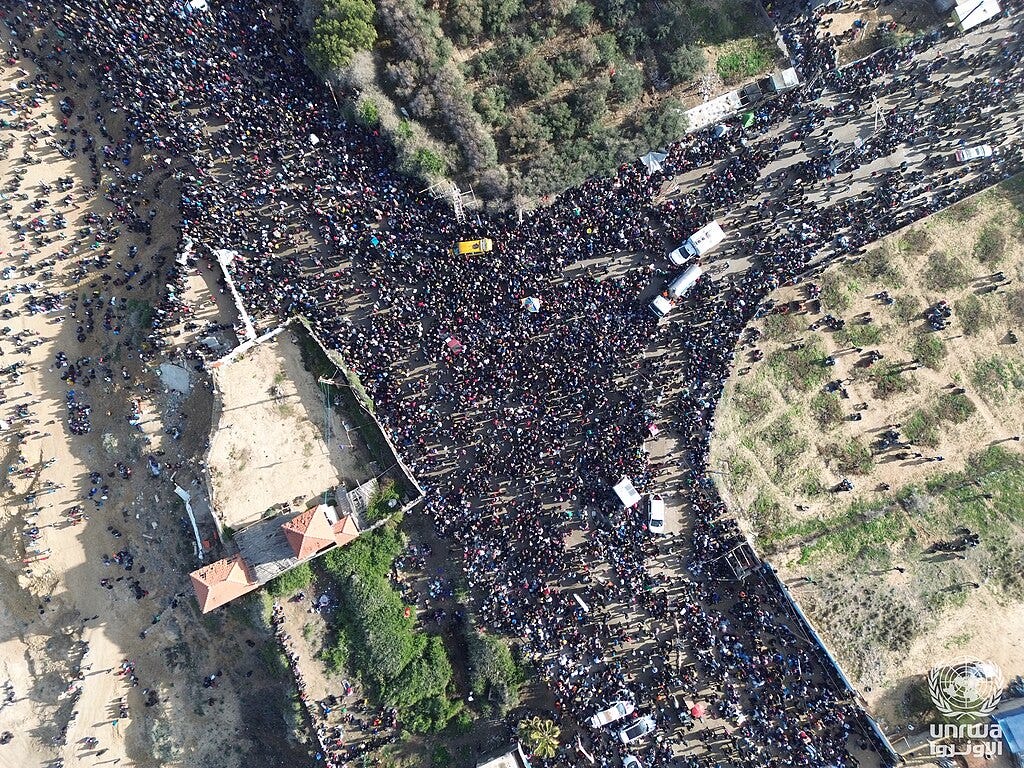
In Lebanon, where a separate truce also held in name, Israel fired on people returning to their villages in the south and killed twenty-four, twelve of them children, wounding 134, and killed a Lebanese soldier. Israeli gunfire on Palestinians trying to reach the north of Gaza killed more. The pattern held in both countries: a ceasefire signed, and the people shot as they tried to walk back to what was left of their homes.
January 27, 2025
Israel opened the way at last, and at seven in the morning Palestinians began crossing into the north, the long column moving up the coast road toward Gaza City and Jabalia and Beit Lahia, toward neighborhoods that no longer existed, to stand on the rubble of their houses because it was theirs.
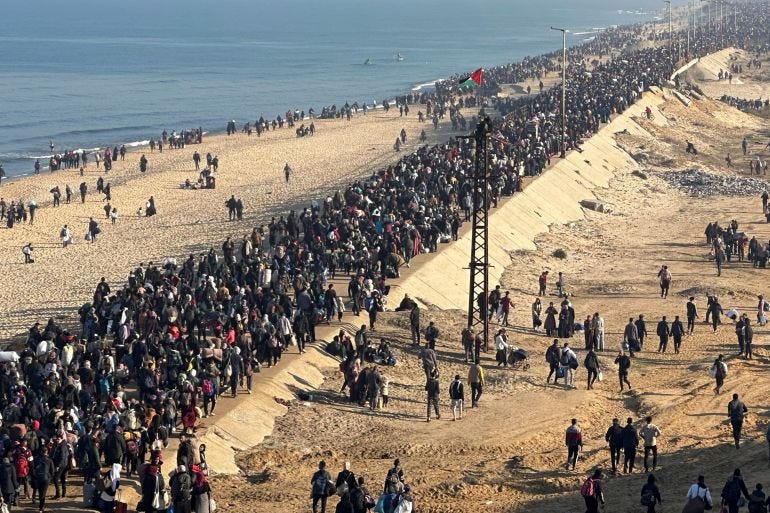
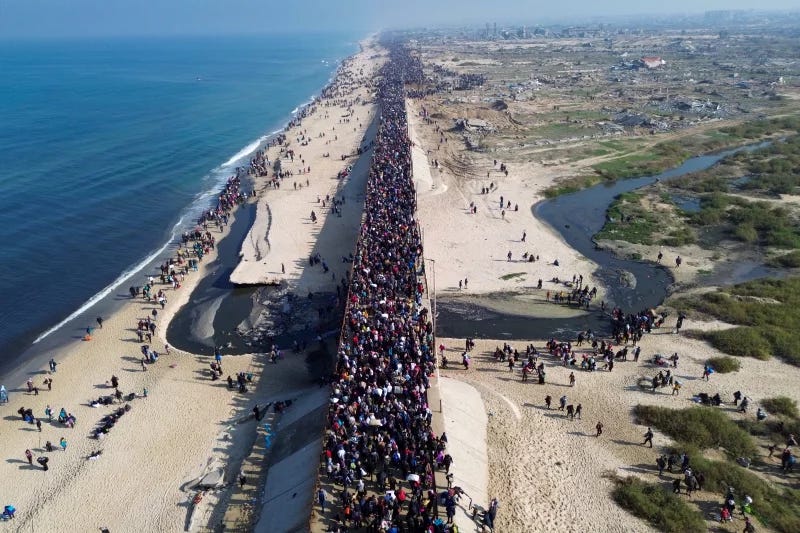
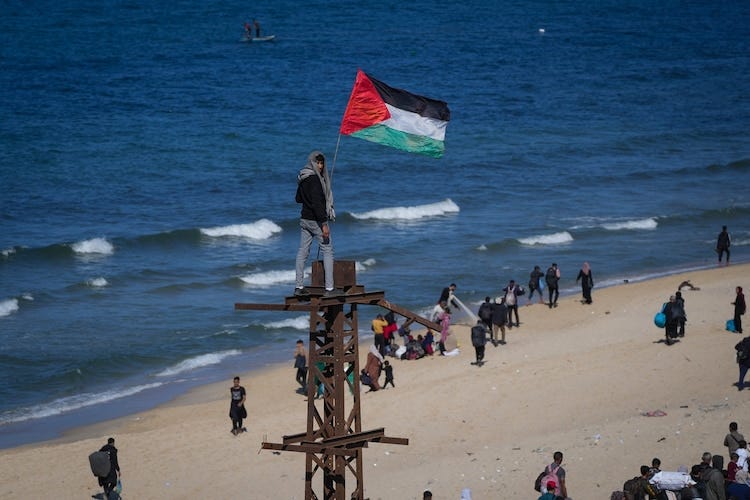
I cried watching them walk back north. After everything Israel had done to make the north unlivable, they still went back. Families on foot, children with flags, people carrying bags, blankets, whatever was left. The north was rubble, but it was home, and they walked toward it like that still meant everything.
That is the part that makes the cruelty feel bottomless. Even after watching them return to ruins, Israel still needed more. That same day, it shelled a horse cart west of Nuseirat and killed a child, wounding three others. The people walked north into what was left of home, and the killing came after them.
January 28, 2025
At least two Palestinians died on the road north itself, of exhaustion and thirst, the walk home killing the old and the weak who had survived everything else. The dead on the road were people who had endured fifteen months of bombardment and starvation and then died trying to reach the place where their lives had been.
In Tulkarm, Israel shot ten-year-old Saddam Hussein Iyad Mohammad Rajab in the abdomen. The bullet tore through his intestines, injured his pancreas and other organs, and exited through his chest. When the ambulance tried to take him from Tulkarm to Nablus, Israeli soldiers stopped it. One of them told the boy’s father he was the one who had shot his son.
“God willing, he will die.”
There are sentences that explain the whole system better than any analysis can. A soldier shoots a child, blocks the ambulance, then tells the father he hopes the child dies. That was Israeli cruelty stripped of all its official language. No security explanation. No fog of war. Just a wounded ten-year-old boy, his father beside him, and the man who shot him wishing death over the body.
January 29, 2025
Sixty-three bodies arrived at the hospitals in a day. Trump claimed his administration had halted shipments of condoms to Gaza because Hamas used them to make bombs, a thing that was almost certainly untrue and was repeated anyway. Two Palestinian detainees from Gaza died in Israeli jails, men with no illness before their detention. Israel killed at least ten in a drone strike on Tammun, a seventeen-year-old among the dead. The new American president narrated the genocide in lies while the prisons kept killing the men inside them.
January 30, 2025
The resistance released the eight hostages, and Israel freed 110 Palestinian prisoners in return, twenty-three of them deported to Egypt. And Hamas confirmed the death of the martyr Mohammed Deif.
For thirty years Israel had hunted him. It had tried to kill him at least seven times across those decades, and each time it failed, and in the failing it killed those around him: his wife, his infant son, his daughter, struck in their home in one of the attempts on his life. He lost an eye, a hand, the use of his legs, and went on commanding, a man who became more shadow than person, whose face the world barely knew, who built the armed wing of the resistance into the force that broke out of the cage on October 7.
To Israel he was the most wanted man in Gaza, a title that says only what the occupier wanted. To his people he was the qa’id, the commander who had given everything he had, his body and his family and finally his life, to the refusal to accept the cage as the end of the story. Israel killed him in the summer in a strike on Khan Younis that killed scores of others around him, as it had always killed others around him, and now, in the winter of the truce, it was confirmed. The roster of the leaders Israel had killed lengthened by the longest name on it.
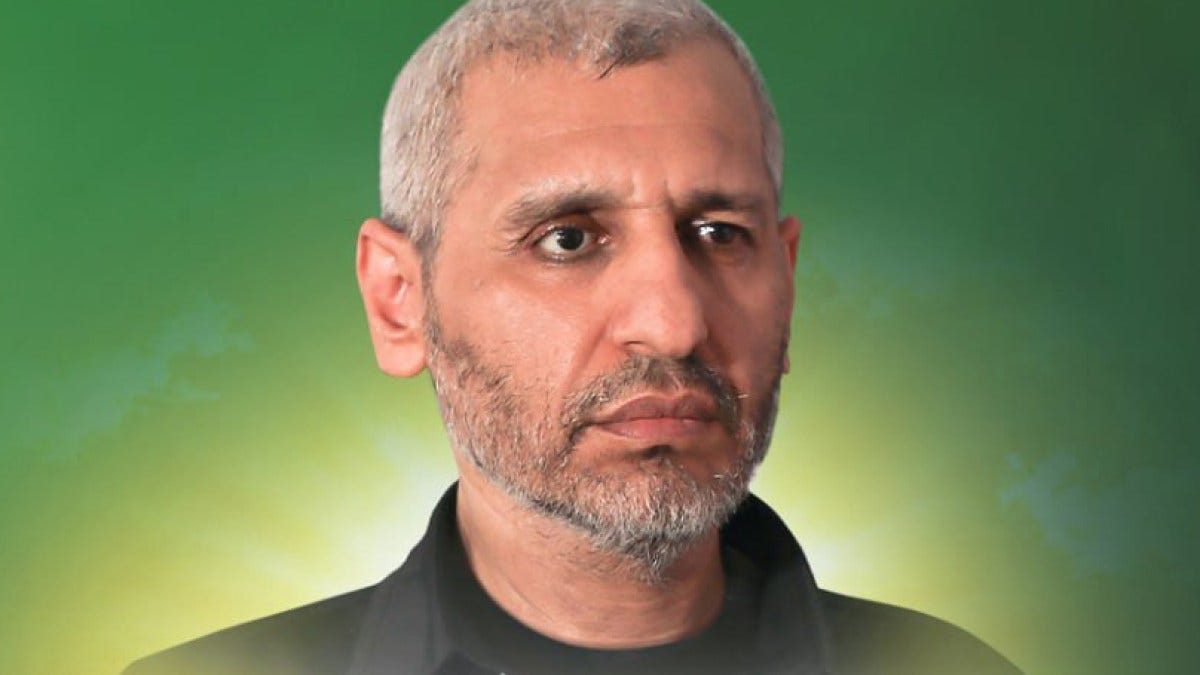
“As you stand here, I am rooted, with thousands of seeds scattered across this land. No matter how fiercely the tyrants try to uproot us, the seeds will rise and bloom. I remain here, in my beloved generous soil. Like her, our spirit of giving flows endlessly, forging it path forward.”
— Mohammed Deif, 2023.
January 31, 2025
Israeli gunboats shot a Palestinian fisherman dead off Nuseirat, killing a man at his nets during the ceasefire. Israel struck the Beqaa Valley in Lebanon and killed two. A coalition of nine nations: Belize, Bolivia, Cuba, Colombia, Honduras, Malaysia, Namibia, Senegal and South Africa formed The Hague Group and announced that they would uphold international law and Palestinian rights, the kind of announcement that arrives after the worst is done.
February 1, 2025
Israel released 183 Palestinian prisoners, seven of them deported, and the resistance released three Israeli captives. An Israeli drone killed five in Jenin, a teenager among them. The Rafah crossing reopened. The exchanges had a rhythm now, the living for the living, but every release of prisoners came braided with a raid, a deportation, a strike in the West Bank, the freeing and the killing running on the same day.
February 2, 2025
Israeli settlers set fire to a mosque north of Jericho, and Israel killed an elderly man in Jenin, and shot at fishermen off Naqoura in Lebanon. Israel struck a vehicle on the restricted coastal road near Nuseirat and wounded at least four Palestinians, a boy among them. The settlers burned and the army shot, and the truce was the name for it all.
February 3, 2025
The Gaza Government Information Office gave a number that told the truth the daily counts could not. Counting the more than 14,000 missing and presumed dead, the people buried under rubble no one could reach, the people whose bodies were never found, the toll was 61,709.
The official figure the world cited, the one in the high forty-thousands, had always been a floor, a count of the confirmed and the recovered. The real number was more than thirteen thousand higher, and even that was an estimate, because a genocide does not leave clean records of everyone it kills. The truce’s grim work was this: the digging out of the dead the war had hidden, the slow conversion of the missing into the counted.
February 4, 2025
In Washington, Trump suggested that the United States could take over Gaza. He said it plainly, the president of the country that armed the genocide proposing that the survivors be removed and the land taken, ethnic cleansing spoken aloud from a podium as policy.
A Palestinian opened fire at a checkpoint near Tayasir and killed two Israeli reservists before he was killed. Israel demolished neighborhoods in the northern West Bank, the foreign ministry in Ramallah said, forcing civilians out at gunpoint and blowing up their homes.
February 5, 2025
Israel killed at least four Palestinians, a child among them, in Rafah, and called them imminent threats.
The Hind Rajab Foundation, named for the five-year-old girl Israel had killed in a car in the first winter of the genocide, said Switzerland had opened a war-crimes probe into an Israeli soldier on its soil, one of the small reckonings beginning to follow the soldiers out into the world.
February 6, 2025
Trump sanctioned the International Criminal Court, the institution that had issued arrest warrants for Netanyahu and Gallant, punishing the court for naming the crime. Katz ordered the army to prepare a plan to let Gazans leave the Strip, naming Spain and Ireland and Norway, the countries that had recognized the wrong of the genocide, as places to send the people it had displaced, the expulsion dressed in the language of departure.
By now 26,000 Palestinians had been displaced by the West Bank offensive, many of them from Jenin.
Israel was carrying into the West Bank what it had refined in northern Gaza: seal the camp, cut the roads, empty the homes, make return impossible, then call the removal a security operation. The architecture of expulsion was being built in the open, in Washington, Tel Aviv, and Jenin at once.
February 7, 2025
Gallant acknowledged that the army had implemented the Hannibal Directive on October 7, the order under which Israel’s own forces fire on the scene of a capture even at the cost of the captives’ lives, a confession that many of the Israeli dead of that day had been killed by Israel itself.
The ten-year-old boy Israel had shot in Tulkarm on January 28 died of his wounds. Saddam Rajab, the child whose ambulance had been stopped, whose father had been told by the soldier who shot him, “God willing, he will die.” Days later, he did.
“When I carried him in my arms, I found that more than 20 Israeli soldiers surrounded me within moments, as some of them assaulted me with severe beatings, punches, and blows using their hands, feet, and rifle butts. I was carrying my son in my arms, and I was telling them to hit me and do whatever you want, but let me take my son for treatment.”
February 8, 2025
The count jumped by 572 as more of the dead were confirmed. Trump cut American aid to South Africa, naming among his reasons the genocide case South Africa had brought against Israel at the World Court, the United States punishing a nation for going to law against the killing. Three Israeli captives were released; Israel freed 183 Palestinian prisoners. Israel struck the Beqaa Valley and killed six.
The Palestinian Foreign Ministry warned that Israel was carrying out ethnic cleansing across the northern West Bank and called for a firm international response to stop what it was doing to the refugee camps.
February 9, 2025
Israel began withdrawing from the Netzarim Corridor, the strip it had carved across the middle of Gaza, as the agreement required.
At the same time, Israel widened its assault in the northern West Bank to Nur Shams, where it killed a Palestinian woman, Sundus Shalabi, eight months pregnant, killed with the child she was carrying. Israel fired on Palestinians near the northern Gaza fence and killed three east of Gaza City, and a woman in al-Qarara, all during the truce.
Israeli police seized children’s coloring books titled From the River to the Sea from a Palestinian bookshop in East Jerusalem and arrested its owner, the occupation now confiscating the words.
February 10, 2025
At least 35,000 Palestinians had now been displaced by the West Bank raids. Israel killed a Palestinian in Shujaiya. Hamas threatened to delay the next release, citing Israel’s violations of the agreement, then said it would proceed if Israel met its obligations, the truce held together by mediators day to day. Abbas, the Palestinian Authority president, signed a decree ending the stipends to prisoners and to the families of those killed in attacks, the Authority in Ramallah bending to the demand that it stop paying its own martyrs’ families.
February 11, 2025
Israel demolished eleven houses in Masafer Yatta, the cluster of villages in the south Hebron hills it had been trying to empty for years. Netanyahu declared the army would return to intense fighting unless Hamas freed hostages by a deadline, Katz promising the “war” would be worse than before, the threat to resume the genocide held over the truce like a blade. Hamas said it remained committed and held Israel responsible for any collapse.
Israel spoke as if the truce was something it had been honoring. What truce. Since the first day, it had killed Palestinians under it, shot into Gaza under it, raided the West Bank under it, demolished homes under it. Now it was threatening to end a ceasefire it had never stopped violating.
February 12, 2025
The UN said more than 2,300 children in Gaza had been treated for acute malnutrition in January alone. An Israeli drone killed a Palestinian east of Rafah. The malnutrition figures were the early sign of what was coming: even with the truce, even with aid supposedly flowing, the children were starving, and the machinery to starve them further was about to be switched back on.
February 13, 2025
The International Federation for Human Rights put the West Bank displacement from Israel’s latest offensive at 44,000.
A child died in Nuseirat from an Israeli munition left in the ground, and Israeli snipers killed a man in the Bureij camp. Lebanon’s parliamentary speaker rejected Israel’s demand to keep troops at five points in the south past the withdrawal deadline. In both Gaza and Lebanon the truces were the same: Israel keeping the land it wanted and calling the keeping security.
February 14, 2025
A Palestinian father said his eight-year-old daughter had lost her sight after an Israeli sniper shot her through the window of her own house in Sa’ir. Settlers of the Hilltop Youth attacked and wounded sixteen Palestinians in al-Maniya. Israel wounded two fishermen off the port of Gaza. The truce did not reach the child at her window or the fishermen on the water.
February 15, 2025
Three Israeli captives were released, and Israel freed 369 Palestinian prisoners. An Israeli drone killed two near Jarjouaa in Lebanon, two children among the wounded. The exchanges continued their grim accounting, and around them the daily killing did not pause.
I want to stop here because this is the thing that can disappear inside the dates. Israel killed every single day of this genocide. Every day. Some days by the hour. A strike, a sniper, a drone, a shell, a child shot, a body recovered, a hospital cut off, a home demolished, a prisoner returned broken, a camp raided, a road fired on.
Even on the days called “pauses,” even on the days called “ceasefire,” even on the days the headlines spoke of “truce,” Israel kept killing.
February 16, 2025
Israel struck and killed two police officers in Gaza as they secured aid in Rafah. The media committee of the Jenin said twenty-five Palestinians had been killed and more than 20,000 displaced since the West Bank offensive began.
A report surfaced that an Israeli brigade had used an eighty-year-old Palestinian man as a human shield for eight hours, tying an explosive cord around his neck and threatening to blow off his head.
Human Rights Watch counted 3,369 Palestinians held without charge in Israeli administrative detention, the Israeli prison system’s name for being taken without trial or charge, held on secret evidence, and kept there by orders that can be renewed again and again.
The truce was a roof over none of this.
February 17, 2025
A fifteen-year-old Palestinian boy died of wounds from an Israeli air strike two weeks before.
At night an Israeli drone flew over Gaza broadcasting a threat of a second and a third Nakba to the people below, the catastrophe of 1948 named aloud as a promise.
A voice from a machine moving over a ruined city, ordering the people beneath it to understand their own destruction before it came. In Warsaw, Nazi loudspeakers warned civilians in the streets as the city was being crushed. German half-tracks, armored troop carriers with sloped steel sides and tracks in the back, carried soldiers and terror through occupied Europe. Israel had made the old scene modern. The shame and irony is that they know that history, claim its memory, invoke its dead, and still chose to sound like the men who hunted them.
Then the threat became an office. Katz announced a new directorate inside the defense ministry to help Gazans “emigrate”, the bureaucratic body for the expulsion.
February 18, 2025
Netanyahu ordered the immediate enforcement of its law banning UNRWA, moving to shut down the agency that fed and schooled the refugees. Israeli tanks killed two in Rafah, and a woman was killed in ash-Shawka, and a child near al-Awda Square. Israel withdrew from towns in southern Lebanon but kept the five points it wanted, and Lebanon’s government said any remaining Israeli presence was occupation. The Lebanese civil defense pulled twenty-three bodies from four border towns Israel had left.
February 19, 2025
Israel destroyed fifty Palestinian homes and 280 shops in Tulkarm, the bulldozing of another city into rubble. Then, Israel issued demolition notices for fourteen more houses in the same city. The Knesset passed a law barring entry to foreigners who supported the prosecution of Israeli soldiers, sealing the borders against accountability.
February 20, 2025
Hamas handed over four coffins. Israel struck a Palestinian dead in Shujaiya as he inspected his own house. Three bombs went off in empty buses in Bat Yam, and Netanyahu ordered the West Bank operations intensified.
The bodies of the Bibas children and of Oded Lifshitz had become the center of the world’s attention, and a man inspecting the ruin of his house was killed by the army that had reduced it, and that killing was a line in a list.
February 21, 2025
Israel said one of the four bodies was not Shiri Bibas, and the dispute over the dead consumed the news; Hamas later returned remains it said were hers, identified by forensic experts. On the same day Israel shot dead a thirteen-year-old girl in Jenin, and a thirteen-year-old boy in a strike in Hebron. Two Palestinian children killed in a day, against the long argument over which body was whose.
February 22, 2025
The third round of the polio vaccination campaign began for the children of Gaza, a thread of keeping-alive running through the ruin.
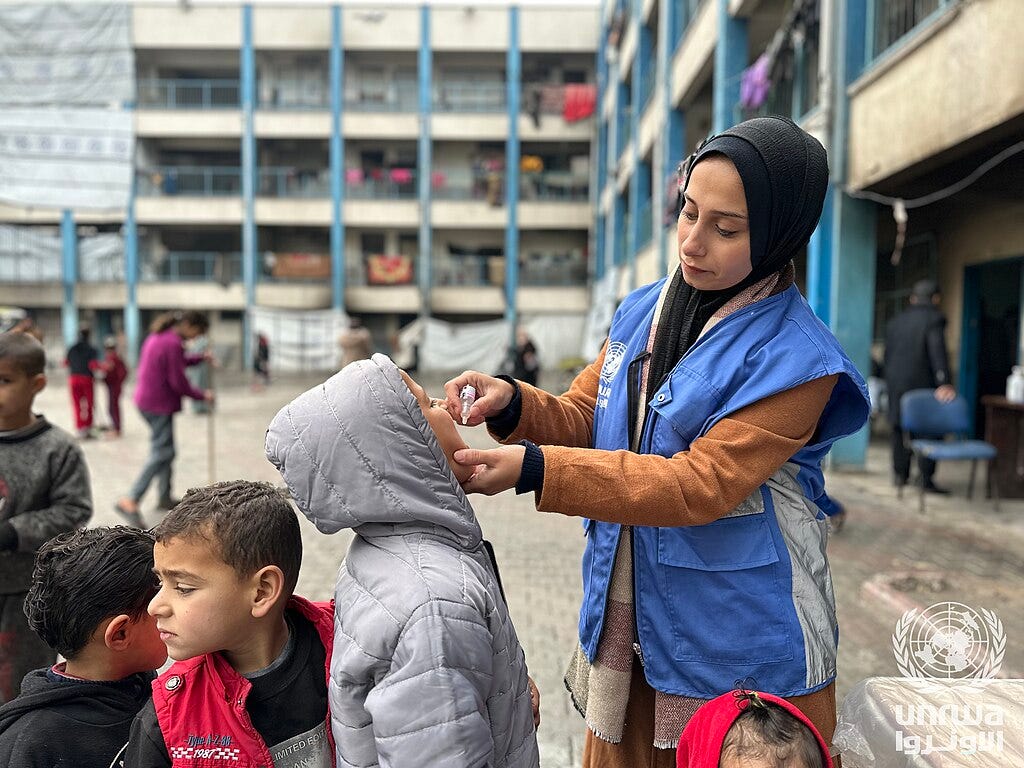
Six Israeli captives were released; among them Mengistu and al-Sayed, both men who lived with mental illness and had wandered into Gaza of their own accord years before October 7, held all that time. And then Israel refused to release the Palestinian prisoners it was meant to free in return, Netanyahu saying the release would wait, and wait without the humiliating ceremonies. The exchange broke on the Israeli side, the prisoners kept in their cells.
February 23, 2025
Katz ordered the army to stay in the Jenin camp, the Tulkarm camp, and Nur Shams for the coming year, the occupation of the West Bank’s refugee camps declared open-ended. Israel struck near Tyre in Lebanon and wounded a Syrian girl, and struck the Beqaa, and killed a Palestinian inspecting his land east of Gaza City. A man arrested from Gaza died in an Israeli jail, his family saying he had been healthy when taken.
February 24, 2025
Peace Now said Israel was set to approve more than 1,100 new settlement units in the West Bank. At least 365 Palestinians, children among them, had been detained in the Jenin and Tulkarm areas since the offensive began. The settlements grew and the prisons filled while the world watched the coffins.
February 25, 2025
Three children died of hypothermia in Gaza, the cold killing the smallest again as it had killed them through the winter, the truce no warmer than the genocide.
Dr. Saeed Salah, the medical director of Patient’s Friends Hospital in Gaza, said other children were in critical condition and pleaded for caravans, tents, and fuel to keep people warm before another cold front arrived. Even the request had become humiliatingly small by then: not safety, not rebuilding, not a life returned, just enough shelter and heat to keep children from freezing to death.
The Trump administration rescinded the rule requiring it to report when allies used American weapons to violate international law, removing the obligation to even look. Katz sanctioned released prisoners and their families for having received Authority stipends, punishing the freed for having been supported.
February 26, 2025
The doctor had warned the day before that more children were in danger. The next day, a one-and-a-half-month-old girl died of the cold in Gaza City, an infant six weeks into a life lived entirely inside this.
A Palestinian prisoner from Gaza died in Israeli custody, the sixtieth to die in the jails since the genocide began, wounded during his detention, healthy before it. Hamas handed over the bodies of four more Israeli hostages, and Israel freed 596 Palestinian prisoners. The International Criminal Court withdrew its arrest warrant for the martyr Mohammed Deif, because Hamas had confirmed his death.
February 27, 2025
In central Jerusalem a rally gathered under the banner “Occupation, expulsion and settlement,” openly demanding the forced removal of the Palestinians of Gaza and the rebuilding of the settlements there. Limor Son Har-Melech, a member of the Knesset for the Otzma Yehudit spoke for it:
“The Land of Israel is for the People of Israel. Gaza is for Jews, Judea and Samaria [the West Bank] is for Jews. They are ours in the merit of our fathers and the merit of our deeds… The expulsion of our enemies needs to be forever. We are here not only to expel but to inherit, to establish flourishing settlements full of life. Victory will be that all of Gaza returns to our hands, where Jews establish new generations of courageous settlers.”
— Limor Son Har-Melech, February 27, 2025.
Gaza hospitals continued to receive the bodies of the dead and injured despite the “ceasefire”. And the expulsion of the living that remained in Gaza was no longer a fringe wish. It filled a square in Jerusalem and spoke from a podium.
February 28, 2025
Israel killed a man in a drone strike in Rafah and wounded two fishermen off Gaza City. The UN put the West Bank displacement near 37,000. The Trump administration approved close to 3 billion dollars more in weapons for Israel, to be delivered over the following years, without any normal review. The arms for every phase still to come were already bought.
March 1, 2025
Phase one of the truce reached its end, and Hamas rejected Israel’s bid to extend the first phase rather than move to the second, demanding the agreed path to a permanent end. Israel announced it had endorsed an American plan to extend the truce through Ramadan and Passover, a plan that let Israel resume the genocide at any moment if it judged the talks dead. The structure of the ceasefire was being rebuilt as a trapdoor.
March 2, 2025
Netanyahu’s office announced that Israel would cease the entry of all aid into Gaza. The trucks stopped at the crossings. After fifteen months of bombardment and a six-week truce that had let only a thin stream of food and fuel through, Israel sealed the territory again and turned hunger back into a weapon, the blockade resumed in full as a tool of pressure on the negotiations. Israel struck Gaza the same day and killed four, a woman among them.
March 3, 2025
Israeli tear gas at the entrance to the Jenin camp suffocated a three-year-old girl to death. Israel shot two people dead in central Rafah and fired a missile at al-Mawasi. The blockade was a day old and the smallest were already dying of the army’s gas in the West Bank while the food sat stopped at the gates of Gaza.
March 4, 2025
Rafah’s authorities said Israel had cut the electricity to the two desalination plants that made the city’s drinking water, moving from stopping the food to stopping the water. Israel killed a Palestinian near Deir al-Balah. The Arab League, meeting in Cairo, drew up a 53-billion-dollar plan to rebuild Gaza with its people staying in place, an answer to the expulsion plans of Washington and Tel Aviv.
March 5, 2025
The UN said more than 3,000 children and 1,000 pregnant and nursing women in Gaza had been diagnosed with acute malnutrition since the ceasefire, and the ceasefire had been the better time. Israel shot a nine-year-old girl in the head in Qusra. The Trump administration confirmed it was in direct talks with Hamas over American captives, the first such open contact. The starving were counted in the thousands of children while the blockade tightened around them.
March 6, 2025
Médecins Sans Frontières put out a statement condemning the shooting of a Palestinian man who was shot at the entrance of a clinic in Rafah. Israel struck a gathering in Shujaiya and killed one. The siege was settling back into its old shape, the strikes on the gatherings, the shootings at the clinics, with the aid now stopped at the line.
March 7, 2025
Israel struck Shujaiya again and killed two. The Houthis said they would resume operations against Israel if the aid blockade on Gaza was not lifted within four days. Israel struck southern Lebanon. Across the region the truce was unraveling thread by thread, and the lever Israel pulled in every case was the food and the water it controlled.
March 8, 2025
The Organisation of Islamic Cooperation backed the Arab plan to rebuild Gaza with its people in place, and France, Germany, Italy, and Britain announced support for it as well, the world’s other powers lining up against the expulsion even as they kept arming the state pursuing it. Israel killed at least two in a drone strike in Rafah and struck a bulldozer clearing rubble in Beit Hanoun and wounded seven. Israeli settlers stole 800 sheep from the Palestinian Bedouin community of al-Auja. The plans for the day after multiplied while the killing of the present went on.
March 9, 2025
Israel cut the supply of its electricity to Gaza entirely, the Israeli Energy Minister, Eli Cohen, ordering the last of the power off. Food stopped, water stopped, and now the current that ran the desalination and the hospitals and the pumps was cut as well, the territory severed from every utility at once, a population of more than two million switched into darkness as a means of pressure. Israel struck Shujaiya and killed two, and the explosives Israel had left in Jabalia wounded the police engineer trying to clear them after they had already injured three children.
March 10, 2025
The Gaza Government Media Office said food was running out in the markets, the shelves emptying as the blockade held. Israel began investigating at least six cases of its own soldiers using Palestinians as human shields in Gaza, the practice so widespread it had become its own category of inquiry. The markets emptied, the soldiers’ crimes stacked into files, and the current stayed off.
March 11, 2025
Thirty-six more bodies recovered in a day. Israel struck near the Netzarim Corridor and killed five, and an Israeli drone killed a woman east of Rafah, and another killed a man. The Houthis announced they would resume attacks on Israeli vessels until the aid was restored. Israeli police again raided a Palestinian bookshop in East Jerusalem and arrested one of its owners over the content of books, the confiscation of the words continuing alongside the confiscation of the food.
March 12, 2025
Israeli forces shot and killed a Palestinian girl in central Deir al-Balah, and killed a man in Rafah, and another in Khuza’a. The Houthi leader announced that the ban on Israeli-linked shipping through the Red Sea and the surrounding waters had taken effect. Israel had sealed Gaza from food, fuel, and medicine. Yemen answered by trying to close the sea to Israel, turning the blockade back toward the state imposing it.
March 13, 2025
An Israeli drone killed a three-year-old child in Shujaiya, and a strike on a tent in Beit Hanoun killed a boy and wounded his mother. Israel struck Damascus, hitting what it called a PIJ headquarters and wounding three civilians in a building abandoned since the fall of the Assad regime. Dozens of Israeli settlers attacked Khirbet al-Marajim and set houses on fire. The three-year-old in Shujaiya and the boy in a tent in Beit Hanoun were killed in the lull that the world still called a ceasefire.
March 14, 2025
Israeli settlers set fire to Palestinian homes and cars in Duma.
American and Israeli officials, it emerged, had approached Sudan, Somalia, and Somaliland about resettling Palestinians removed from Gaza under Trump’s plan, the search for somewhere to put the expelled now reaching across Africa.
Alaa Hashim, a Palestinian journalist, died of wounds from an Israeli strike on Gaza City, the 206th journalist the Forum of Palestinian Journalists counted killed since October. Israel struck the Zaytun quarter and killed four, and Israeli naval forces killed a Palestinian fisherman off the north coast. The expulsion was being shopped to foreign governments while the genocide kept going.
March 15, 2025
Israel struck Beit Lahia and killed eight aid workers and a journalist, calling the dead militants posing as journalists without showing evidence, the accusation it always lays over the bodies of the people who feed and the people who report. UNICEF said acute malnutrition in northern Gaza had doubled in a month and that dozens of children had died of hunger and thirst in recent weeks, the blockade already converting into dead children. The United States, on Trump’s order, struck dozens of targets in Yemen and killed at least thirty-one people, most of them women and children. The Israeli army pulled a platoon out of Gaza after a video showed the soldiers firing while reading aloud from scripture, the killing turned to liturgy on camera.
March 16, 2025
Israeli drone strikes killed Palestinians across Gaza, in Juhor ad-Dik, in Nuseirat, in Beit Lahia, the dead including a child and a woman. Israel struck southern Lebanon and killed four. The American campaign in Yemen killed more; the Health Ministry there raised its dead to fifty-three, five of them children.
The strikes ran in three countries at once, and the count in Gaza climbed by the bodies dug out and the bodies freshly made.
March 17, 2025
Israel struck the Wadi Gaza bridge area and killed three young men a woman at the scene said were collecting firewood, and struck a school sheltering the displaced in Bureij and killed a father and his son, calling the dead bomb-planters. It struck Lebanon repeatedly, and Syria, killing two and wounding nineteen in Daraa.
Hamas said it had agreed to release the Israeli-American captive Edan Alexander and the bodies of four dual nationals, another attempt to keep the truce from collapsing completely. But by then the word had already been hollowed out. Israel had kept the blockade in place, kept the markets empty, kept the power off, kept children hungry, and kept killing around the edges of the ceasefire.
This was the last day of the “truce”. What Israel did the next day would make the word a memory.
THE “CEASEFIRE” BROKEN
March 18, 2025
The truce held for fifty-eight days. Then, in the dark before dawn on March 18, without warning and without any Palestinian violation to point to, Israel ended it the way it does everything, from the air, all at once, across the whole of Gaza.
Israel killed more than 400 people that day, 263 of them women and children. It was among the deadliest single days of the entire genocide, and it happened in a few hours while people slept in the places the ceasefire had told them were safe. Israel struck a house in Rafah and killed seventeen members of one family, at least twelve of them women and children. It struck a residential block in Gaza City and killed twenty-seven relatives. Whole families that had survived fifteen months of bombardment, that had walked back to their neighborhoods in January believing the worst was behind them, were ended in their sleep on a single night because Israel decided the pause had served its purpose and the killing would resume.
There is a particular cruelty in this that has to be named plainly. The people killed on March 18 had been told there was a ceasefire. They had let themselves believe it. They had buried some of their dead, gathered what was left of their families, returned to the rubble of their homes and begun the impossible work of living again. For fifty-eight days they slept without expecting to be killed before morning. And Israel used that interval not to make peace but to rest its pilots and resupply its bombs and choose its next targets, and then it brought the ceiling down on people who had lowered their guard because they had been promised they could. The truce, for Israel, had been a tactic.
The dead of March 18 were the price of the tactic, paid by people who had done nothing but believe the agreement their occupier signed.
Israel called them strikes on Hamas. It killed 263 women and children before sunrise and called it precision. There is no version of this that is anything other than what it was: the deliberate mass killing of a captive population, resumed at a time of Israel’s choosing, against people who had been disarmed of even their fear.
March 19, 2025
The bombardment continued through the second day, the count climbing to 436 from the eighteenth. Israel struck a tent west of Khan Younis and killed a woman and her child. It struck the UN compound in Deir al-Balah and killed a UN staff member, a Bulgarian, and wounded five others, then denied it. Israel announced it had begun ground operations again in central and southern Gaza to expand its buffer zone, the seizing of more land resuming alongside the killing. The ceasefire was a day dead and the machine was already running at full speed, as if it had never stopped, because in truth it had only paused.
March 20, 2025
Israel struck Gaza before dawn and killed at least seventy-one, women and children among them. It struck a house in Abasan al-Kabira and killed at least sixteen, mostly women and children. It began ground operations along the northern coast near Beit Lahia and in Rafah, the army moving back into the places it had withdrawn from in January, retaking the ground it had given up, undoing the truce on the earth as well as in the air.
March 21, 2025
Israel destroyed the Turkish-Palestinian Friendship Hospital, the only cancer hospital in Gaza, leveling it completely. A Médecins Sans Frontières staff member was killed when Israel struck his apartment building in Deir al-Balah. Israel struck the medical faculty of the Islamic University of Gaza. The resumption was already following the old pattern within days: the hospitals, the universities, the aid workers, the systematic dismantling of everything that let Palestinians heal or learn or be cared for.
March 22, 2025
Israel struck Gaza City overnight and killed five. The toll from the eighteenth onward had reached 634. In Lebanon, where another truce supposedly held, Israel struck Touline killing another five, a girl among them, then struck Tyre and al-Qlailah and killed more. Four days into the resumption, Israel was killing across two countries again at the rate it had kept before the pause.
March 23, 2025
The count passed fifty thousand.
Fifty thousand Palestinians, by the Health Ministry’s careful and conservative count, the count that does not include the thousands still under the rubble, the count the Lancet had said was likely tens of thousands too low. Fifty thousand confirmed dead in seventeen months, in a strip of land smaller than many cities, most of them women and children, killed by a state that called each one a target and the whole of it self-defense. The number is too large to hold in the mind, which is exactly the danger of it: that fifty thousand becomes a figure rather than fifty thousand times one, fifty thousand names, fifty thousand people who woke up on October 6, 2023 with lives and futures and were dead within a year and a half. The world marked the number and moved on. Israel marked it by killing at least fifty-one more the next day.
That same day Israel struck the surgical building inside Nasser Hospital and killed Ismail Barhoum, a member of Hamas’s political bureau, while he was receiving treatment, and a sixteen-year-old boy with him, the American trauma surgeon volunteering there saying the male surgery department was destroyed. It killed Salah al-Bardawil, another Hamas political leader, and his wife in Khan Younis.
And in the night, Israel besieged a convoy of Palestine Red Crescent ambulances in Rafah, and the fate of the rescue workers inside was unknown, fifteen hours later, still unknown. This specific siege would become one of the defining atrocities of the resumed genocide, and its full horror would take days to surface.
A seventeen-year-old boy, Walid Ahmed, died in Israeli custody in Megiddo Prison. He was from Silwad in the West Bank. He was a child, and he died in an Israeli jail.
March 24, 2025
Israel killed two journalists in two strikes. Mohammed Mansour of Palestine Today, killed with his family in a strike on his home in Khan Younis. Hossam Shabat of Al Jazeera Mubasher, already wounded in an earlier Israeli strike, killed now in his car in eastern Beit Lahia.
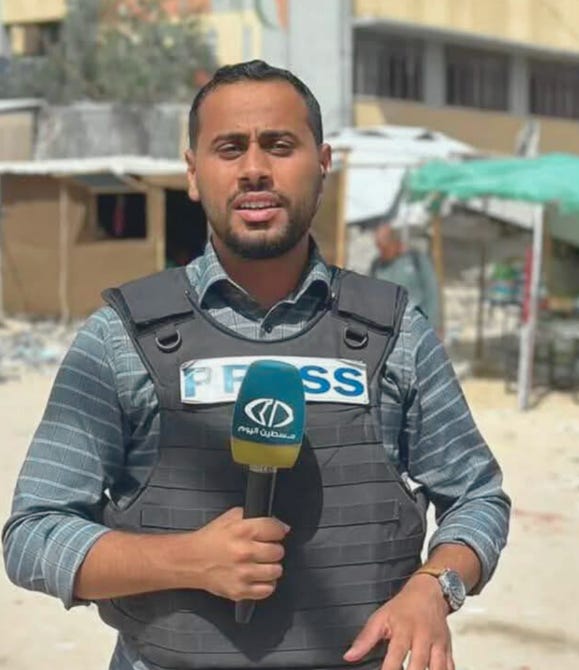
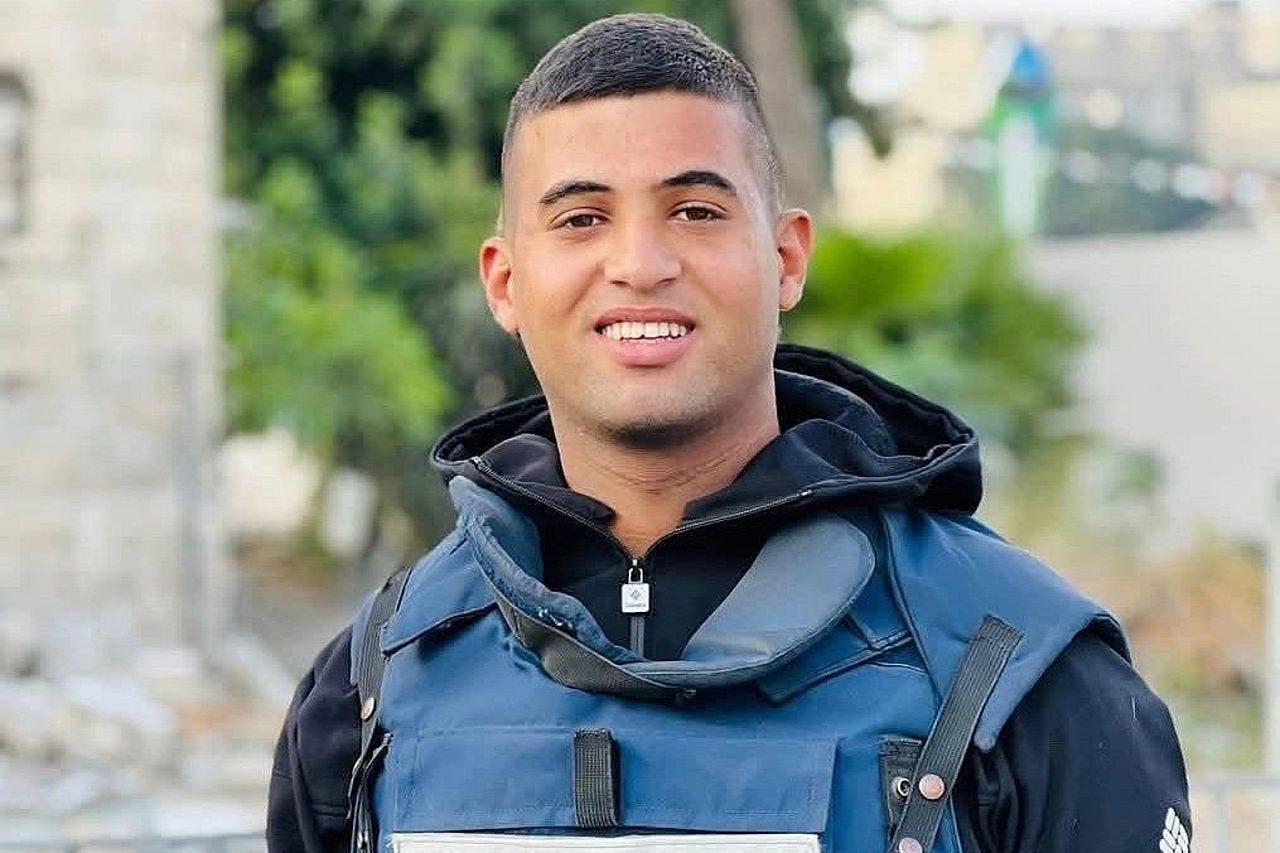
Israel called them both militants, as it always does, over the bodies of the reporters it kills.
Hamdan Ballal, a co-director of the film No Other Land, which had won the Oscar Academy Award weeks before for documenting exactly this kind of dispossession, was beaten by Israeli settlers and arrested by Israeli police in Susya. The film had been honored in Los Angeles; its maker was beaten in the hills of the south Hebron by the people the film was about.

March 25, 2025
Israel struck tents in Hamad City and killed five, three of them children. It struck Khan Younis and killed two children, and Beit Lahia and killed a three-year-old girl.
That same day, Palestinians in northern Gaza protested in Beit Lahia, Beit Hanoun, and Jabalia, calling for an end to Israel’s war and blockade. Their signs said, “We refuse to die,” “The blood of our children is not cheap,” and “Stop the war.” One protester said what the whole north had been living: no food, no safety, no water, no money, no dignity left under the siege.
Some chants against Hamas were reported too, and that is what Israel’s friends rushed to make the story. Not the war. Not the blockade. Not the tents hit that day. Not the children killed that day. The useful line was pulled out and held up as if Gaza had finally blamed the right people. But the protest itself was clearer than that. It was a people being starved and bombed saying they wanted to live.
March 26, 2025
Israel struck a home in Jabalia and killed at least eight, among them a woman and her children, one of them a six-month-old boy. It killed the Hamas spokesman Abdel-Latif al-Qanoua in a strike on a tent in Jabalia. Israeli drones hit tents and a charity food bank in central Gaza and killed eleven. The food bank: in a territory Israel had sealed and was starving.
March 27, 2025
Israel struck a market in Gaza City and killed seven. It struck a tent in Beit Lahia and killed a paramedic. World Central Kitchen said an Israeli strike near one of its aid facilities killed a volunteer and wounded six.
The markets, the paramedics, the aid kitchens, all of it struck in a single day, the infrastructure of staying alive targeted piece by piece while the blockade that had begun on March 2 held the food at the gates.
March 28, 2025
Israel struck a house in the Zaytun quarter and killed eight, mostly women and children, and wounded nearly twenty more. In Lebanon it struck Kfar Tebnit and killed one and wounded eight, three of them children, and struck Beirut’s southern suburbs. The resumed killing in Gaza, the strikes on Lebanon, the settler attacks in the West Bank, all of it ran together now exactly as it had before the truce, as though the fifty-eight days had been edited out of the year.
March 29, 2025
The Palestine Red Crescent found the body of the leader of the rescue team that had gone missing a week before in Tel al-Sultan, the team besieged on the night of the twenty-third. Israel said it had mistakenly opened fire. Israel struck people breaking their Ramadan fast on a beach in Deir al-Balah and killed three. The fast broken on the beach, the families gathered at sundown to eat after a day of hunger in a month of holiness, and Israel struck them there.
March 30, 2025
Israel killed at least sixty-four Palestinians in strikes across Gaza, at least ten of them children.
In Rafah, the Palestine Red Crescent recovered the bodies of the rescuers who had gone missing a week earlier. The attack began on March 23, when an ambulance was sent to the al-Hashashin area after Israeli fire. It was shot at. More ambulances and a civil defense vehicle went after it. They were marked, their emergency lights were flashing, and one of the medics was recording from inside the convoy as it moved through the dark.
The video showed the vehicles stopping on the road. Then the gunfire came. The medics could be heard speaking, praying, calling out. One of them recited the shahada. Another asked his mother to forgive him and said he had only chosen this path to help people. The recording ended inside the killing.
For days, the rescuers were missing. When their colleagues were finally allowed back to the area, they found the ambulances crushed and buried in the sand. The bodies were buried with them. Fifteen were killed: eight Red Crescent workers, six civil defense workers, and one UN employee. The men had gone out in ambulances to reach the wounded. A week later, they were dug out of a mass grave.
March 31, 2025
Israel ordered the majority of Rafah’s residents to evacuate to al-Mawasi, emptying the city again. It struck a house on Yaffa Street in Gaza City and killed twelve, women and children among them. The month that had begun with a blockade and ended with the ceasefire shattered closed with the south being cleared once more and the families dying in the buildings, exactly where the year had been before January’s false dawn.
April 1, 2025
The World Food Programme closed its remaining bakeries in Gaza for lack of supplies under the blockade. The bread, which had returned briefly during the truce, was gone again. A month into the renewed siege, Israel had once more reduced more than two million people to waiting for food that was not allowed to come.
April 2, 2025
Israel struck a UNRWA clinic sheltering the displaced in the Jabalia camp and killed at least nineteen, nine children among them. Katz announced ground operations in Gaza to seize extensive territory to add to Israel’s buffer zones, the annexation of Gaza’s land stated openly as policy. The clinic full of the displaced and the declaration of seizure on the same day: kill the Palestinians, take the ground, standard Israeli modus operandi.
April 3, 2025
Israel struck the Dar al-Arqam school sheltering the displaced in Tuffah and killed at least twenty-five, children and women and the elderly among them, more than a hundred wounded.
Hungary, under Viktor Orban, was to host Netanyahu on a state visit while he was wanted by the International Criminal Court. Hungary announced it would withdraw from the court rather than arrest him, a European government choosing the man under warrant for genocide over the institution that had named the crime.
The school full of the displaced burned in Gaza while in Budapest the warrant was waved away.
April 4, 2025
Israel struck a house in al-Manara near Khan Younis and killed at least nineteen, mostly women and children. The Trump administration advanced the sale of more than 20,000 assault rifles to Israel, weapons the previous genocidal administration had only delayed over concern they would arm extremist Israeli settlers. The rifles for the settlers, the bombs for Gaza, all flowing again.
April 5, 2025
Israel struck Shujaiya and killed at least three, a woman among them, and the Zaytun quarter and killed a woman, and Khan Younis and killed a child.
The daily toll had settled back into the dozens, the grinding ordinary numbers of the genocide, each day a number, each number a set of homes and the people who had been in them.
April 6, 2025
Israel struck Khan Younis and killed nineteen. It struck Tuffah and killed eleven, nine of them children, reported by their own papers. And in the West Bank, Israeli fire killed a fourteen-year-old Palestinian-American boy, Amer Rabee, near Turmus Ayya; the army said he was throwing rocks, and his family and a surviving boy said they were picking almonds, and his father said even if they had thrown stones the soldiers could have fired a warning or chased them, not killed his son.

A child picking almonds, an American citizen, shot dead, and the army’s answer was that he might have thrown a stone.
April 7, 2025
Israel struck a tent housing journalists near Nasser Hospital and killed two, including a journalist, and wounded at least seven more reporters; one more died of his wounds. It struck a charity kitchen in Khan Younis where people had gathered for food and killed at least six. Across the West Bank, Palestinians shut their shops and businesses in a general strike against the genocide. The journalists in their tent, the hungry at the kitchen, killed in the same day, while the West Bank closed its shutters in grief and protest.
April 8, 2025
Israel struck a house in Deir al-Balah and killed eleven, five of them children. An Israeli strike near a Médecins Sans Frontières clinic in al-Mawasi killed two, including a two-year-old boy. The strikes near the clinics had become a category of their own, the medical points drawing the bombs as surely as the homes and the tents.
April 9, 2025
Israel struck Shujaiya and killed at least twenty-nine, children and women among them, dozens more wounded, dozens more trapped under the rubble. Hours later it struck Shujaiya again and killed at least five more.
I want to stop on this because it happened too often to pass by as another detail. The first strike brings people out. Neighbors run toward the smoke. Medics arrive. Civil defense comes with what little equipment it has left. Men dig with their hands because the machines are gone or have no fuel. The wounded are still calling from under the concrete. Then Israel strikes the same place again.
The Israeli double-tap strike had become so familiar that it had its own record now, its own page, its own ugly place in the language of genocide: a first strike, then a second one timed for the people who came running.
April 10, 2025
Israel struck everywhere: a car in Deir al-Balah, struck homes in Jabalia, kept the count climbing through the dozens.
What more is left to say?
April 11, 2025
Israel struck a home in Sheikh Nasser east of Khan Younis and killed ten, seven of them children, once again reported by their own papers, killing children was a regular in Israeli media.
It struck a house in Katiba north of Khan Younis and killed at least ten of one family, at least three children and two women among them.
The head of pediatrics at Nasser Hospital said Gaza had reached the fifth phase of famine, the worst classification that exists. On the IPC scale, Phase 5 is called catastrophe for a household and famine for an area. It means food has disappeared past the point of hunger. Families are facing starvation and destitution, children are wasting, and people are dying from hunger or the diseases hunger lets in. It is the final category before there is nothing left to classify.
Israel allegedly found a Hamas tunnel under a kindergarten, and the children of Gaza starved at a catastrophe level.
April 12, 2025
Israel struck a building inside al-Ahli Arab Hospital, the Baptist hospital, destroying its emergency and reception department; patients were evacuated after a warning call, and at least three people, including a twelve-year-old boy, were killed in the evacuation itself. The hospital Israel had struck in the first month of the genocide, struck again now, its emergency room destroyed, a sick child killed in the rush to flee it.
April 13, 2025
Israel struck the Deir al-Balah municipality building and killed at least three. It struck a car in Deir al-Balah and killed seven. It struck a home in the Jabalia camp and killed seven, two women among them, and wounded a pregnant woman. The municipal building, the car, the home, the mother, the ordinary everyday of a place, struck and struck and struck again and again and again.
To what end?
April 14, 2025
Israel killed six brothers in Deir al-Balah as they were helping deliver food to hungry Palestinians. They were between ten and thirty-four years old. Children and grown men from the same family, moving through a starving territory with food in their hands. Their father, Ibrahim Abu Mahadi, said they had been helping people since the beginning of the war and carried no weapons.
Six sons from one house, killed together while trying to keep other people alive. The strike that killed them was one of more than thirty-five Israel said it carried out that day.
I want to stop here because I remember a day in the past year when I just broke. I do not even remember which massacre did it. By then there had been too many. I had watched children pulled from rubble, fathers carrying pieces of their families, doctors crying over their own dead, people starving in front of the world. I had watched for so long that I did not know what could still reach me.
Then one day I just started crying and could not stop. It felt like someone had untangled my heart from the inside after I had spent months tying it shut just to keep looking. Maybe I was trying to be a man about it. Maybe I had become numb because numbness was the only way to survive the helplessness. But the grief was still there, waiting for a small enough opening. When it came, it came all at once.
April 15, 2025
Fifty-one thousand. Israel struck the northern gate of the Kuwaiti Field Hospital in al-Mawasi and killed a medic and wounded nine patients and staff. The al-Qassam Brigades said it had lost contact with the fighters holding the Israeli-American captive Edan Alexander after an Israeli strike, the bombardment now endangering even the captives Israel claimed to be fighting to free.
Another thousand added to the count in twelve days.
April 16, 2025
Israel struck a house in Tuffah and killed Fatma Hassouna, a twenty-five-year-old Palestinian photojournalist, along with ten members of her family. She had spent eighteen months photographing Gaza through the genocide, after Israel had destroyed her home, displaced her, and killed people from her family before. A day before she was killed, Put Your Soul on Your Hand and Walk, a documentary about her life in Gaza, had been announced for Cannes. She had been filming the life Israel was trying to erase, and then Israel killed her too.
Fatma had written that if she died, she wanted a loud death. She did not want to become breaking news or another number in a group. She wanted the world to hear it. I think about how many Palestinians had to ask for that before they were killed. To be heard. To be seen. To not vanish into the count. Even in death, she was asking for the thing every journalist in Gaza had been trying to give everyone else.

Israel struck a tent camp in al-Mawasi, the designated safe zone, and wiped an entire family, killing at least ten, children among them. The safe zone was not safe; it had never been safe; it was where Israel told people to go and then killed them.
Even stopping for one name did not stop the killing around her.
April 17, 2025
Israel struck tents again in al-Mawasi and killed at least sixteen, mostly women and children. It struck tents in Jabalia and killed at least seven, mostly children. It struck a group of tents in Khan Younis and killed at least ten, including a disabled boy, five other children, and five women.
The tents, the tents, the tents, the families with nothing left but canvas, killed under it again and again in a single day.
Meanwhile, the United States struck the Ras Isa fuel port in Yemen and killed at least seventy-four people, the American campaign there killing on the same scale as the Israeli one in Gaza.
April 18, 2025
Israel struck a house in Bani Suheila and killed at least thirteen. It struck a makeshift barbershop in Khan Younis and killed at least six, children among them. Two more boys died of malnutrition.
A chair, a mirror, a man with clippers, people waiting their turn, boys being cleaned up by their fathers, a little normal life trying to survive under the ruin. You go to a barber to look human again. In Gaza, even that could become the place Israel hit.
April 19, 2025
Israel killed at least ninety-two over two days. It struck Shujaiya, al-Nasr, the Maen area of Khan Younis, killing women and their children.
In Beit Furik, three Palestinian children were found tied to olive trees, abducted by Israeli settlers and left there for over an hour.
Children, tied to trees…
There are days where the explanation feels like an insult to the thing itself. What more is there to say after that. Three children taken, bound to olive trees, left there in the groves of their own land. The image already says everything.
April 20, 2025
Israeli strikes since dawn killed twenty-five, women and children among them. Nasser Radaydah, a forty-nine-year-old Palestinian prisoner from Bethlehem, died in Israeli custody after being moved from Ofer Prison to a hospital. He had been shot by Israeli forces during his arrest in September 2023, treated for the wounds, then transferred into prison. The prison finished what the arrest had started.
Israeli prisons kept killing in the background of the bombing, men taken and never returned alive, the count of the dead in custody climbing alongside the count of the dead under the bombs.
April 21, 2025
Israel struck a home in east Khan Younis and killed a couple and their children. It struck east of Rafah and killed two children. The UN said it had run out of tents to shelter the displaced of Gaza.
There were no more tents.
The people Israel had driven from their homes, then driven from their shelters, then driven into the open, had reached the point where the world’s largest aid system had nothing left to give them but the ground.
April 22, 2025
Israel struck a home in central Khan Younis and killed nine, two women and two children among them. At least eleven people were killed in house fires caused by Israeli airstrikes. It struck Al-Durra Children’s Hospital in Tuffah and its solar panels, hitting a children’s hospital and the means by which it kept its power.
April 23, 2025
Israel struck the Jaffa school sheltering the displaced in Gaza City and killed at least thirteen, a child among them, burying six under the rubble. The schools full of the displaced, struck as routinely as anything else, the places of last refuge turned into the places of death.
April 24, 2025
Israel struck a police station in Jabalia and killed at least ten. It struck Sheikh Radwan and killed at least six, a woman and four children among them. The Gaza Health Ministry said the territory was at phase five of malnutrition, the most severe. And Israel finally admitted that it had shelled the UN facility in March and killed the Bulgarian staff member it had denied killing for over a month, the admission arriving only after the denial had served its time.
By then, an admission had no weight. One killing acknowledged inside a sea of killings still denied, excused, buried, or left unnamed. Israel lied until the lie was no longer useful, then corrected the record as if the record itself had not been drowning for eighteen months.
April 25, 2025
Israel killed at least eighty-four over the day. The Gaza Government Media Office said at least fifty-two people, fifty of them children, had now died of hunger and malnutrition since the blockade began on March 2. The World Food Programme said its food stocks in Gaza were depleted, entirely gone. The aid system had run dry: no tents, no food, the bakeries closed, the kitchens closing, the children dying of hunger by the dozen, all of it the direct and intended result of a blockade Israel had imposed and the world had allowed.
April 26, 2025
Israel struck a house in Sabra and killed at least ten. It struck al-Mawasi and killed three. The Israeli army said it had killed more than 400 fighters since March 18, the figure it offered as justification for a renewed campaign that had killed thousands, most of them women and children, in five weeks.
April 27, 2025
The Health Ministry added 697 newly verified deaths to its total, the missing again becoming the counted, the number leaping by nearly eight hundred as the dead of the blockade and the bombardment were confirmed.
Israel struck the Jaffa school survivors’ neighborhoods, struck a cafe in Nuseirat and killed six, struck Zaytun and Khan Younis and al-Mawasi and Deir al-Balah, the day scattered with the dead across the whole strip.
April 28, 2025
Israel struck a house in the Jabalia camp and killed at least ten, children and women and elderly men among them. It struck west of Gaza City and killed at least seven, two children among them, and struck the al-Ghafari junction in central Gaza City and killed twelve, five of them children, and struck Gaza City again and killed ten more. The UN said sixteen community kitchens had closed over the weekend, out of supplies. The kitchens that had been feeding the starving were going dark one after another, and the strikes kept coming on the people they could no longer feed.
April 29, 2025
Israel struck tents for the displaced south of al-Mawasi and killed four, three of them children, and wounded more than forty. UNOCHA said nearly 10,000 cases of acute malnutrition in children had been recorded since the start of 2025, 1,600 of them severe, and the Health Ministry said at least 60,000 children were now showing signs of malnutrition.
Sixty thousand starving children.
The number is its own indictment. There is no military explanation for sixty thousand starving children. There is only the blockade, and the choice behind it.
April 30, 2025
Israel struck the Nuseirat camp and killed at least three, a child among them. It struck Gaza City and killed a fisherman pulling his boat to the water. The killing continued at its rate, the man at his boat, the child in the camp, the daily harvest of a campaign that had no end in sight and no limit anyone was willing to impose.
May 1, 2025
The Gaza Health Ministry said severe malnutrition now affected 92 percent of Gaza’s children and breastfeeding mothers.
Ninety-two percent. Nearly every child in Gaza, nearly every nursing mother, malnourished, in a famine built deliberately by the withholding of food.
Israel struck al-Mawasi and killed three, and Beit Lahia and killed three, and Khan Younis and killed three farmers trying to grow food, and Shujaiya and killed two including a child.
May 2, 2025
Israel struck a house in Bureij and killed nine, at least two of them women, and Sheikh Radwan and killed two, and Shujaiya and killed two including a boy and his grandfather, and Jabalia and killed several including children.
An Israeli drone struck the Freedom Flotilla’s Gaza-bound aid ship off Malta and set it on fire, attacking even the boat trying to bring help across the sea.
May 3, 2025
Israel struck a house in the Khan Younis camp and killed eleven, three of them infants. An infant girl died of malnutrition and dehydration at al-Rantisi Hospital. The Government Media Office put the count of those killed by malnutrition since the Israeli blockade at fifty-seven, most of them children, the ill, the elderly.
The three infants in the house, the infant at the hospital, the fifty-seven starved: the smallest and the weakest, killed first and fastest by Israel, as they always do, as they were always going to do under a siege designed to make exactly this happen.
May 4, 2025
UNICEF said more than 9,000 children had been treated for acute malnutrition since the start of the year. Israel struck a tent in al-Mawasi and killed ten, six women and a child among them.
World Central Kitchen, the last large kitchen still trying, would soon halt operations for lack of supplies.
May 5, 2025
Israel struck three apartments in the al-Rumuz tower in Gaza City and killed fifteen, and a four-month-old infant died of malnutrition. The infant four months into a life that had known only this, dead of hunger, in the same day’s record as the tower full of the dead.
May 6, 2025
Israel struck a school sheltering the displaced in the Bureij camp and killed at least thirty-three, women and children among them, dozens wounded; residents said the army had warned them to leave a mosque and then struck the school beside it.
Israel struck Sanaa’s airport and disabled it completely. Trump announced the United States would stop striking the Houthis, who said the ceasefire did not apply to Israel in any way.
I want to pause here for Yemen, and for Lebanon too. Whatever else anyone says about the genocide, those were the two fronts that did not leave Palestine alone. Lebanon bled for Gaza. Yemen closed the sea for Gaza. Both were punished for it, bombed for it, threatened for it, and still the message was clear: Palestine was not alone in the region, even when the world tried to make it feel that way.
May 7, 2025
Israel struck the al-Karama school in Tuffah and killed thirteen, a journalist among them. It struck near a restaurant and market in Gaza City and killed thirty-three, women and children among them. World Central Kitchen halted its operations in Gaza, out of supplies, the last of the big kitchens gone dark. The school, the market, the restaurant, the places where people gathered to be fed or simply to be among others, struck and struck, and then the kitchens closed, and there was less and less standing between the population and starvation.
I have to end the record here.
I began this piece for 1,000 days of genocide. That was the point. To carry the record as far as I could toward that number, to sit with what it means for a people to be killed, starved, buried, displaced, imprisoned, and erased across one thousand days while the world kept finding new ways to delay its conscience.
But I could not even reach the thousandth day.
Not because the killing ended. It did not. Not because Gaza became quiet. It did not. Not because the dead stopped arriving, or the hospitals recovered, or the north was restored, or the children were fed, or the prisoners came home whole, or the world finally did what it had been pretending to consider for almost three years.
I have to end it here because the page itself can no longer carry the record. Every time I try to add more, the draft breaks. The links fail. The platform freezes. The page refreshes and throws me back. I had to stop embedding sources. Then I had to stop adding days. The genocide kept going, but the place holding the record gave out before the record could reach the number in its own title.
There is something obscene in that. A genocide so constant that even documenting it begins to exceed the page. Too many days. Too many strikes. Too many children. Too many names. Too many bodies recovered later from rubble that had already become old news. Too many journalists killed while trying to show the world what was happening. Too many doctors killed in the hospitals they refused to leave. Too many families erased together. Too many infants freezing, starving, burning, buried.
This is not a complete record. It was never going to be. Even before the page broke, I was not capturing the full catalog of killing from each day. I missed strikes. I missed names. I missed bodies recovered later. I missed the smaller reports that never reached English, the deaths folded into totals, the families mentioned once and then swallowed by the next day. I was recording as much as I could, and still it was never everything.
It is a record of trying. Trying to keep count when the count was always behind. Trying to name people before they became only numbers. Trying to stop on a face, a child, a doctor, a prisoner, a journalist, a family, before the next day dragged me forward. Trying to refuse the way genocide turns human beings into totals and then turns the totals into background.
If you made it this far, I am asking you not to treat this as an ending. Treat it as the point where one page broke under what Palestinians were still living. The record stops here because the page failed. Gaza did not stop. Israel did not stop. The hunger did not stop. The siege did not stop. The drones did not stop. The burials did not stop. The grief did not stop. The genocide did not stop.
Carry that with you.
Carry the fact that this became too much for a page before it became too much for the states arming it.
Carry the fact that I was writing toward 1,000 days and the page broke at 579.