October 7th
The greatest day in modern Arab history

“I live, yet I am silenced, my thoughts colonized, my spirit tethered by the invisible chains of an oppressor who claims not just my land, but the sacred territory of my mind. They, the colonizer, become a god, unassailable, crafting a narrative where my rebellion is not only futile but blasphemous. My fight, then, is not merely against physical shackles but against the internalized belief in their eternal power and my perpetual weakness. Liberation is not just reclaiming land but reclaiming me, my thoughts, my belief in our collective power to defy, to resist, to exist beyond their suffocating narrative. Witnessing liberation, my body reclaims its autonomy, becoming a fortress against the colonizer’s insidious invasion, a tangible assertion of my right to exist, resist, and persist.”
my notes, October 8, 2023
I wrote this a day after the seventh, when the air still felt different.
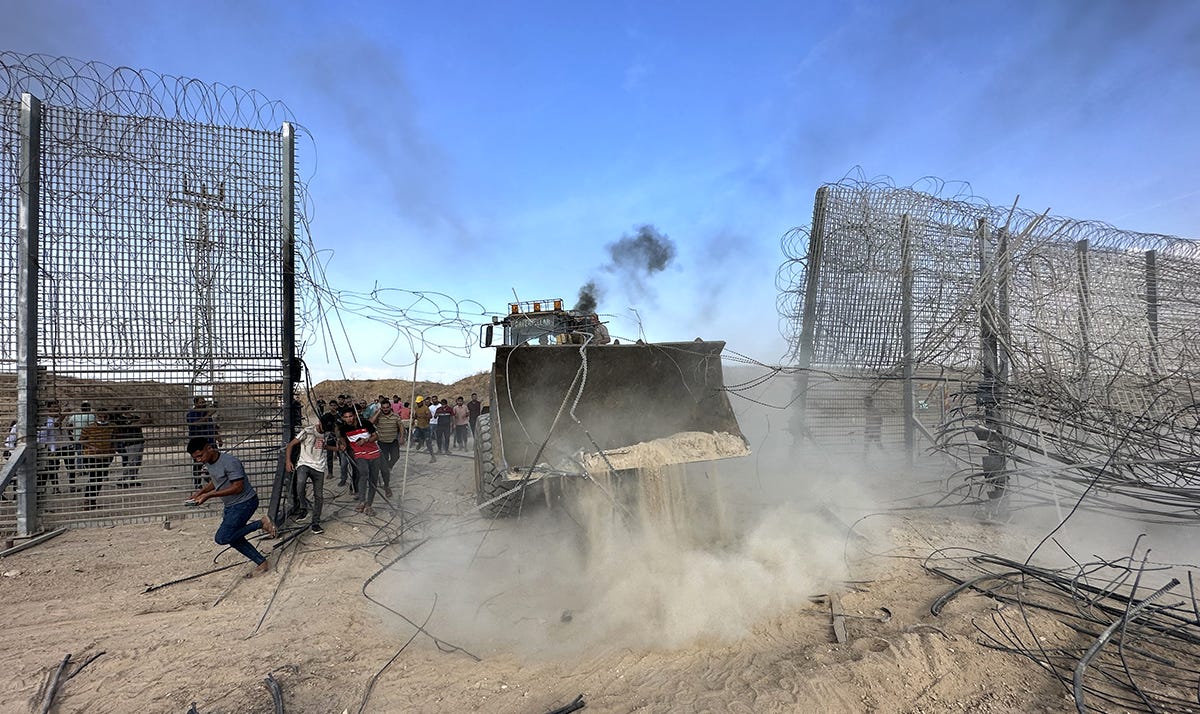
Something had shifted. You could feel it before you could explain it. For the first time in my life, in the life of so many Palestinians, the story that morning did not begin with another image of Palestinian death. It began with the wall. It began with the machine that had taught an entire people to imagine itself as permanent, exposed in a single morning as temporary.
That was the wound October 7 opened inside the colonial imagination.
For decades, Palestinians were asked to perform grief in a way the world could manage. Mohammed El-Kurd has called this the demand to become the “perfect victims,” and there may be no better phrase for it. The Palestinian must be mournful enough to be pitied, never angry enough to be feared. Human enough to be photographed beneath rubble, never political enough to resist the machinery that placed him there.
This is the bargain colonialism has always offered us. Surrender your dignity. Abandon your dead. Betray your people. And in return, the world will let you participate in your own subjugation.
What an offer.
How many times must Arabs be offered humiliation and told to call it peace before we understand that the enemy fears our unity more than our anger?
By October 2023, the official future of the region had already been written without Palestine in it. Normalization moved forward. Arab regimes discovered new ways to speak around the wound. Gaza was treated as a pressure chamber that could be tightened or loosened depending on Israel’s needs. The West Bank was being eaten alive hill by hill. Prisoners disappeared into sentences longer than human life. Al-Aqsa became a stage for provocation. The siege on Gaza, in place since 2007, had become so ordinary to the world that slow death was treated as administration.
Then the wall broke.
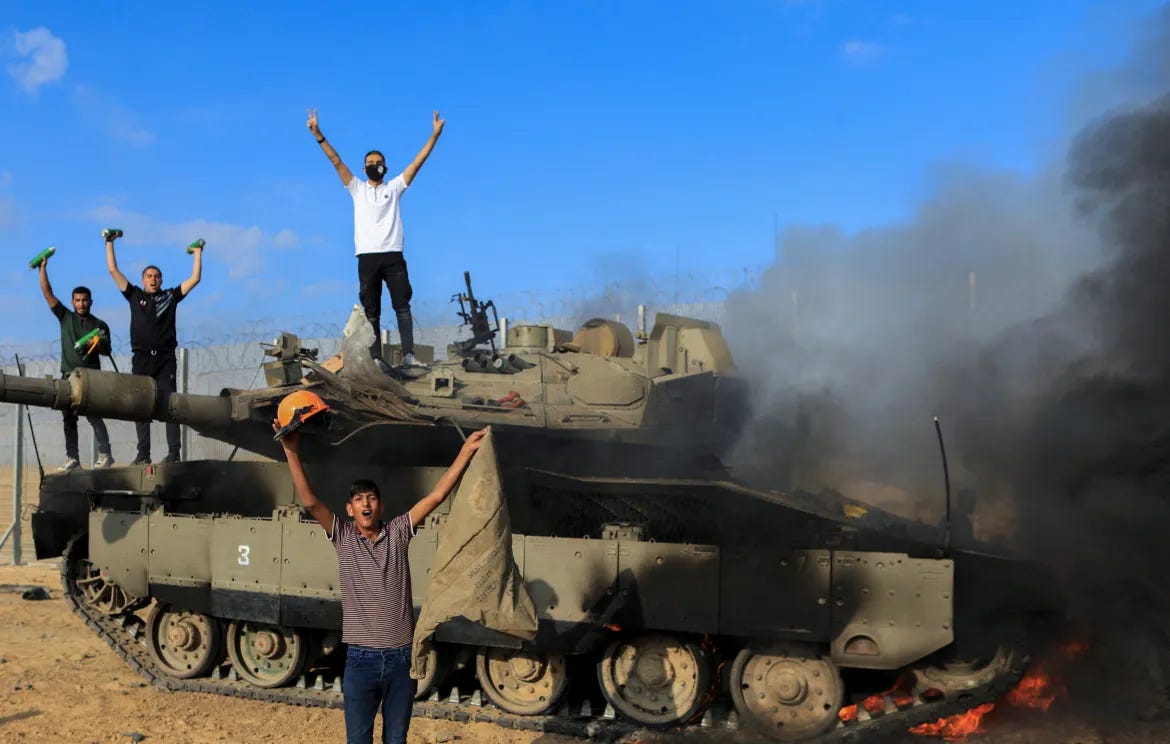
October 7 was what broke the surface. Beneath it was work the enemy never wanted to believe was happening: years spent studying the fence, the towers, the routines of an army that mistook surveillance for knowledge. The order was dated October 5. Resistance leadership had reportedly been in continuous session since October 1. Zero hour was set for 6:30 a.m. on the seventh.
At that hour, the order was issued.
من درع اثنين إلى الجميع، من درع اثنين إلى الجميع: في هذه اللحظات، صدر القرار إلى جميع مجاهدي كتائب الشهيد عز الدين القسام، وجميع الوحدات والتشكيلات العسكرية: الضرب بيد من حديد، أروا الله منكم ما يحب، أغيظوا عدوكم، وأروهم من بأسكم الشديد.
From Shield Two to all, from Shield Two to all: In these moments, the order has been issued to all the fighters of the Martyr Izz al-Din al-Qassam Brigades, and to all military units and formations: strike with an iron hand, show Allah from yourselves what He loves, enrage your enemy, and show them your mighty force.
— Reported radio transmission from “Shield Two” at the opening of the October 7 operation, October 7, 2023
That transmission is more than a battlefield command. It is the sound of a people crossing a psychological border. The words carry the voltage of a colonized people who had been told for generations that power belonged elsewhere. The order was military, but the deeper rupture was internal. The invincible image of the colonizer cracked.
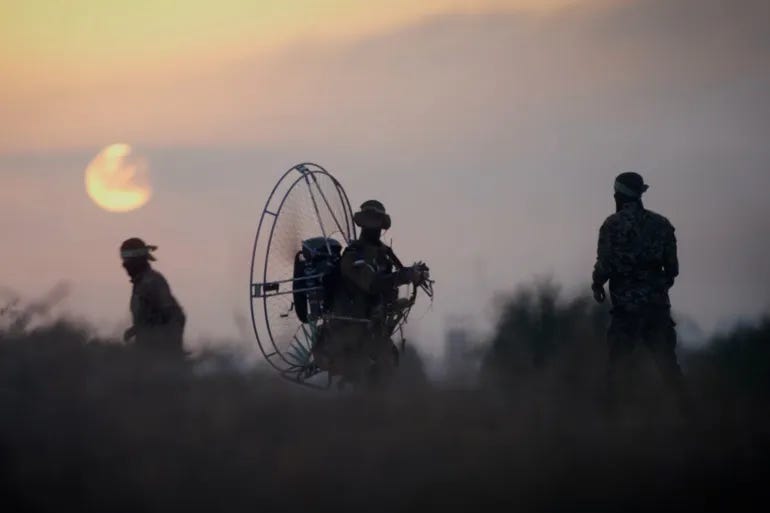
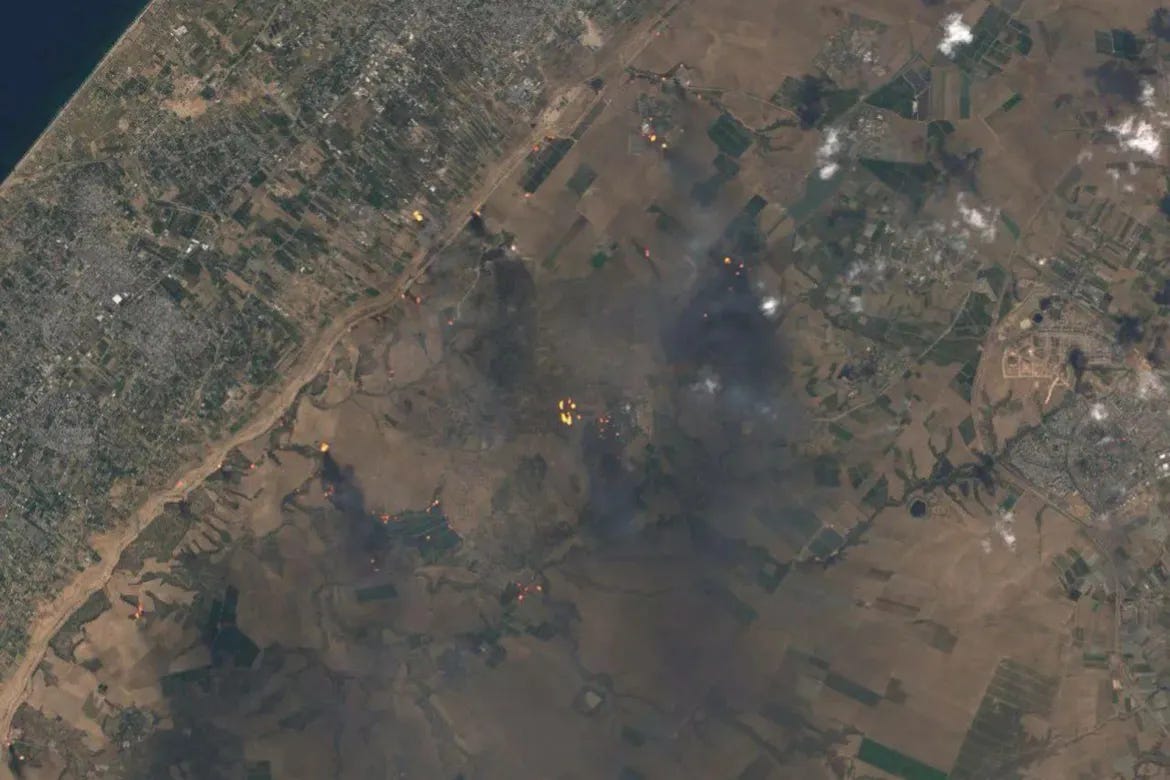
The attack moved across land, air, and sea. At 6:30 a.m., more than 3,500 rockets opened the morning while engineering units worked on the barrier and infantry moved toward the perimeter. Drones, paragliders, and naval units entered the operation in coordination with the assault. Around 3,000 fighters were assigned to the maneuvering force, with roughly 1,500 more in support and reinforcement positions. Fire was directed at military sites within the Gaza Division’s range and at airbases including Hatzor, Nevatim, Tel Nof, and Palmachim.
The main target was the IDF’s Gaza Division. Its northern brigade sites included Yiftah and Nahal Oz. Its southern brigade sites included Kissufim, Kerem Shalom, Sufa, and Netzarim. Re’im sat at the center of the structure. The IDF’s Gaza Division was the nervous system of the cage, the institution through which Gaza was watched, contained, and disciplined. Once Re’im was hit and the surrounding sites began to collapse, the mythology of Israeli control collapsed with them. Former Israeli intelligence officer Alon Eviatar later described the first half-hour as almost impossible to believe. He said the border was breached from sixty points. Even a regular army, he admitted, would struggle to do that.
That is what October 7 burned into history. Israel was surprised by people it watched every day. The failure was deeper than intelligence. It was imagination. The occupier had stared at Gaza for years and still did not understand what was forming inside it. Quiet became, in Israel’s mind, proof of containment. A few economic openings became proof that the cage had worked. All the while, military preparations continued beneath the surface. Gaza let the jailer trust the lock. The fence failed because the mind behind it failed first.
The operation was also understood by the resistance as preemptive. Al-Qassam had reportedly monitored signs of an impending Israeli campaign after the Jewish holidays. Israeli security discussions before October 7 included talk of action against Hamas leaders, including Yahya Sinwar and Mohammed Al-Deif. The resistance seized initiative before another war could arrive entirely on Israeli terms. Initiative is everything in colonial politics. The colonizer acts and calls it security. The colonized acts and is told he has violated history. October 7 broke that rhythm and forced Israel into reaction. Much of the fury that followed came from that humiliation.
After October 7, Israel tried to rebuild its image through the ruin of Gaza. Its genocide became a brutal campaign against life itself. Entire cities were erased: Beit Hanoun, Beit Lahia, Rafah, Khuza’a, and neighborhood after neighborhood whose names the world never bothered to learn. Hospitals were turned from places of refuge into scenes of massacre. Even the line for bread became a place where death waited. The bare elements of survival, water, electricity, medicine, and shelter, were pulled into the machinery of punishment. Israel treated destruction as proof that power had returned to its hands. It mistook rubble for victory.
This has been Israel’s problem from the beginning. It thinks the body is the archive. Gaza has disproven that at a cost so enormous every sentence feels too small beside it. When Israel entered Gaza on the ground, the resistance it met showed what siege had produced: tunnels, ambushes, local manufacturing, improvised engineering, fighters emerging from destroyed neighborhoods with weapons made under conditions designed to make weapons impossible. Abu Obeida, Qassam’s spokesman, had already named the contradiction: “from the impossible.”
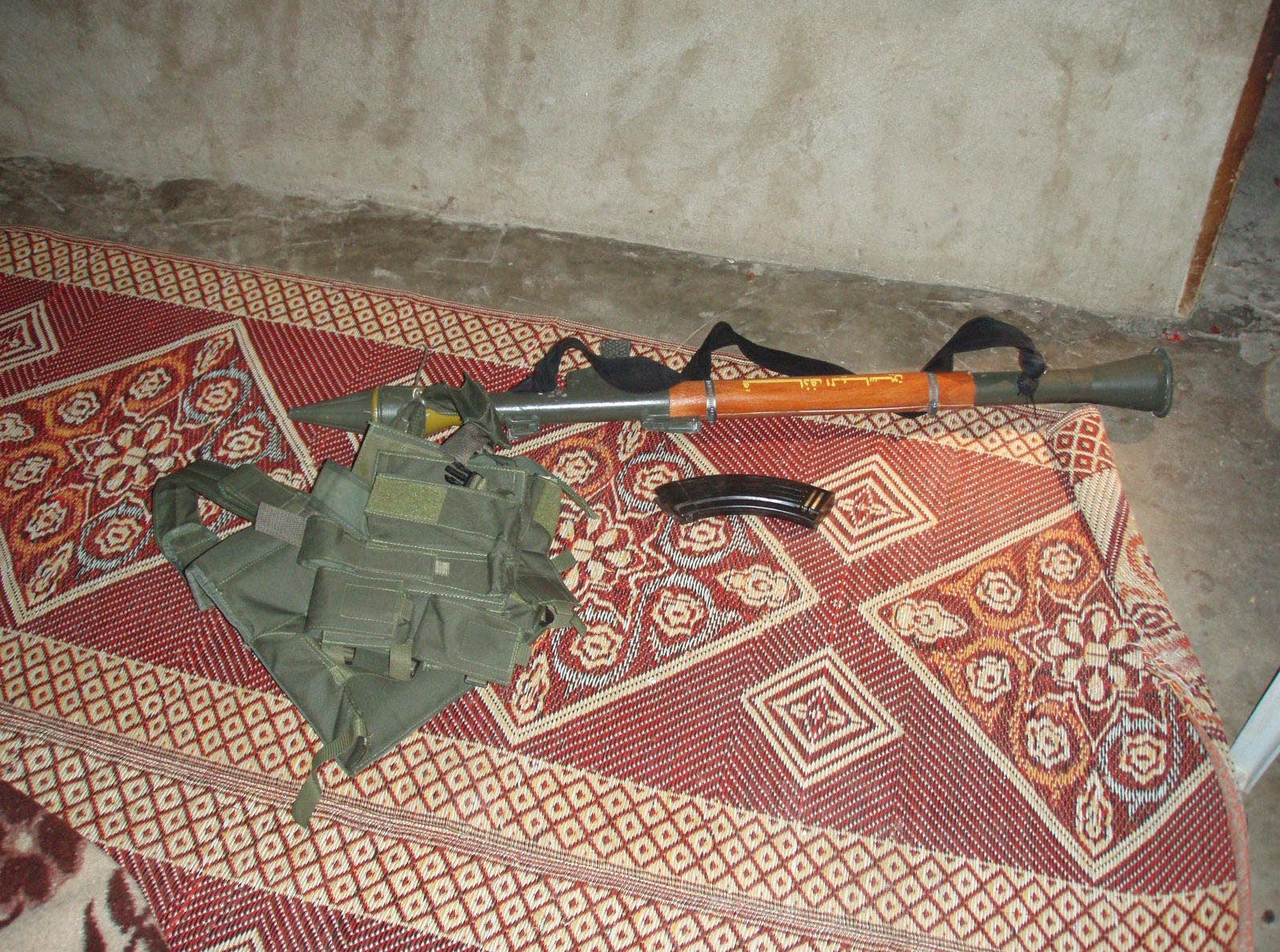
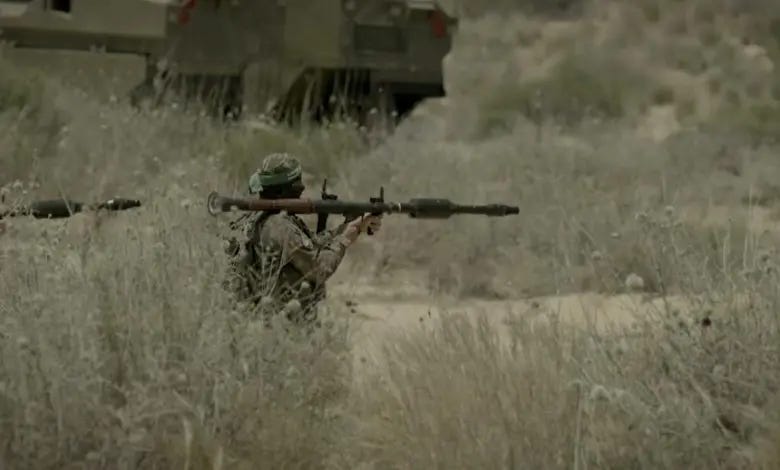
The Yassin 105 became one of the clearest symbols of Gaza’s answer to Israeli armor. It is a locally manufactured anti-tank rocket, modeled on older Soviet designs and adapted inside Gaza under siege. Fighters used it against Merkava tanks, armored personnel carriers, and D9 armored bulldozers, the same machines Israel used to grind through neighborhoods, flatten streets, and open paths for invasion.
The importance of the Yassin was not only in the damage it could inflict. In the countless clips released by Qassam and watched by millions, it became one of the defining images of the ground war: a fighter emerging from rubble or a tunnel mouth, shouldering a Gaza-made rocket, and striking armor built by one of the most militarized states on earth. It showed that Gaza had found a way to meet heavy armor with weapons built under blockade, in workshops and tunnels, from the narrow possibilities left to a besieged people.
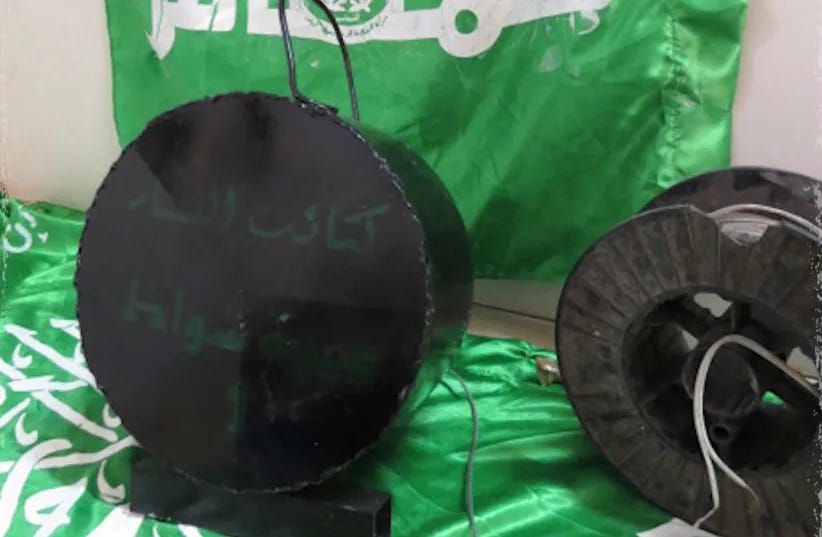
The Shawaz EFP (explosively formed penetrator) represents a different kind of patience. It is an improvised explosive device developed over years by the Qassam Brigades and used against Israeli armored vehicles during ground incursions. Its name appears again and again in footage from Gaza because it belongs to the defensive logic of the war: let the armored column enter the streets it came to dominate, then make the ground answer back.
Some of the footage is almost unreal in its proximity. Fighters run toward active tanks and armored carriers, crossing the open space where any hesitation would mean death, to place the charge by hand. In one Khan Younis ambush near the Ali ibn Abi Talib Mosque in Ma’an, a fighter climbs onto the armored vehicle itself and drops the Shawaz through the open hatch, directly onto the commander visible inside.
The act is small enough to fit in a few seconds of footage, but it carries the entire logic of the Palestinian battlefield. Israel builds its war machine to kill from a distance. The Palestinian fighter closes that distance himself, with fear, nerve, and a life he knows he may not carry back.
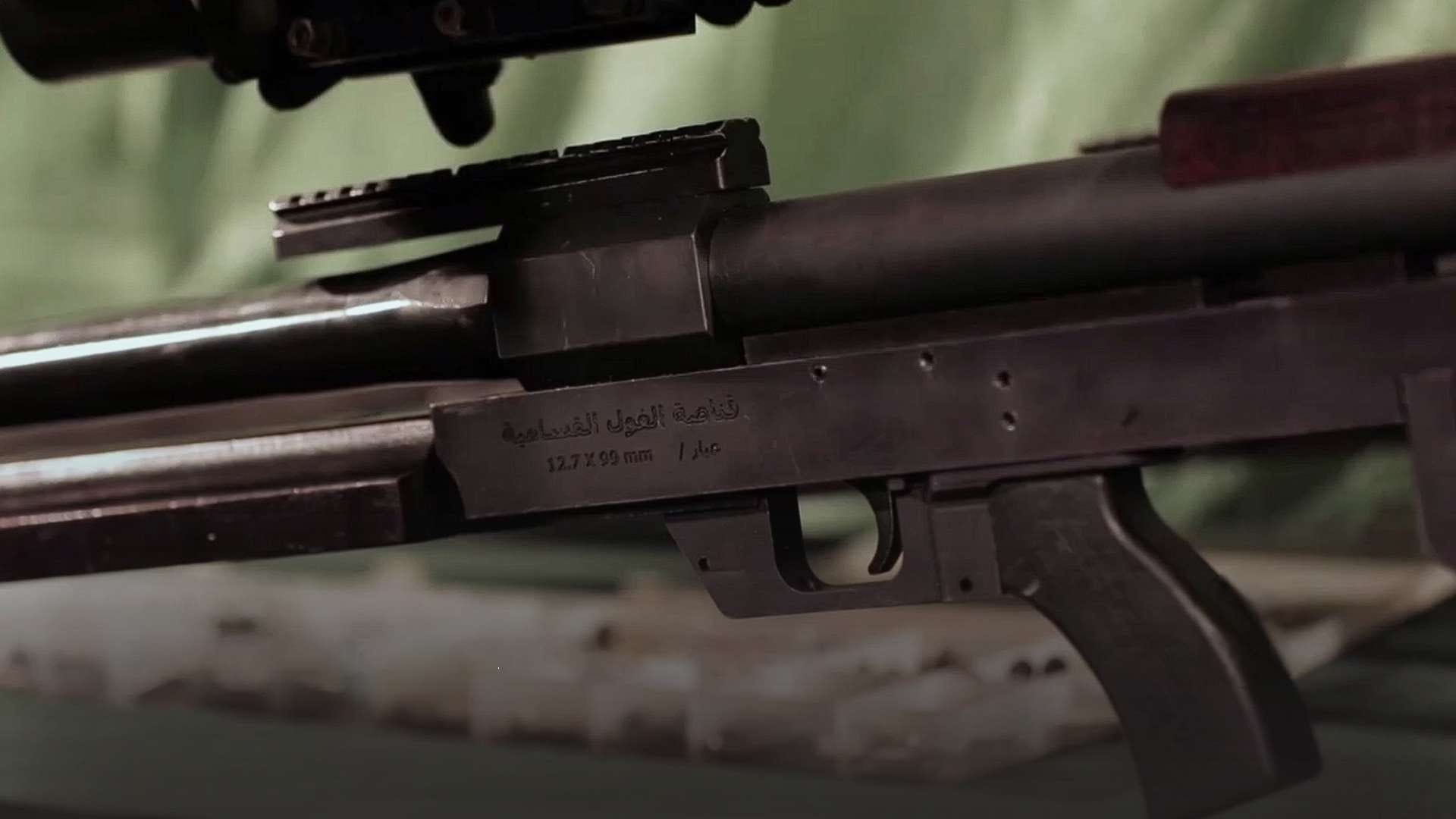
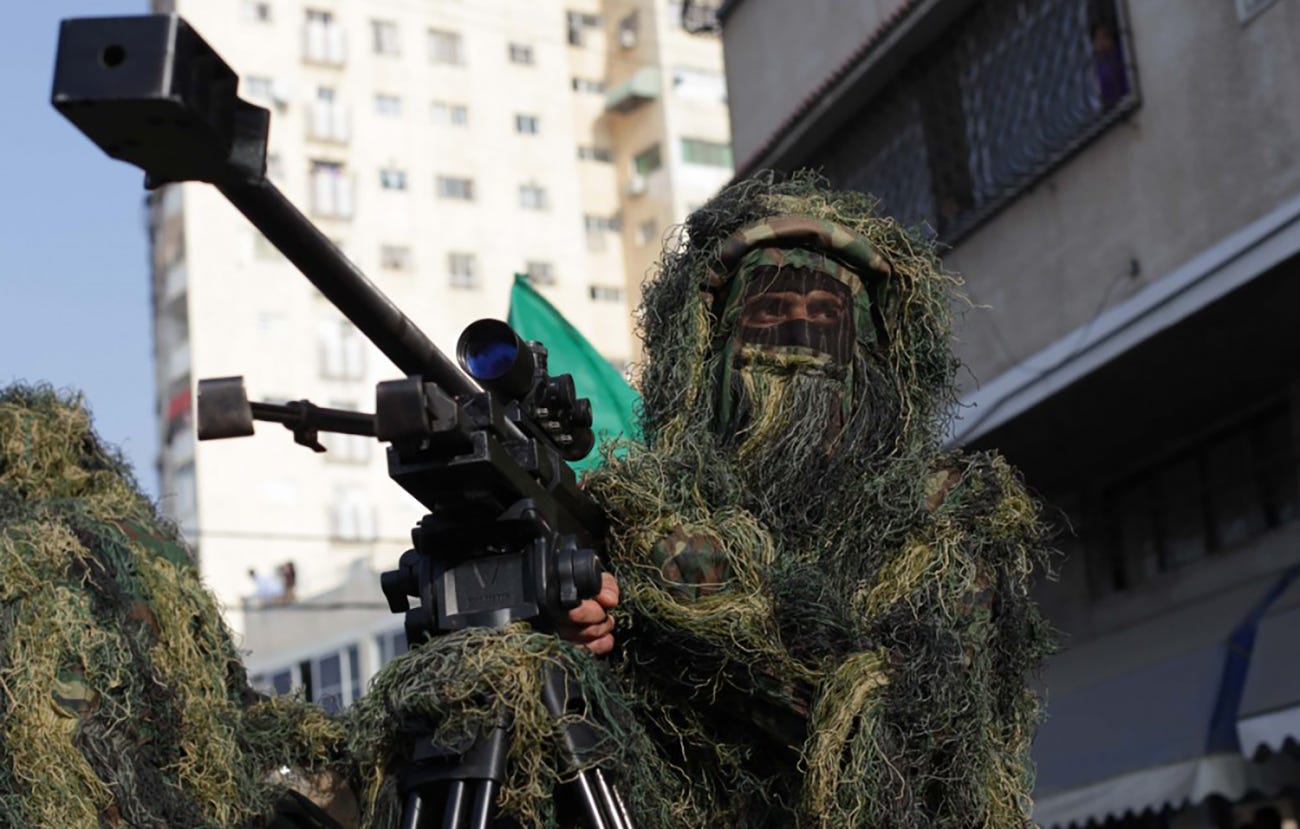
The Ghoul rifle belongs to the distances that cannot be crossed by foot. First introduced during the 2014 war, it reappeared after October 7 as Gaza’s anti-materiel rifle, carried by sniper teams through the ruins of the ground war. Where the Shawaz required a fighter to reach the machine by hand, the Ghoul answered the spaces Israel tried to make deadly before a fighter could ever arrive.
Countless clips showed Israeli officers struck from afar by a weapon Gaza had built, hidden, preserved, and carried across years of blockade. That is what gives the Ghoul its weight. It survived from one war into the next. It carried the patience of a resistance that had learned when to close the distance and when to master it.
These weapons were built under a brutal seventeen-year siege, in a place where Israel tried to control what entered, what moved, and what could be made. That is why Abu Obeida’s phrase matters: weapons made from “the impossible.” The Yassin 105, the Shawaz, and the Ghoul rifle each belong to that same story. Gaza was supposed to be disarmed by deprivation. Instead, deprivation became the condition under which a military language was built. These weapons were more than tools of battle. They were proof that the siege had failed to produce surrender.
This is where Netanyahu’s recent message to Lebanon enters the story.
I have a message for you, the people of Lebanon. Israel is not at war with you. We’re at war with Hezbollah, that has taken your country hostage, that does Iran’s bidding, that uses your territory to launch terrorist attacks against Israel.
Do you remember what Lebanon was like before Iran and Hezbollah turned it into a nightmare? Remember the cafés? Remember the culture? Remember the calm? All that’s gone because Hezbollah and Iran want to drag us into war over and over and over again. You deserve better. Your children deserve better. You know by now that Israel will do whatever it takes to protect our families, our communities.
Hezbollah is weaker than ever. Israel is stronger than ever. We’ve taken out nearly 10,000 Hezbollah terrorists so far. We’re systematically clearing out South Lebanon of these fanatics. No matter where they are, we’ll find them.
You also know we yearn for peace with you, with Lebanon. A peace where our two peoples can invest together, build together, thrive together. The only impediment, the only obstacle to this beautiful vision is Hezbollah. They want war, not peace. They want death, not life. They will sacrifice as many of you as possible to achieve their sick aims. Don’t let your future be dictated by medieval theocrats hellbent on destroying our common civilization.
Israel wants peace with you. Seize your future. Join Israel. Build safety and prosperity for all of our children. And once Hezbollah is dismantled, the possibilities are endless. And they are sky high.
When Netanyahu tells the Lebanese people that Israel is not at war with them, only Hezbollah, he is trying to split the region back into manageable pieces. He speaks in the language of rescue while bombs remain the grammar of Israeli policy raining across Lebanon. He asks Lebanon to imagine peace as separation from its own south, from Palestine, from Iran, and from the forces that made Gaza harder to isolate.
The message is old. Abandon the front next to you and maybe you will be spared. Blame the resistance for the violence of the state attacking you. Call submission stability. Call fragmentation wisdom. The strategic meaning sits in plain view. Israel wants regional power for itself and local suffering for Palestinian and Lebanese people. It wants American cover, Western weapons, Arab normalization, and then it demands that Gaza and southern Lebanon stand alone.
The axis of resistance disrupts that design. Gaza alone can be starved. Lebanon alone can be threatened. Iran alone can be demonized. Held together, they become a regional problem no campaign can dissolve.
That is why the enemy fears unity more than anger. Anger can be absorbed. It can be televised, pitied, condemned, filed away. Unity changes the arithmetic, and Israel has always depended on the arithmetic staying simple.
So when Netanyahu speaks to Lebanon now, in this very season, listen to what the speech is actually for. It is the same separation that has organized every chapter of this, dressed for a new audience. Divide Beirut from Tyre. Divide the Shia from the Sunni, the Lebanese from the Palestinian, the citizen who wants quiet from the fighter who will not give it. He is asking Lebanon to do what the Arab order has been asked to do for seventy-eight years, which is to look at the burning house next door and decide it is not yet your fire.
Some will take the offer. That has always been true, and it would be dishonest to pretend otherwise. There will be palaces that nod and ministries that calculate. Colonialism never lacks for partners. It survives on them.
But the offer comes differently now than it would have on October 6, and that difference is the whole of what I have been trying to describe. A Lebanese teenager watching that speech has already watched something else. He has seen the most surveilled strip of land on earth breach the most expensive fence ever built. He has seen an army that called itself invincible spend two years failing to recover its own captives from a territory it had sealed shut. He has seen a people that the world had quietly agreed to forget refuse, at a cost that makes the throat close, to be forgotten. Whatever he decides to do with his own life, that knowledge is now inside him, and it was not inside the generation before his.
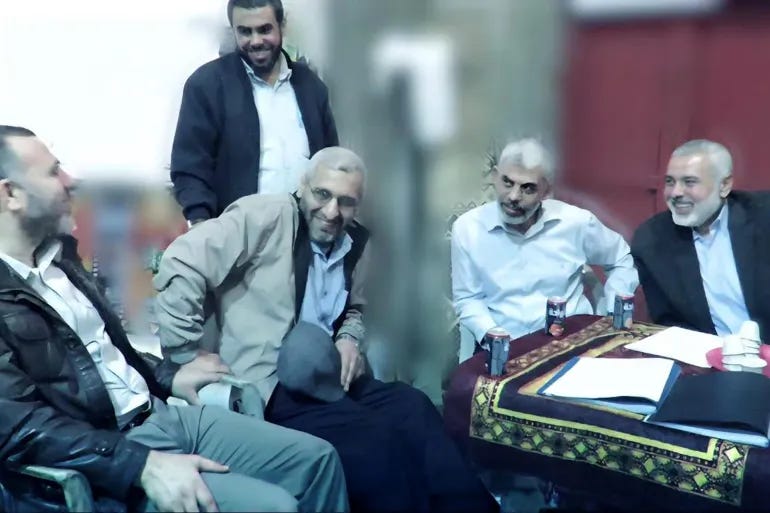
This is the thing the bombing cannot reach. You can rebuild the fence. You can refill the prisons. You can kill the men in the photograph, one after another, and Israel has, and more will be killed after them. The machinery of the visible can be repaired at any cost the financing allows. What cannot be repaired is the moment a watching people stops believing the cage is permanent, because that belief was the cheapest and most important weapon the occupier ever held, and it was never stored in any armory he could defend.
The blood this has cost Gaza is not a figure of speech and will not be turned into one here. It is the floor under every sentence I have written, and no argument I could make would be worth the weight of a single street in Khan Younis. I will not pretend the ledger balances. It does not. It never will.
But the question Netanyahu is so desperate to close is the question that will not close. He goes to Lebanon precisely because the matter is not settled, because a settled enemy needs no speeches. You do not deliver a sermon to the dead. The very fact of the address, the yearning in it, the offered cafés and the promised prosperity, is the confession underneath the threat: the thing was supposed to be over, and it is not over, and everyone in the region can feel that it is not.
That is what was actually broken open on the seventh, and it is why no amount of rubble has been able to close it. Not a wall. Not an army. A certainty. The men who planned that morning are almost all dead now. The fence is being rebuilt. And still the most powerful military in the region spends its days trying to talk a small country out of a future it can no longer guarantee will not arrive.
The occupier is no longer arguing with our anger. He is arguing with our patience, and patience is the one thing a besieged people has always had more of than the people besieging them.