Fictional Empires, Fictional Chains, Fictional Walls
Notes on Andor, an extraordinary show, from a Palestinian.

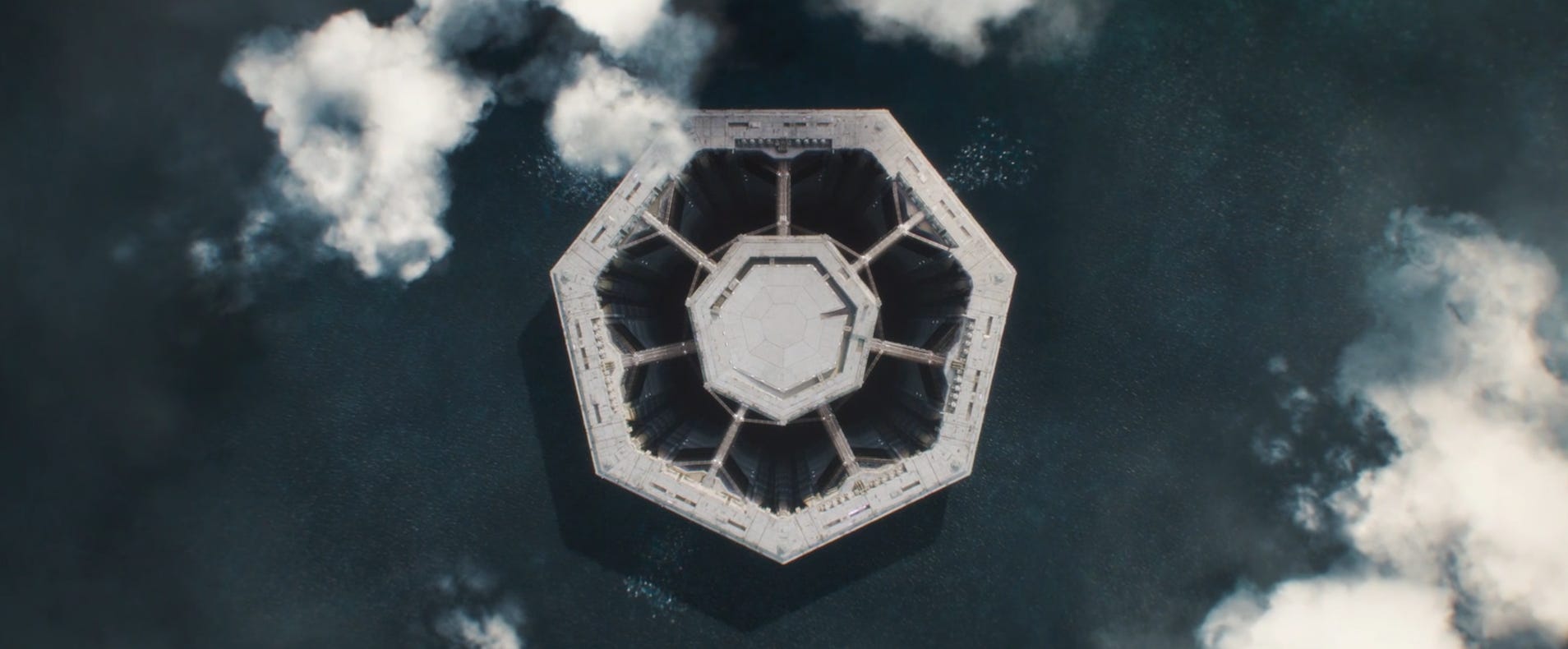
How silly it is to feel tears of joy at fictional characters having fictional triumphs in fictional worlds dominated by fictional empires with fictional armies and fictional prisons and fictional chains struck from fictional wrists, a fictional crowd pouring off a fictional ledge toward a fictional sea under a fictional sky, dreamed up in a real writers’ room, filmed on a real soundstage, scored by a real orchestra, sold to me by a real company for a real monthly fee, none of them ever born, none of them ever caged, none of them ever freed, no mother among them who ever lost a son, no name on any of them that anyone will carry after the season ends, fictional grief and fictional courage and fictional dawn, fiction all the way down, and me in my chair at one in the morning, wet-faced, real.
The show is Andor. There is a prison in it, a factory floor, where men are sentenced for nothing and never told when the sentence ends. They build something all day with their hands and are never told what they are making. They sleep in cells with no doors because the floor itself can kill them. Every part of their lives has been reduced to numbers, shifts, tables, quotas. The prison has convinced them that it is enormous because it has convinced each man that he is small.
In the tenth episode they break out.
Five thousand of them at once, running for the water.
…
Those of us who get good at grief get very good indeed. Professional. Expert. You learn the weight of a shroud and the sound of the wail. You learn how to receive news on the phone, how to read a name and keep scrolling, how to fold sorrow small enough to carry to work in the morning. Grief becomes a kind of competence. You know what to do with it because you have done it before.
And somewhere in all that practice, another muscle goes quiet.
The one for joy.
That sudden feeling that rises before you have time to discipline it. The feeling that believes in an ending you have trained yourself not to expect. It can sit unused so long that you forget its shape, forget that you own it, until five thousand invented prisoners begin running for an invented sea and something inside you answers them.
“One way out! One way out! One way out!”
A man named Kino leads the prison break. He gets on the intercom and tells them there are more of them than there are guards, that the building is theirs, that they will never get a cleaner chance. He is magnificent. Then he reaches the edge, the water, the way out, and he stops. He cannot swim.
He freed five thousand people and he stands at the edge and cannot jump, and I knew him at once, knew him in my chest before my mind, he is every grandfather who planted a tree he understood he would never sit under, every fighter who drew a map of a country he would not live inside, every prisoner who taught the younger prisoners to read and stayed behind when the gate opened, every teacher and every farmer and every mother who spent themselves on a crossing they always knew was for someone else’s feet, who did the work of the door and paid the price of the door and then stood at the water they could not pass and watched the others swim.
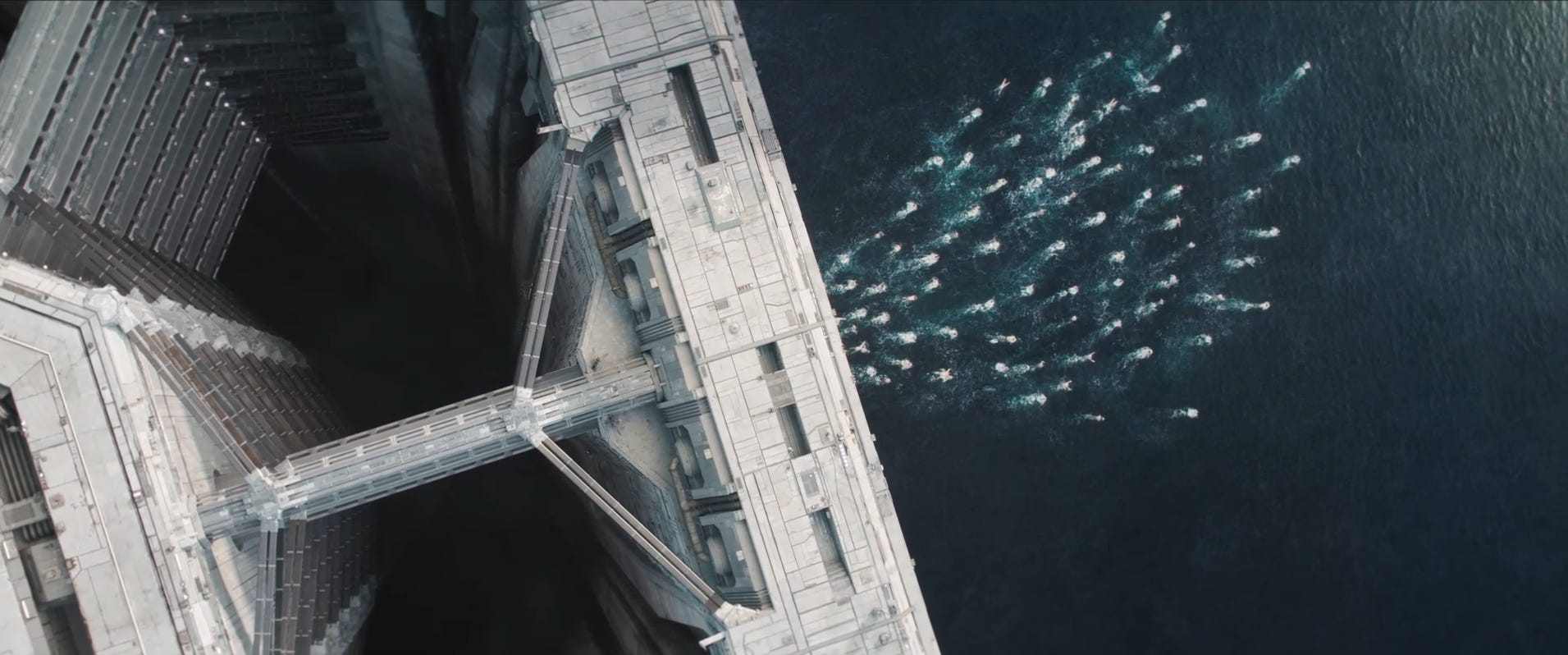
The cruelty of that image to me. Maybe because so much of our history has been lived in the future tense. Return. Liberation. Home. Things spoken of by people who understood perfectly well that they might die before the verb ever became present. How many? How many carry keys to houses they will never enter again, teach children the names of villages they know they themselves will never see, spend themselves preparing a crossing for someone else’s feet?
Two episodes later, Nemik, a young revolutionary, already dead, speaks through a manifesto he left behind:
“There will be times when the struggle seems impossible. I know this already. Alone, unsure, dwarfed by the scale of the enemy. Remember this. Freedom is a pure idea. It occurs spontaneously and without instruction. Random acts of insurrection are occurring constantly throughout the galaxy. There are whole armies, battalions that have no idea that they've already enlisted in the cause. Remember that the frontier of the Rebellion is everywhere. And even the smallest act of insurrection pushes our lines forward. And then remember this. The Imperial need for control is so desperate because it is so unnatural. Tyranny requires constant effort. It breaks, it leaks. Authority is brittle. Oppression is the mask of fear. Remember that. And know this, the day will come when all these skirmishes and battles, these moments of defiance will have flooded the banks of the Empire's authority and then there will be one too many. One single thing will break the siege.
Remember this. Try.”
Andor perfectly understands that power wants to appear permanent, and when you have lived beneath it long enough, permanence begins to feel like a property of the world rather than something being imposed upon it. But tyranny requires constant effort. Every wall must be guarded, every order enforced, every prisoner convinced there is no point in resisting. Freedom requires no such invention. The desire for freedom appears on its own.
Their permanence was the fiction all along. Their numbers were the fiction. The guards turning out to be few, the current dying in the floor, the whole machine that called itself permanent coming apart in an afternoon. Do not remind yourself that it is only a show. For the two minutes in which the prisoners climb to the surface, something in you stands up and remembers. Not their power, which was a story. Not the cages, which are real, but never permanent. The wanting underneath. Real, unkillable, still there, still yours…
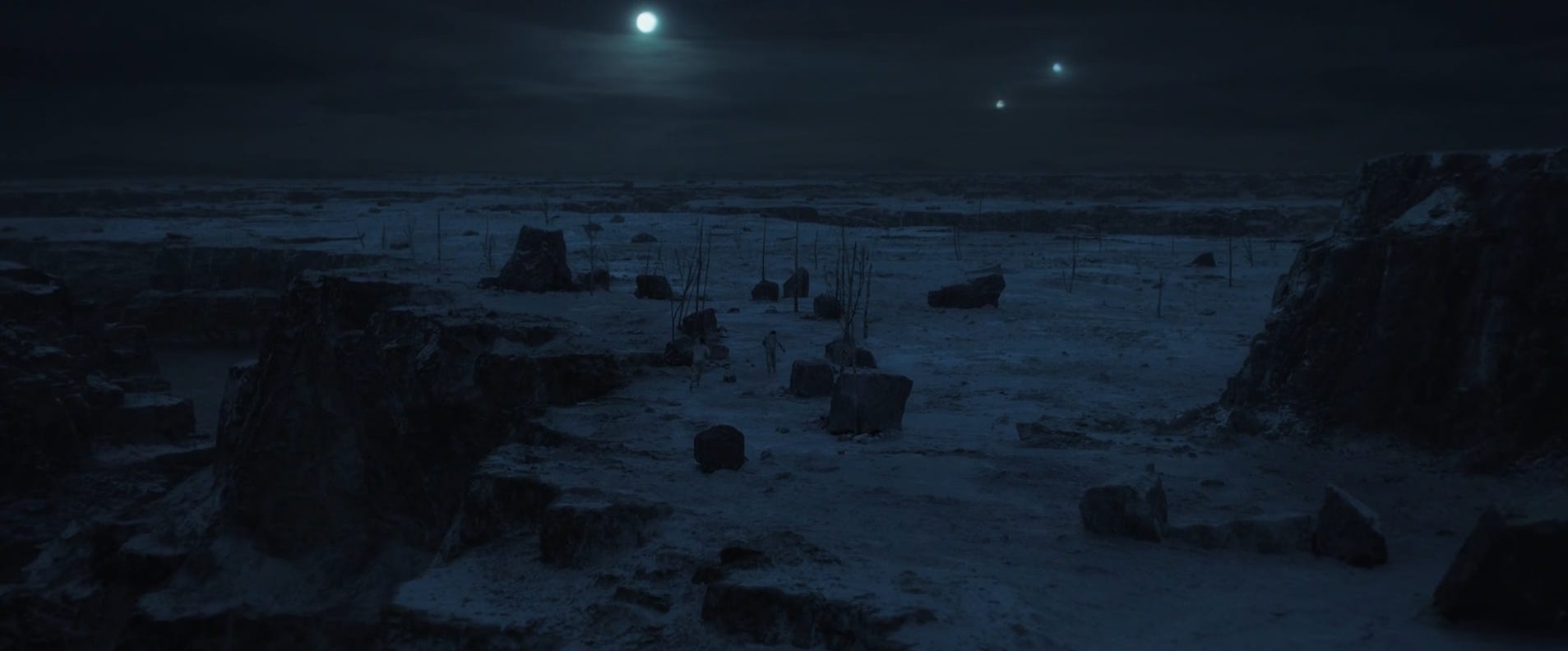
…to be free.
Wow! Great work! This was extremely moving!
I’m an American of Palestinian dissent who has never visited so I cannot fully relate to you but Andor spoke to me in a very similar way. Great piece.